As an Amazon Associate, we earn from qualifying purchases. Some links on this site are affiliate links at no extra cost to you. Our recommendations are based on thorough research and editorial judgment.

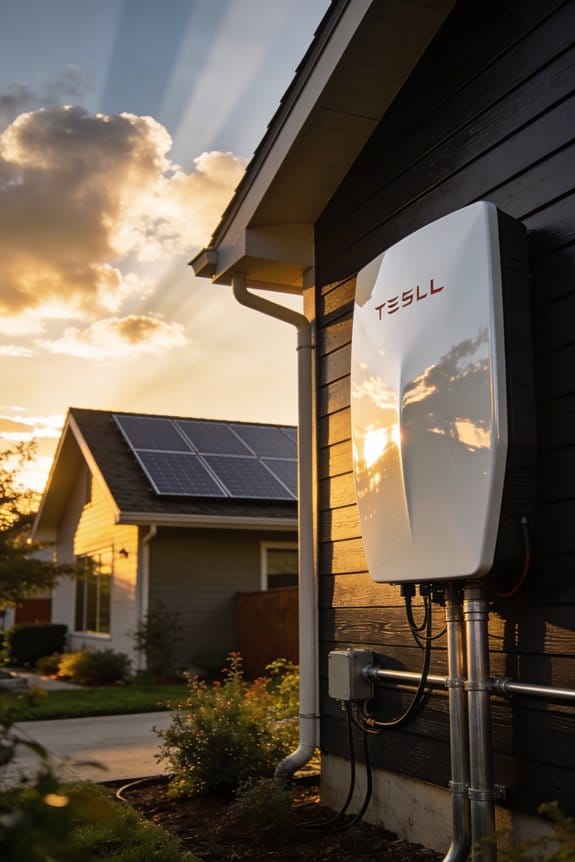
How Does the Tesla Powerwall Work and What Does It Actually Cost?

I store 13.5 kWh in a rechargeable lithium‑ion NMC cell, deliver up to 11.5 kW continuous AC with a 185 A surge for motor starts, and accept up to 20 kW DC via six MPPTs that throttle charging at a 5 kW AC limit; the inverter synchronizes phase, maintains configurable power factor, and operates at 97.5 % solar‑to‑grid efficiency, while the base price is $7,300 per unit plus $1,200‑$2,500 installation, optional service contracts $200‑$400 annually, and a ten‑year warranty, all of which define the true cost of ownership, and the following sections expand on sizing, performance, and long‑term expenses.
Key Takeaways
- Tesla Powerwall stores up to 13.5 kWh of electricity in a lithium‑ion battery, delivering 11.5 kW continuous AC power (up to 30 kW peak).
- It charges from solar (max 5 kW continuous) or grid, using a 97.5 % efficient inverter that synchronizes frequency and phase.
- Backup mode supplies full‑home loads and handles motor‑start surges (185 A LRA) while maintaining a configurable power factor.
- Pricing starts at $7,300 per 13.5 kWh unit; installation adds $1,200‑$2,500, with optional service contracts $200‑$400 / yr.
- Federal tax credits, utility rebates, and financing (e.g., zero‑interest loans or 5‑year 4‑5 % APR loans) can significantly reduce net cost.
How Tesla Powerwall Stores and Releases Energy
Storing energy, the Powerwall 3 uses a rechargeable lithium‑ion cell that holds a nominal 13.5 kWh, while its integrated inverter converts DC to AC at 120/240 VAC split‑phase, 60 Hz, allowing seamless solar‑to‑grid transfer with 97.5 % efficiency and supporting up to 20 kW DC input via six MPPTs ranging 60‑550 V. I monitor battery chemistry, noting the NMC formulation that balances energy density and cycle life, while charge cycles are limited to roughly 5,000 full‑depth events before capacity degrades to 80 % of nominal. Inverter coupling synchronizes phase and frequency, ensuring that energy routing from solar panels to the grid or home loads occurs without voltage distortion, and the system’s programmable logic directs excess generation to storage during off‑peak periods, then releases it during peak demand, maintaining grid stability and maximizing self‑consumption.
Tesla Powerwall Real‑World Power Output: Continuous, Backup, and Peak

Usually the Powerwall 3—one option among broader home backup power station strategies—delivers a continuous AC output of 11.5 kW, which can be sustained indefinitely under normal grid‑connected conditions, while its backup mode also supports 11.5 kW continuous power plus a 185 A LRA motor‑start surge, and the system can be configured to reach up to 30 kW peak power for short durations, enabling rapid response to high‑demand events; these capabilities stem from a 13.5 kWh nominal battery, a 20.8 A maximum continuous charge current, a 160 A fault‑current rating for one second, and six MPPT inputs handling 60‑550 V DC, collectively ensuring that solar‑to‑grid efficiency remains at 97.5 % and that the inverter maintains a configurable power factor between 0 and 1, thereby providing reliable, high‑power output across continuous, backup, and peak scenarios. In practice, the continuous output rating translates to full‑home load support, while peak handling allows brief surges such as motor starts, and the inverter’s rapid switching preserves voltage stability throughout.
Recommended Products

MAXIMUM CAPACITY: Heavy-duty dolly supports loads up to 440 lbs, perfect for moving heavy equipment and appliances safely and efficiently

[3000WATT POWER INVERTER]Provides 3000 watts continuous power, 6000 watts surge power to charge your multiple electronic devices on the go
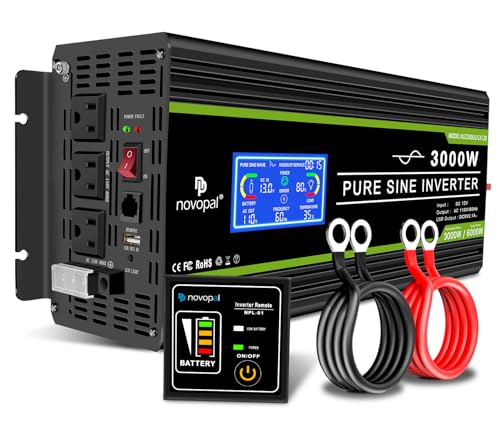
【 Pure Sine Wave Inverter】- 3000 watts continuous power/6000 watts peak power, 12V DC to 120V AC, high output AC terminals, remote switch, 3 output sockets, 1 USB port and LCD display, ideal for most appliances and sensitive equipment.
Maximum Solar Input & Sizing a Powerwall

If you connect a solar array to a Powerwall 3, the system can accept up to 20 kW of DC input, which the six MPPTs handle across a 60‑550 V range, allowing you to size the array for maximum self‑consumption while staying within the inverter’s 5 kW continuous charge limit of 20.8 A AC; this configuration, combined with the 97.5 % solar‑to‑grid efficiency and the 13.5 kWh nominal battery capacity, means that a 15 kW array will typically fill the battery in 2–3 hours of peak sun, whereas a larger 20 kW array may saturate the charge controller after about 1.5 hours, requiring careful load‑shifting or export settings to avoid curtailment.
When planning solar oversizing, I consider that input throttling will engage once the MPPTs reach their 5 kW ceiling, preventing excess DC from overcharging the battery, while the remaining generation can be routed to the grid or curtailed, ensuring the system respects the 20.8 A AC charge limit and maintains peak efficiency.
Recommended Products

【All-in-one solar charge inverter】: SUNGOLDPOWER 10KW DC 48 volt UL1741 Pure Sine Wave Solar Inverter Combined with Max. 200A battery charging, 2 MPPT Solar controller inbuilt, Max.Voltage of Open Circuit : 500VDC, Split phase (120V/240V) or Single phase (120v) output. Wifi module is included, which allows the user to view the operating status and parameters of the inverter via the mobile phone APP. Parallel up to 6 units
【All-in-one solar charge inverter】: SUNGOLDPOWER 10KW DC 48 volt Pure Sine Wave Solar Inverter Combined with Max. 200A battery charging, 2 MPPT Solar controller inbuilt, Max.Voltage of Open Circuit : 500VDC, Split phase (120V/240V) or Single phase (120v) output. Wifi module is included, which allows the user to view the operating status and parameters of the inverter via the mobile phone APP.

【All-in-one solar charge inverter】: SUNGOLDPOWER UL1741 6.5KW DC 48V Pure Sine Wave Solar Inverter Combined with Max 140A battery charging, 2 MPPT Solar controller inbuilt, Max. Voltage of Open Circuit: 550VDC, Split phase (120V/240V) or Single phase (120v) output. Wifi module is included, which allows the user to view the operating status and parameters of the inverter via the mobile phone APP.
Tesla Powerwall Pricing Breakdown: Base Unit, Installation, and Expansion

After examining how solar input limits affect charging dynamics, the next step is to quantify the cost structure of a Tesla Powerwall system, beginning with the base unit price of $7,300 for the Powerwall 3, adding regional installation fees that typically range from $1,200 to $2,500 depending on mounting method, electrical work, and permitting, and then accounting for expansion packs priced at $7,300 each, which increase usable capacity by 13.5 kWh per additional unit, while also considering optional service contracts and potential utility incentives that can offset the total out‑of‑pocket expense. I note that subscription tiers for monitoring and backup support may add $200–$400 annually, and financing options such as zero‑interest loans or lease‑to‑own plans spread payments over 5–10 years, reducing upfront cash outlay. Installation complexity, permitting timelines, and local labor rates further influence total cost, while expansion packs maintain the same unit price, preserving linear scalability of capacity and expense.
What You’ll Actually Pay Over 10 Years (Total Cost of Ownership)

Because the Powerwall 3 costs $7,300 per unit, installation typically ranges from $1,200 to $2,500, and each additional 13.5 kWh expansion pack carries the same $7,300 price, the ten‑year out‑of‑pocket expense can be calculated by summing hardware, labor, and optional service fees, then adjusting for any utility rebates or financing interest. I add estimated maintenance costs of $150‑$250 annually, which cover firmware updates and occasional inverter inspection, and factor in replacement cycles that may require a new inverter after roughly 10‑12 years, adding $1,200‑$1,800. Insurance impacts, reflected in a 0.5 % annual premium increase for stored energy, and financing options such as 5‑year loans at 4‑5 % APR, further modify the total cost, yielding an overall ownership figure near $13,500‑$15,000 after rebates and tax credits.
Common Misconceptions About Tesla Powerwall Performance & Pricing
Although many owners assume the Powerwall 3 can deliver unlimited backup energy, its 13.5 kWh usable capacity, 11.5 kW continuous output, and 185 A motor‑start rating actually limit the duration and type of loads it can sustain, especially when simultaneous high‑power appliances exceed the peak 30 kW option. I often encounter the claim that the system’s lifespan is effectively infinite, yet the warranty specifies ten years and the projected service life of twenty‑one years, meaning the overstated lifespan can mislead budgeting. I also notice hidden fees appearing in installation contracts, where permitting, electrical upgrades, and optional monitoring subscriptions add to the base $7,300 price, thereby increasing total cost. When evaluating performance, I compare the 37.8 MWh aggregate throughput against real‑world cycling, noting that efficiency drops slightly under high‑temperature conditions, which further clarifies realistic expectations.
Frequently Asked Questions
Will the Powerwall Work With a Generator During Outages?
I’ll tell you it works with a generator, but you’ll need a manual transfer switch for proper generator compatibility, ensuring the Powerwall can safely charge or discharge while the backup runs.
Can the Powerwall Be Used for Off‑Grid Living?
I can run off‑grid living if I pair the Powerwall with enough solar sizing; the battery stores excess daylight energy, and with proper inverter setup I’ll have continuous power when the grid’s down.
What Is the Impact of Temperature on Powerwall Performance?
I’m telling you, temperature effects tinker with Powerwall efficiency, and extreme heat or cold can shave usable kilowatt‑hours. Those conditions may also trigger warranty implications, so monitoring and proper ventilation matter.
Does the Powerwall Support Bidirectional Vehicle‑To‑Home (V2H) Charging?
I’ll tell you it doesn’t natively support bidirectional vehicle‑to‑home V2H, but you can still use vehicle‑to‑grid charge scheduling through a compatible inverter or third‑party controller.
How Does the Powerwall Handle Partial‑Load Motor Start‑Ups?
I’ve seen it handle motor starting smoothly; the Powerwall’s surge tolerance lets it supply the brief high‑current burst, then settles into normal output without tripping, keeping your equipment safe.