As an Amazon Associate, we earn from qualifying purchases. Some links on this site are affiliate links at no extra cost to you. Our recommendations are based on thorough research and editorial judgment.

What Are the Pros and Cons of Leasing vs Buying Solar Panels?

I’ll explain that leasing a solar system typically requires $0 down, a monthly fee of $50–$250 that escalates about 2.9 % per year, and leaves title, the 30 % federal tax credit, and maintenance responsibility with the installer, while buying a $25,000 system—often financed with a $5,000–$7,500 down payment and a 4.5 % interest loan—grants the homeowner full ownership, eligibility for the tax credit, net‑metering benefits, and after‑loan electricity effectively free, yet imposes 1–2 % annual maintenance costs and requires a credit score above 720 for zero‑down manufacturer deals; the financial trade‑off shows roughly $15,000–$20,000 greater net savings over 30 years for purchase, though lease agreements simplify cash flow and transfer warranty obligations, and if you continue, you’ll discover deeper details.
Key Takeaways
- Ownership lets you claim the 30% federal tax credit and state rebates, reducing net cost by $7,500‑$9,000 on a $25k system.
- Leasing requires little or no upfront cash, but the landlord captures the tax credit and you miss out on those incentives.
- Purchase loans have fixed payments (e.g., $260/month at 4.5% for 10 years) that end, while lease fees start low but escalate ~2.9% annually.
- Owning panels provides full net‑metering benefits, battery‑integration options, and can increase home resale value by ~5 % ($6.5‑$8k).
- Leasing transfers maintenance, warranty, and liability to the provider, but lease transfers can complicate home sales and deter buyers.
Leasing vs. Buying Solar Panels: Quick Comparison
I’ll start by laying out the core differences, noting that buying a solar system gives you full ownership and control, while leasing transfers ownership to a third‑party company that installs, maintains, and operates the panels on your roof. Purchasing provides roof ownership, enabling energy autonomy, whereas leasing ties the system to a contractual entity, limiting modifications and resale flexibility. A bought system typically costs $25,000 upfront, qualifies for a 30 % federal tax credit, and can be paid off in roughly ten years, after which electricity is effectively free; a lease often requires $0 down, charges $50‑$250 monthly, escalates about 2.9 % annually, and does not allow battery upgrades. Both options affect long‑term savings, but only ownership delivers direct financial return through increased property value and retained incentives.
Who Owns the Roof Panels?
Typically, the roof panels belong to the party that finances their acquisition, meaning that if you purchase the system—for example a home solar power system—with cash or a solar loan, you retain full ownership, while a lease transfers legal title to the third‑party—unlike buying gear such as a home solar generator outright installer, who then holds the panels, assumes responsibility for maintenance, and controls any future modifications, a condition that can complicate resale transactions because prospective buyers must accept the lease transfer and often encounter contractual restrictions that limit upgrades such as battery integration. I explain that roof ownership determines who can authorize structural changes, and that title transfer is recorded in the lease agreement, which also imposes lease restrictions on alterations, so any upgrade limits must be approved by the installer, preventing independent battery addition or panel replacement without consent, thereby affecting long‑term flexibility and property valuation.
Up‑Front Cost vs. Zero‑Down: What Money Do You Need Now?
Ownership of the panels determines whether the homeowner must provide cash upfront or can proceed with a zero‑down lease, because a purchase transfers title to the buyer while a lease retains title with the installer, which in turn dictates the financing structure, the immediate cash outlay, and the subsequent payment schedule. When I buy, I face a down payment ranging from $5,000 to $7,500 for a typical 6 kW system, plus any loan origination fees, which means I must have emergency savings sufficient to cover at least three months of living expenses after allocating the down payment. In contrast, a zero‑down lease requires no initial cash, allowing me to preserve emergency savings, yet I accept a monthly lease fee that escalates roughly 2.9 % per year, affecting long‑term cash flow and total cost of ownership.
Recommended Products

PORTABLE CHARGER: 4 panels fold into case for easy storage. Hang loops to strap the panel anywhere

Innovators in portable solar power | For over a decade, Goal Zero has paved a new way forward in portable energy use at home, while traveling, and off grid. Our products are engineered with precision here in the U.S. Every feature has a purpose, designed with a real-life use case in mind. Portable solar gives you the power to run devices and appliances from the sun wherever you go.
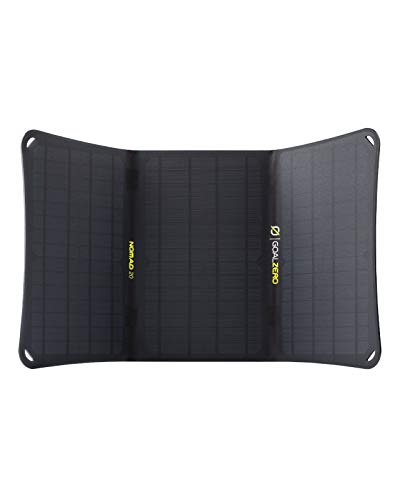
HIGH EFFICIENCY PANEL: The 20W, 18-22V Panel has a built in 8mm charging cable and a USB port
Solar Lease vs Purchase Tax Credits & Who Gets Them?
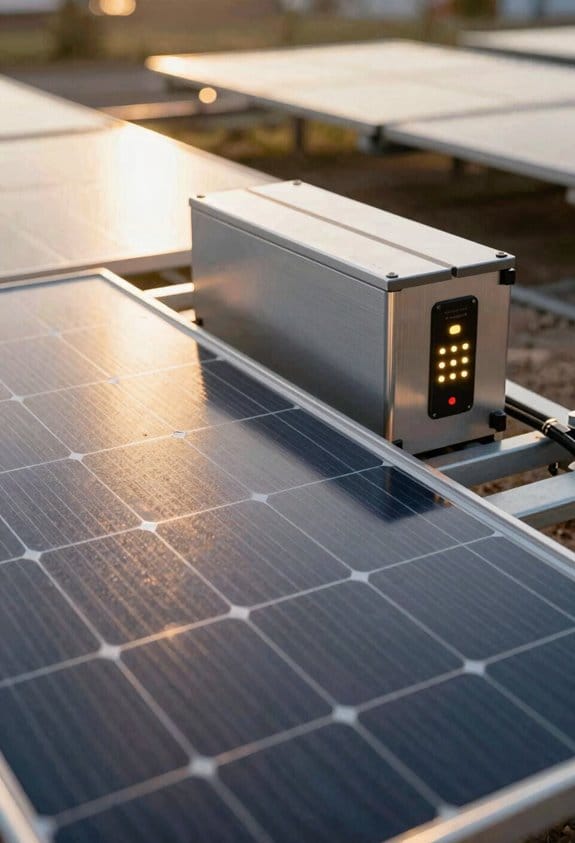
If you lease a solar system, the leasing company—not you—captures the federal clean‑energy tax credit, which equals 30 % of the installed cost, and any state rebates such as NYSERDA’s up to $20,000, whereas a purchaser can claim those incentives directly, reducing the net outlay by roughly $7,500‑$9,000 on a $25,000 installation. This distinction creates a clear line of tax ownership, because the lease holder retains legal title to the equipment and consequently receives all incentive allocation, while the homeowner, despite occupying the roof, forfeits any credit eligibility, resulting in a higher effective cost of energy over the contract term. In contrast, owners who purchase the system can apply the 30 % federal credit and any applicable state rebate to their tax return, effectively lowering the capital expenditure and improving the internal rate of return, especially when combined with depreciation schedules and net‑metering credits that further enhance cash‑flow profiles.
Recommended Products

【Expanded Power System with Two Batteries】This bundle includes the AFERIY P310 Portable Power Station along with two compatible Expansion Battery Packs, configured to significantly increase your total energy storage capacity. The power station and expansion batteries are shipped in three separate packages.

★【Lower Your Electric Bills】 : The SUNGOLDPOWER 590W bifacial solar panel uses advanced N-Type 16BB cells with up to 22.8% high efficiency, generating more power per square foot and helping you take control of rising electricity bills.

Edge-Cutting N-Type Solar Panel: Renogy N-Type solar panel features 18 busbars, reducing hot spot effect in extreme weather. With up to 25% cell efficiency, superior temperature tolerance, it delivers exceptional performance and extended lifespan.
Solar Lease Vs Purchase: Which Saves More Over 30 Years?
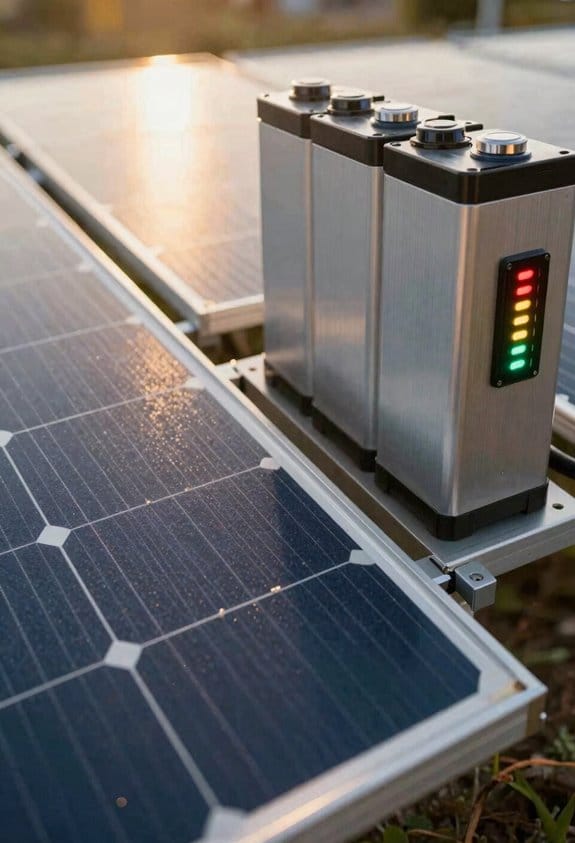
Comparing lease and purchase over a 30‑year horizon reveals that purchasing typically yields greater net savings, because the homeowner captures the 30 % federal tax credit—approximately $7,500 on a $25,000 system—avoids annual lease escalations of about 2.9 %, and eliminates monthly payments after a 10‑year loan payoff. I note that owned panels integrate directly with the grid, allowing full net‑metering benefits, whereas leased units may be limited by contract terms that restrict export capacity, potentially reducing overall financial return. The environmental impact of ownership includes the ability to add battery storage, enhancing load shifting and reducing reliance on fossil‑fuel generation, while leasing constraints prevent such upgrades, limiting long‑term emissions reductions. Consequently, my calculations show a $15,000‑$20,000 advantage for purchase over three decades.
Recommended Products

System Components:Delivers up to 10kW power output with 120V/240V single-phase split-phase support, making it suitable for smoothly running common household appliances. The system includes 18 × 590W solar panels with a total PV capacity of 10620W, capable of generating up to 39.36 kWh per day under optimal conditions, along with two 48V 314Ah portable LiFePO₄ battery offering 32.2 kWh of energy storage. Complete with necessary cables, this all-in-one solar solution is designed for convenient setup and reliable home power support.
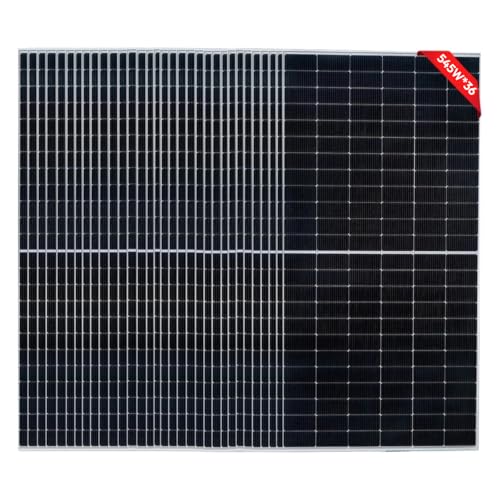
[Bifacial Technology] Designed to capture sunlight from both sides, this panel increases energy yield by up to 30%, making it ideal for various installations, including rooftops and ground mounts.

Limited-Time Perks: E10 Metal Pad, Up to 12-Month 0% APR
Solar Lease vs Purchase Monthly Payments: Fixed vs Escalating
The previous analysis showed that purchasing solar panels typically yields $15,000‑$20,000 more net savings over thirty years, largely because owners capture the 30 % federal tax credit and avoid lease escalations. I compare fixed loan payments, which remain constant for the duration of a 10‑year loan, to lease structures that employ tiered escalation, increasing roughly 2.9 % per year, causing a $200 monthly lease to exceed $350 after twenty years, while a financed purchase can achieve early payoff, eliminating payments after the loan term and delivering two decades of zero‑cost electricity. Fixed payments simplify budgeting, whereas escalating lease fees compound, reducing net benefit; the distinction hinges on whether payment growth is linear and predictable or subject to annual percentage increments.
Recommended Products

【Ultra-High Efficiency】Equipped with A+ grade N-Type cells and 16BB technology, the panel achieves up to 25% higher conversion efficiency, reduces hot spots, and ensures a longer lifespan.
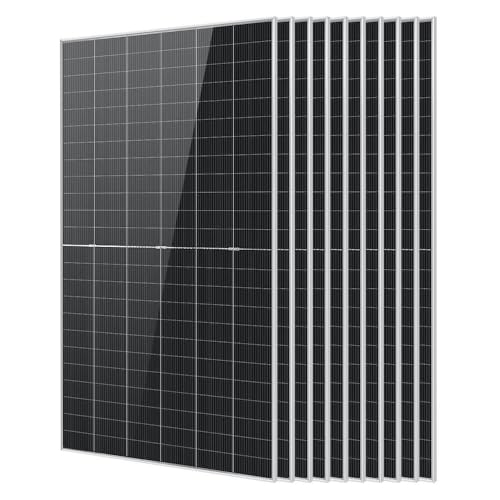
★【High Efficiency】 : SUNGOLDPOWER UL61730 CEC Listed N-Type 16BB 590W Bifacial monocrystalline solar panel can generate more energy up to 22.8%. Bifacial technology allows for the harvesting of up to an additional 30% energy from the rear side of the module.

Premium Efficiency Performance: Featuring A+ grade N-Type cells and 16BB technology, Renogy Solar Panels deliver up to 25% greater conversion efficiency while minimizing hot spots and extending operational lifespan.
Solar Lease vs Purchase Maintenance: Who Pays Repairs?
Evaluating who bears repair and maintenance costs reveals a clear split: leasing companies assume all responsibilities for equipment upkeep, including routine inspections, inverter replacements, and panel cleaning, while purchasers must fund these activities themselves, often allocating 1–2 % of the system’s initial $25,000 installation cost annually for unexpected repairs, even though manufacturer warranties typically cover defects for twenty‑five years. I note that warranty transfers occur automatically when a lease ends, allowing the leasing firm to retain liability for any outage liability that might arise during the contract, whereas owners retain the warranty but must manage outage liability themselves, requiring them to schedule service calls, verify component integrity, and absorb costs for non‑warranty failures, which can average $500–$1,200 per incident, depending on panel type and inverter age. This distinction clarifies financial exposure for both parties.
Solar Lease vs Purchase Resale Impact: What Buyers Think?
When homeowners consider selling a property that includes a solar system, the ownership structure—lease or purchase—directly influences buyer perception, financing eligibility, and transaction timelines, because leased panels require lease transfer agreements, often trigger additional due‑diligence steps, and may deter buyers unwilling to assume long‑term contractual obligations, whereas owned panels, which typically increase resale value by about 5.4 % and allow the seller to transfer the federal 30 % tax credit benefit, present a clearer financial advantage, simplify appraisal processes, and reduce negotiation friction, ultimately affecting the probability of closing within standard market windows. I observe that buyer perceptions now lean toward owned systems, as market trends show a 12 % rise in listings highlighting “owned solar,” while lease‑transfer failures remain at roughly 18 % of negotiations, indicating higher risk for sellers. Consequently, appraisal reports assign a premium of $6,500‑$8,200 to owned installations, whereas leased units often receive a discount of $2,300‑$3,100, reflecting the combined impact of contractual complexity and perceived long‑term cost uncertainty.
Solar Lease vs Purchase Financing: Loans, Manufacturer Deals, Credit Scores
Buyers who’ve seen owned panels boost resale value now face the financing side of solar, where loan terms, manufacturer incentives, and credit scores create distinct cost structures; a 30 % federal tax credit, applied to a $25,000 installation, reduces upfront outlay to $17,500, while a typical 10‑year solar loan at 4.5 % interest spreads payments to roughly $260 monthly, fixed for the loan’s duration, and a manufacturer’s “zero‑down” deal, which often bundles rebates and low‑interest financing, can lower monthly obligations to $180 but usually requires a credit score above 720, whereas lease agreements, despite $0 upfront, impose escalating payments starting at $150 and increasing 2.9 % annually, with no tax credit benefit to the homeowner. I compare credit score implications, noting that scores below 680 often trigger higher loan rates or disqualify zero‑down offers, while scores above 750 release manufacturer terms flexibility, allowing borrowers to select shorter loan periods, lower interest, or bundled warranty extensions, and I examine how manufacturer terms flexibility can reduce monthly outlays but may impose stricter credit thresholds, resulting in a trade‑off between immediate cash flow and long‑term equity accumulation.
Recommended Products

30% Higher Energy Yield with Bifacial Design: Comparing to the traditional solar panels, Renogy's innovative 320W solar panels capture sunlight on both sides, delivering up to 30% more power output than conventional solar panels.

[OUTDOOR-READY] Tempered glass and aluminum frame with sealed junction boxes for backyard year-round use.

Safe & Powerful: Renogy 320 watt Solar Panels performs 20 watts higher than regular 300 watt solar panels, total power adds up over 600 watts, daily 3200Wh of electricity and generates electricity with no microcracks to pretect your battery, EL certified.
Final Checklist: 10 Must‑Ask Questions?
If you’re preparing to decide between leasing and buying solar panels, you’ll need a systematic set of questions that address ownership, financial impact, and contractual terms, because each factor directly influences long‑term ROI, maintenance responsibility, and resale implications. I ask whether the contract allows warranty transfers, because a transferable warranty can preserve value after a home sale, and I verify that installation permits are secured, ensuring compliance with local codes and avoiding future fines. I query the total upfront cost versus monthly payments, the escalation rate for lease fees, the length of the loan term, the expected pay‑back period, the availability of federal tax credits, the responsibility for repairs after warranty expiry, the process for system upgrades, the impact on property appraisal, and the termination penalties if I sell the house before the agreement ends.
Frequently Asked Questions
Will I Need a New Roof Before Installing Solar?
I’ll check the roof inspection first; if it’s sound, you can proceed without a new roof, and make sure the warranty transfer is documented so the solar system stays covered.
Can I Transfer a Solar Lease to a New Homeowner?
I can tell you that transferability options are limited; you’ll need to negotiate a lease assignment with the provider, and the contract often includes strict lease assignment prerequisites that can complicate the process.
How Does Solar Affect My Homeowner’s Insurance Premiums?
I’ll tell you: adding solar usually nudges insurance premiums up a bit, but adding a policy riders can offset the risk, keeping costs manageable while your roof shines like a sun‑lit beacon.
What Happens to the System if My Roof Is Damaged?
If your roof gets damaged, I’ll file roof repairs through the installer’s warranty claims, ensuring the panels are safely removed, repaired, and re‑installed without extra cost to you.
Are There Any Hidden Fees in Solar Lease Contracts?
Ever wonder if hidden fees lurk in solar lease contracts? I’ve seen equipment warranties bundled in, but annual escalators often creep up, adding unexpected costs beyond the advertised monthly rate.