As an Amazon Associate, we earn from qualifying purchases. Some links on this site are affiliate links at no extra cost to you. Our recommendations are based on thorough research and editorial judgment.


Can Solar Panels Work in Cold Climates Like Alaska or Canada?

I’m explaining that solar panels do work in sub‑zero climates because crystalline‑silicon cells increase voltage as temperature drops, giving roughly 0.25–0.5 % more power per °C below 25 °C, which translates to a 3–5 % boost at –10 °C when irradiance stays constant, while low‑light conditions limit current and consequently net gain; bifacial modules can capture up to 0.8 % extra energy from snow albedo, and mounting at 30°–45° reduces snow accumulation, maintains structural loads, and supports self‑cleaning, so if you keep reading you’ll discover detailed design and performance data.
Key Takeaways
- Cold temperatures increase PV voltage, so panels can produce 3‑5 % more power at –10 °C than at 25 °C, assuming constant irradiance.
- Real‑world data from Alaska and Canada show 2‑4 % higher winter energy yields for crystalline‑silicon modules, especially with clear skies and low snow cover.
- Proper tilt (30°‑45°) and snow‑shedding designs prevent accumulation, preserving irradiance and maintaining the temperature benefit.
- Anti‑icing heating (≈150 W m⁻²) or coatings keep surfaces above 0 °C, avoiding ice adhesion while retaining the cold‑temperature voltage gain.
- System design must account for structural loads, low‑temperature rated components, and adequate battery thermal management for reliable operation.
Cold‑Weather Solar Efficiency Explained
When temperatures fall below the 25 °C standard test condition, the voltage of crystalline‑silicon cells rises, which increases overall module efficiency, yet the current drops slightly, resulting in a net power gain of approximately 0.25 %–0.5 % per degree Celsius of cooling; consequently, a panel operating at ‑10 °C can produce roughly 3 %–5 % more power than the same panel at 25 °C, provided that irradiance remains constant and snow does not obscure the surface. I note that thermal coefficients, typically –0.4 %/°C for voltage, dominate performance shifts, while low‑light conditions reduce current more than voltage, limiting the net gain. Hence, under clear, cold, low‑irradiance scenarios, the module’s efficiency may still exceed its 25 °C rating by up to 0.5 % per degree, though absolute output remains modest.
Real‑World Cold‑Climate Solar Performance in Alaska & Canada
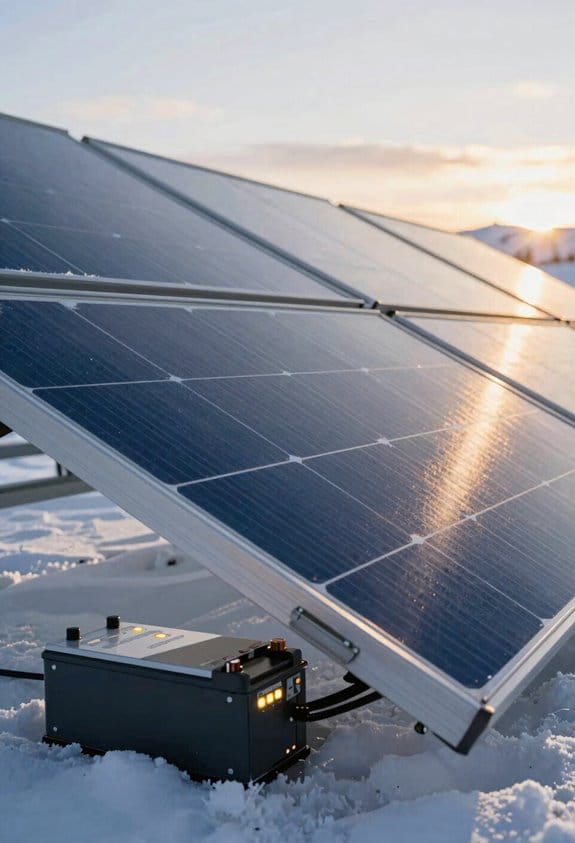
Cold‑weather solar efficiency gains, explained in the previous section, become evident in real‑world deployments across Alaska and Canada, where measured outputs show that crystalline‑silicon modules rated at 20 % efficiency under standard test conditions produce 3 %–5 % more power at –10 °C, while maintaining an average temperature coefficient of –0.4 %/°C, and field data from Fairbanks, Alaska, indicate a 4 % increase in daily energy yield during clear, sub‑zero days compared with 25 °C baselines, despite irradiance levels of 300–500 W/m². I observe that community microgrids in rural Yukon, supplied by 250 W panels, record a 2.8 % rise in winter capacity factor, and indigenous partnerships in northern Manitoba report similar gains, with bifacial modules leveraging snow albedo to add 0.6 % output, while system monitoring confirms temperature‑related voltage improvements, and maintenance logs show snow‑slide angles of 30° effectively prevent accumulation, thereby sustaining performance across seasonal cycles.
Best Panel Technologies for Sub‑Zero Conditions
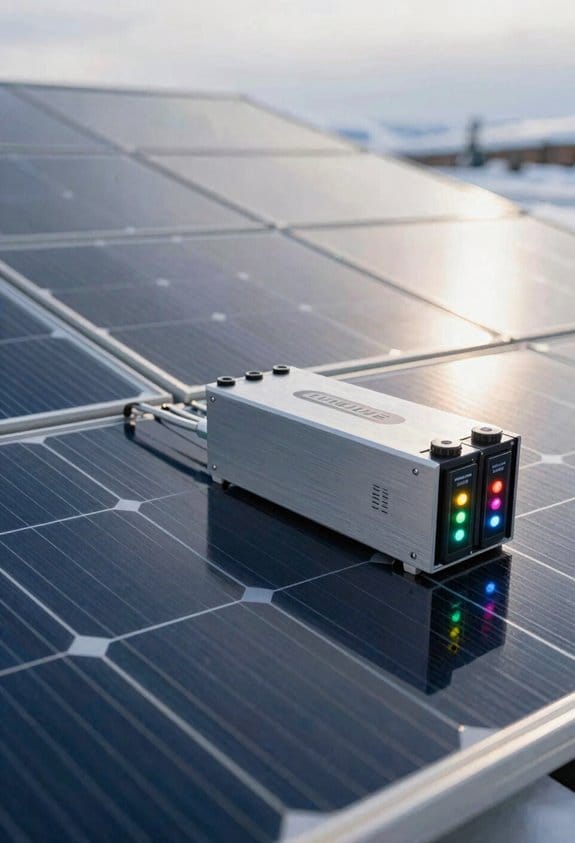
Optimizing solar installations for sub‑zero environments requires evaluating temperature coefficients, spectral response, and mechanical robustness, so I compare crystalline‑silicon modules, which retain a –0.35 %/°C coefficient and deliver 3‑5 % higher power at –10 °C, with cadmium‑telluride panels that exhibit a –0.45 %/°C coefficient yet maintain stable output under low‑irradiance conditions, while bifacial designs exploit snow albedo to increase rear‑side generation by up to 0.8 % on clear days, and thin‑film amorphous silicon units, despite a higher –0.6 %/°C coefficient, offer superior low‑light performance but suffer modest efficiency loss when temperatures drop below –20 °C, consequently the selection hinges on balancing voltage gain from colder cells, durability of frame and glass against ice loading, and the ability to integrate with single‑axis trackers that automatically adjust tilt to mitigate snow accumulation. I note that bifacial advantages stem from reflected irradiance, while temperature coefficients dictate the voltage boost, and I evaluate each technology’s glass‑laminate strength, encapsulant flexibility, and mounting hardware compatibility, ensuring that the chosen panels sustain performance despite thermal contraction and wind‑induced vibration, thereby delivering reliable output throughout harsh winter cycles.
Recommended Products
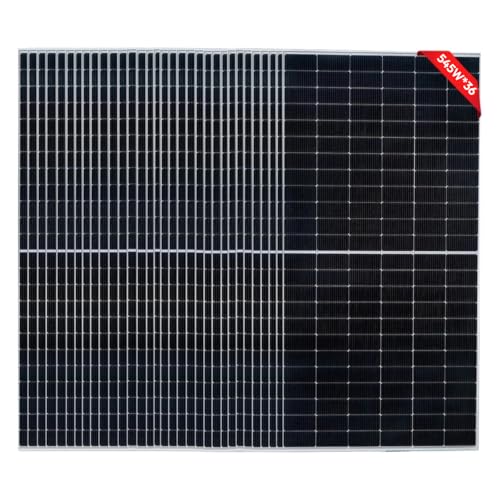
[Bifacial Technology] Designed to capture sunlight from both sides, this panel increases energy yield by up to 30%, making it ideal for various installations, including rooftops and ground mounts.
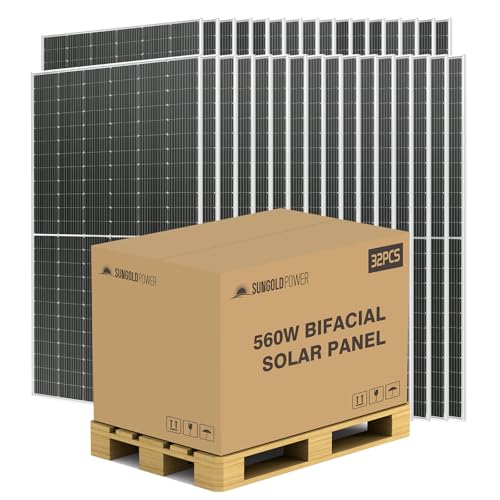
【High Efficiency】 : SUNGOLDPOWER 560W Bifacial monocrystalline PERC solar panel can generate more energy up to 30%
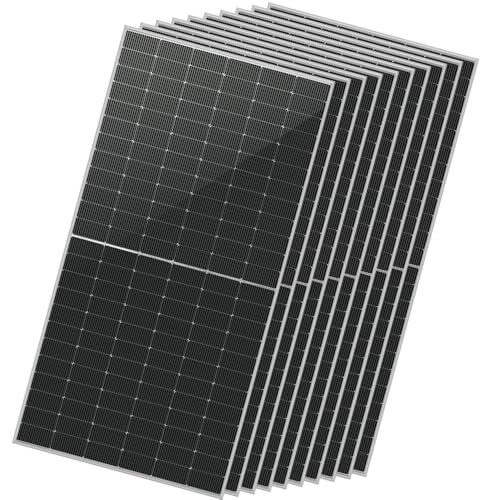
【High Efficiency】 : SUNGOLDPOWER 16BB N-Type 560W Bifacial monocrystalline PERC solar panel can generate more energy up to 30%
Cold‑Climate Solar Mounting Angles & Tracking Systems
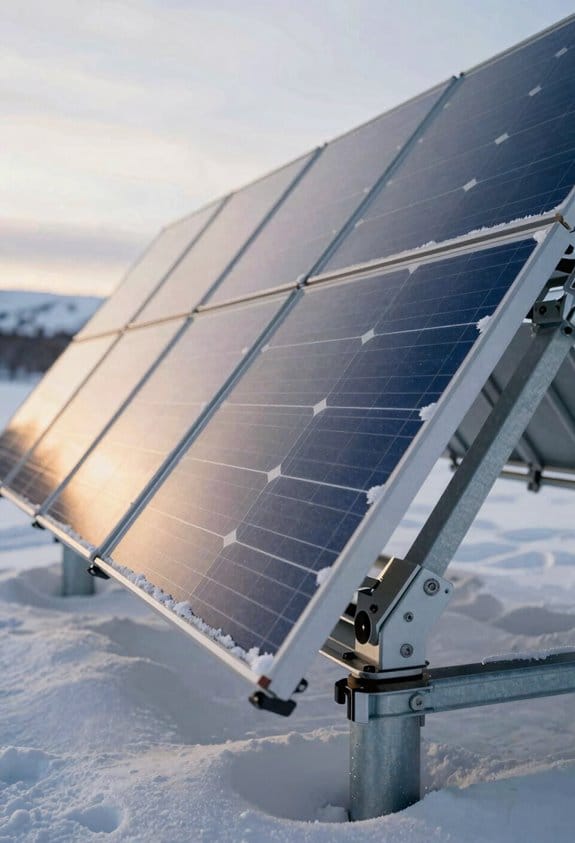
I’ve just compared temperature coefficients and material resilience for sub‑zero panels, so the next factor to contemplate is how mounting angles and tracking systems affect performance in cold climates. Tilt optimization, typically 30°–45° in northern latitudes, reduces snow accumulation, enhances self‑cleaning, and improves incident irradiance by up to 12 % compared with flat roofs, while also increasing the cosine‑weighted solar flux during low‑sun‑angle periods. Single‑axis trackers, calibrated for winter solstice azimuth, can raise annual yield by 5 %–15 % relative to fixed arrays, yet they demand rigorous tracker maintenance, including de‑icing motors, lubricated bearings, and sensor recalibration after frost events, because mechanical friction rises with sub‑zero temperatures and ice buildup can skew positional accuracy, thereby compromising output stability.
Recommended Products

Energy-Efficient Low Amp Draw – Our RecPro RV air conditioner is engineered with a low amp draw, allowing you to power multiple RV appliances at once without overloading your system. Ideal for off-grid, solar, or generator setups—maximize comfort while minimizing energy usage.

TECHNOLOGICALLY ADVANCED DESIGN - SwimJoy's technologically advanced design makes it one of the most durable, efficient, & longest-lasting solar pool heating systems available.

Dual-Peak 60A MPPT Solar Charge Control: Renogy Rover Charge Controller Master partial shading and cloudy conditions with 99.9% multi-peak tracking efficiency. Our advanced algorithms deliver 98% conversion efficiency maximizing harvest even with damaged panels. 12v/24v/36v/48v solar charge controller engineered for demanding RV solar systems, off-grid cabins, and marine setups. Maintains full compatibility with gel, sealed, flooded, and lithium batteries, establishing this Renogy charge controller as your ultimate energy storage solution.
Cold‑Climate Solar Strategies for Short Winter Days
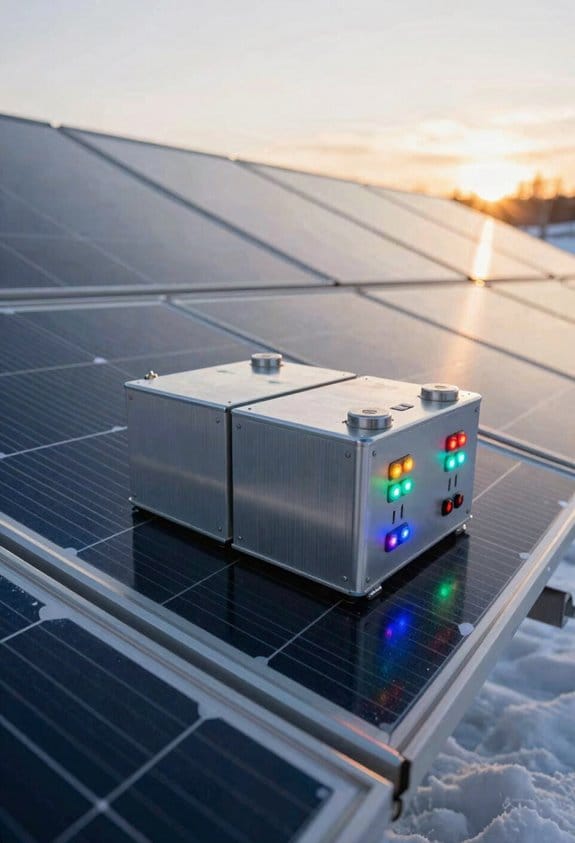
When the sun remains low for most of the day, I focus on maximizing irradiance capture by combining high‑tilt mounting, typically 45°–60°, with low‑loss anti‑reflective coatings that raise effective albedo by up to 8% and reduce spectral losses, while also integrating bifacial modules whose rear‑side gain can add 5%–12% extra energy during brief clear‑sky intervals; this approach, coupled with a battery‑sized to handle 1.5 kW‑hour per kW of installed capacity, guarantees that the reduced daylight hours, which in northern latitudes can drop from 10 h in summer to 4 h in December, do not compromise overall system yield, because the increased cosine‑weighted flux and temperature‑induced voltage boost offset the shorter exposure, and the storage buffer smooths output fluctuations caused by intermittent cloud cover. I also track polar daybreak timing to align peak output with sunrise, use snow albedo‑enhancing surface treatments that reflect up to 90% of incident light, and schedule regular panel cleaning cycles to prevent snow accumulation from reducing effective irradiance, thereby preserving energy capture during the brief, low‑sun winter windows.
Winter Battery Strategies for Seasonal Power Gaps
If the temperature drops below ‑20 °C and daylight shrinks to four hours, the battery system must combine high‑energy‑density chemistry, such as lithium‑ion cells rated at 250 Wh kg⁻¹, with a thermal management module that maintains operating temperature between 0 °C and 25 °C. I design the pack to include phase‑change material insulation, which limits temperature swing to ±3 °C, thereby preserving capacity during seasonal storage, while the battery management system monitors charge‑discharge curves, adjusting current limits to avoid excessive battery cycling stress. I also integrate a low‑temperature pre‑heat resistor, consuming 0.5 W kg⁻¹, to raise cell temperature to prime range before high‑power discharge, and I configure the inverter to prioritize depth‑of‑discharge below 80 % to extend cycle life, ensuring reliable power delivery throughout the winter months.
Cold‑Climate Solar Incentives & Financing Options
Why do many jurisdictions offer higher rebates for solar installations in cold climates, given that photovoltaic efficiency rises as temperature drops, panels typically lose 0.25‑0.5 % power per °C above 25 °C, and bifacial modules can capture up to 15 % additional reflected sunlight from snow‑covered ground? I explain that federal tax credits, currently 30 % of system cost, combine with state‑level incentives that often double the rebate value for northern projects, reflecting the higher performance potential and lower grid strain. Low‑interest loans, frequently capped at 3 % APR and amortized over 20 years, further reduce upfront capital, while utility‑scale programs may add performance‑based incentives tied to winter output metrics, thereby aligning financing structures with seasonal efficiency gains and encouraging adoption despite short daylight hours.
Maintenance Tips for Cold‑Weather Solar Systems
The higher rebates that many northern jurisdictions provide, which were outlined in the previous discussion on incentives, lead directly to a need for rigorous upkeep because cold‑weather conditions expose panels to snow loading, ice accretion, and thermal cycling; I consequently focus on maintenance protocols that mitigate these risks. I recommend installing a panel heating system rated at 150 W per square meter, which maintains surface temperatures above 0 °C, thereby preventing ice adhesion while preserving the 0.25 % per °C voltage gain typical of crystalline silicon cells. Snow removal should be performed after each snowfall exceeding 2 cm, using a soft‑bristle brush to avoid micro‑cracks, and the inclination angle adjusted to 30° to facilitate natural slide‑off. Regular inspection of junction boxes for moisture ingress, coupled with thermal imaging to verify uniform heating, assures long‑term reliability and minimizes performance loss during thermal cycling events.
Recommended Products

System Components:Delivers up to 10kW power output with 120V/240V single-phase split-phase support, making it suitable for smoothly running common household appliances. The system includes 5 × 590W solar panels with a total PV capacity of 2950W, capable of generating up to 11.8 kWh per day under optimal conditions, along with one 48V 314Ah portable LiFePO₄ battery offering 16.1 kWh of energy storage. Complete with necessary cables, this all-in-one solar solution is designed for convenient setup and reliable home power support.(May 19, 2026: Upgraded from a 6 × 410W panel configuration to 5 × 590W)

[800W Solar Panel Kit]The 800W off grid solar system complete kit is equipped with 25.2% High-Efficiency Solar Cell 195W bifacial solar panels and 12V 3000W inverter charger for the first time. It not only has higher power generation efficiency, more beautiful all-black appearance, and easier installation, but also uses the UPS power function to provide you with extremely fast conversion power supply of two energy sources. It can not only generate electricity with solar energy, but also charge with mains electricity, allowing you to enjoy your RV trip without worries
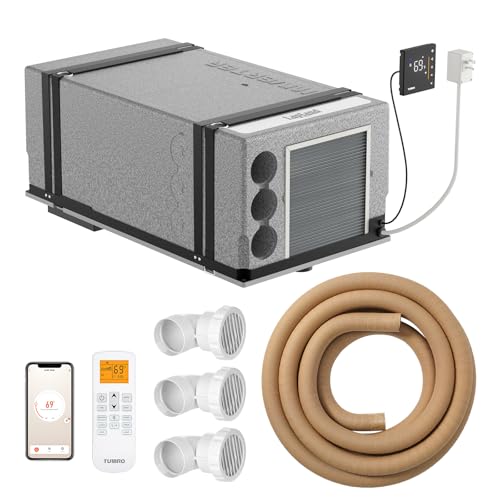
High Efficiency Inverter Technology: Features an advanced inverter compressor that reduces energy consumption by up to 30% compared to standard RV AC units. By intelligently adjusting speed, it avoids high-power startup surges and maintains your desired temperature with minimal electricity use, significantly cutting down on power costs.
Cold‑Climate Solar Myths Debunked
Does cold weather truly cripple solar output, or do the physics of photovoltaic cells actually favor lower temperatures, because crystalline silicon modules typically gain 0.25–0.5 % power per degree Celsius below 25 °C, while excess heat reduces efficiency by 10–25 % above that threshold, meaning that, when clear skies and adequate snow‑shedding angles are present, performance can exceed summer levels despite shorter daylight hours; nevertheless, snow cover blocks incident irradiance until cleared, and ice accumulation adds structural load, so system design must incorporate tilt, anti‑snow coatings, and, when necessary, low‑power heating (≈150 W m⁻²) to maintain surface temperatures above 0 °C, thereby preventing ice adhesion without negating the voltage gain associated with cooler operating conditions. I explain that common myths—such as “cold destroys panels” or “energy storage is impossible in frost”—ignore empirical data showing panel degradation rates remain low when thermal cycling is moderated, and that batteries, particularly lithium‑ion, retain >80 % capacity at –10 °C when insulated, allowing reliable energy storage despite reduced daylight.
Quick‑Start Checklist for Cold‑Climate Solar Installations
Cold climates actually improve photovoltaic voltage, which means that when I move from debunking myths to planning installations, I must focus on concrete design steps. I begin by selecting modules rated for –40 °C minimum operating temperature, ensuring that their temperature coefficient of –0.30 %/°C will boost output when ambient temperature falls below 25 °C, and I verify that the mounting racking allows a 30° tilt to facilitate snow removal and reduce icing risk. Next, I specify anti‑icing coatings, integrate heated back‑sheet elements, and choose micro‑inverters with built‑in MPPT to maintain efficiency despite partial shading from thin snow layers. I also configure a monitoring system that records voltage spikes, logs temperature differentials, and triggers automatic panel cleaning cycles when snow accumulation exceeds 2 cm. Finally, I confirm compliance with local building codes, verify that structural loads accommodate 1.5 kPa snow pressure, and document the warranty terms covering cold‑weather degradation.
Recommended Products

【High Efficiency Module】 : Sungoldpower UL61730 500W Solar panel comes with Mono PERC Half-Cut Technology and has a module efficiency up to 21.05%. Sungoldpower 500 watt solar panels provide more output per surface area than most traditional panels.
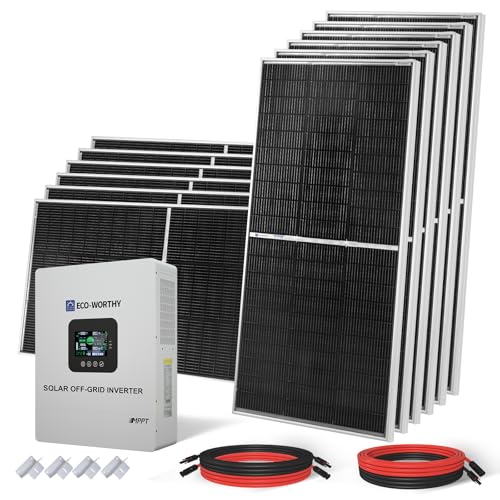
[Ideally Output of 9.36KWH] The power of 9.36KWh per day under 4 hours full sunshine by the 2340W solar panel system, very suitable for home, shed, cabin, farm or other energy backup, and it will provide enough power for portable ac, air condition, TV, refrigerator, coffee maker, microwave and other AC 110V devices.

【High Efficiency】 : SUNGOLDPOWER 16BB N-Type 560W Bifacial monocrystalline PERC solar panel can generate more energy up to 30%
Frequently Asked Questions
Will Solar Panels Work on a Roof With a Metal Roof in Extreme Cold?
I’d say solar panels work fine on a metal roof in extreme cold—think of them as a sturdy ship weathering a storm. Proper metal mounting handles thermal expansion, and cold actually boosts voltage, keeping efficiency high.
Do Snow‑Covered Panels Still Produce Any Electricity?
I’ll tell you—snow‑covered panels still make power because the snow’s albedo reflects extra light, and panel heating from absorbed sun and dark cells melts enough to keep a thin conductive layer generating electricity.
How Does High Altitude Affect Solar Output in Northern Regions?
I’ll tell you: high altitude boosts altitude irradiance, yet the temperature coefficient means cooler air actually lifts efficiency, so northern mountain roofs harvest more sun despite the thin, crisp atmosphere.
Can I Install Solar Panels on a Wooden Shed in Winter?
I’d say yes, you can do a winter installation on a wooden shed, just make sure the shed mounting is securely anchored, use tilted panels to shed snow, and select cold‑tolerant modules for reliable performance.
What Is the Expected Lifespan of Panels Exposed to Freeze‑Thaw Cycles?
They say “a stitch in time saves nine,” so I tell you panels typically last 25‑30 years despite freeze‑thaw cycles; material fatigue and seal degradation progress slowly, usually not affecting performance noticeably.