As an Amazon Associate, we earn from qualifying purchases. Some links on this site are affiliate links at no extra cost to you. Our recommendations are based on thorough research and editorial judgment.


What’s the Difference Between Monocrystalline and Polycrystalline Solar Panels?

I’m explaining that monocrystalline panels consist of a single pure silicon crystal, giving a uniform black hue, rounded cell edges, and a temperature coefficient of –0.3 % to –0.5 %/°C, while delivering 18–20 W/ft² with annual degradation of 0.3 %–0.5 %; polycrystalline panels are made from multiple silicon fragments, showing a blue‑tinted surface, angular cells, a higher temperature coefficient up to –1 %/°C, lower power density of 14–16 W/ft², and faster degradation of 0.5 %–0.8 % per year, resulting in distinct trade‑offs in efficiency, cost, and durability, and if you continue you’ll discover further details.
Key Takeaways
- Monocrystalline panels use a single silicon crystal, giving a uniform black look and rounded cells; polycrystalline panels combine multiple crystals, appearing blue‑tinted with angular cells.
- Monocrystalline delivers 18‑20 W/ft² versus 14‑16 W/ft² for polycrystalline, needing less roof space for the same power output.
- Up‑front cost is higher for monocrystalline ($0.60‑$0.80/W) than polycrystalline ($0.45‑$0.65/W), but higher efficiency yields lower lifetime per‑kWh cost.
- Monocrystalline has a lower temperature coefficient (‑0.3% to ‑0.5%/°C) and retains more power in heat, shade, and low‑light conditions than polycrystalline.
- Expected lifespan is longer for monocrystalline (25‑40 years, 0.3‑0.5%/yr degradation) versus polycrystalline (20‑35 years, 0.5‑0.8%/yr degradation).
Design & Appearance of Monocrystalline vs Polycrystalline Panels
When evaluating design and appearance, monocrystalline panels, which consist of a single pure silicon crystal, display a uniform black hue and rounded cell edges, whereas polycrystalline panels, formed by melting multiple silicon fragments, present a blue‑tinted surface with straight, fragmented cell boundaries, a distinction that influences both visual uniformity and perceived aesthetic integration within architectural settings. I notice the visual texture of monocrystalline modules is smooth, reflecting light evenly, while polycrystalline panels exhibit a subtle grainy pattern caused by crystal boundaries, affecting how sunlight diffuses across the surface. Mounting profiles for both types follow standard racking dimensions, yet the slight variance in cell edge curvature can alter clearance requirements, meaning installers must account for the rounded monocrystalline edges versus the angular polycrystalline outlines to guarantee proper alignment and structural integrity.
Recommended Products

【32153Wh LiFePO4 Battery】 Dawnice’s newest line of batteries –2 sets 51.2V 314Ah LiFePO4 battery provides 6000+ cycles & a 10 years lifetime with built-in 100A Battery Management System (BMS) protects it from overcharge, deep discharge, overloading, overheating and short circuit, and excessive low self-discharge rate. Support in parallel up to 16 sets, can be expanded in the future.

【Grade A solar cells】 : The long-lasting UL61730 550W monocrystalline grade A solar cells, the waterproof design ensures that the panel can be used in all weather conditions.
【Grade A solar cells】 : The long-lasting 550W monocrystalline grade A solar cells, the waterproof design ensures that the panel can be used in all weather conditions.
Efficiency Impact: Power Output per Square Foot
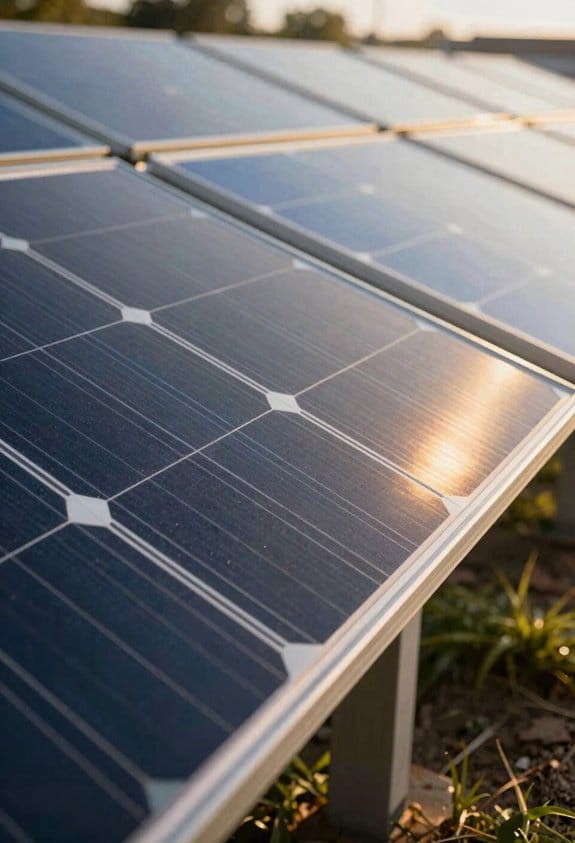
The visual uniformity of monocrystalline modules, which I noted in the previous design discussion, directly influences their power density, because a single‑crystal structure allows cell spacing to be minimized, reducing inactive area. I calculate watt density by dividing rated power by panel footprint; monocrystalline typically delivers 18–20 W/ft² versus 14–16 W/ft² for polycrystalline, reflecting higher space efficiency. This difference arises from larger grain size, fewer crystal boundaries, and tighter interconnect routing, which together lower resistive losses and increase current flow. Consequently, a roof with the same square footage can host fewer monocrystalline panels to achieve a given kilowatt target, reducing mounting hardware and wiring complexity. Polycrystalline panels, while comparable in voltage, require more surface area to match the same output, affecting overall system layout and balance‑of‑system design.
Recommended Products

【52.7KWh LiFePO4 Battery】5 sets Dawnice’s newest line of batteries – 51.2V 206Ah LiFePO4 battery provides 6000+ cycles & a 10 years lifetime with built-in 100A Battery Management System (BMS) protects it from overcharge, deep discharge, overloading, overheating and short circuit, and excessive low self-discharge rate.
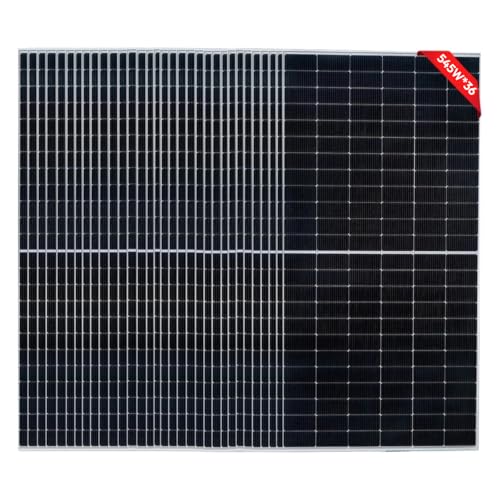
[Bifacial Technology] Designed to capture sunlight from both sides, this panel increases energy yield by up to 30%, making it ideal for various installations, including rooftops and ground mounts.
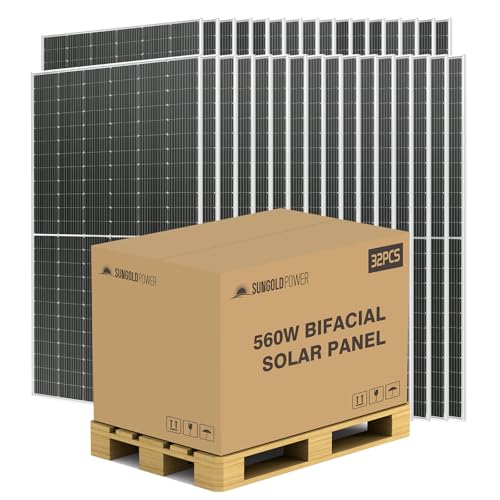
【High Efficiency】 : SUNGOLDPOWER 560W Bifacial monocrystalline PERC solar panel can generate more energy up to 30%
Cost Comparison: Upfront Price vs. Lifetime Savings
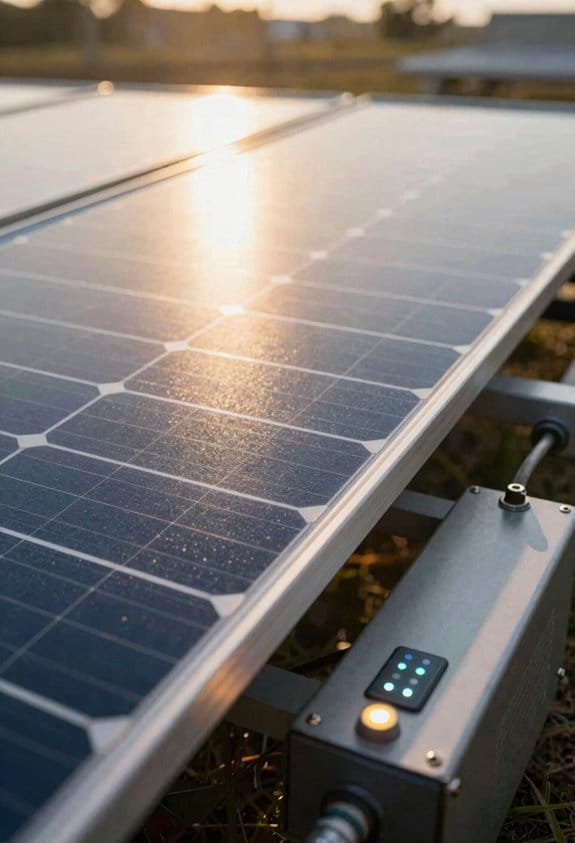
Evaluating upfront cost versus lifetime savings requires comparing monocrystalline panels, which typically cost $0.60–$0.80 per watt, with polycrystalline panels, priced around $0.45–$0.65 per watt, while accounting for their differing efficiencies, degradation rates, and warranty terms. I calculate the initial investment by multiplying wattage by price per watt, then adjust for efficiency, noting monocrystalline yields roughly 20 % more power per square foot, which reduces the number of panels needed and offsets higher upfront expense. Maintenance costs remain similar for both technologies, yet polycrystalline’s slightly faster degradation may increase long‑term service frequency. Over a 25‑year warranty period, the higher output of monocrystalline typically yields greater cumulative energy production, translating into lower per‑kilowatt‑hour costs despite its higher initial price.
Recommended Products

Reliable LiFePO4 Technology: Our 16-cell LiFePO4 battery boasts an impressive lifespan of 2500 to 7000 cycles over 10 years. Equipped with an advanced Battery Management System (BMS), it's safeguarded against overcharging, deep discharges, overloads, overheating, short circuits, low temperature cut-off, and boasts an exceptionally low self-discharge rate.

System Components:Delivers up to 10kW power output with 120V/240V single-phase split-phase support, making it suitable for smoothly running common household appliances. The system includes 18 × 590W solar panels with a total PV capacity of 10620W, capable of generating up to 39.36 kWh per day under optimal conditions, along with two 48V 314Ah portable LiFePO₄ battery offering 32.2 kWh of energy storage. Complete with necessary cables, this all-in-one solar solution is designed for convenient setup and reliable home power support.

【High - Power Generation Capacity】This 5500W system can generate 22Kwh power per day under 4 hours' full sunshine, perfect for home, shed, cabin, farm or as other energy backup. They can also provide enough power for portable AC, air condition, TV, refrigerator, coffee maker, microwave and other devices
Performance in Heat, Shade, and Low Light Conditions
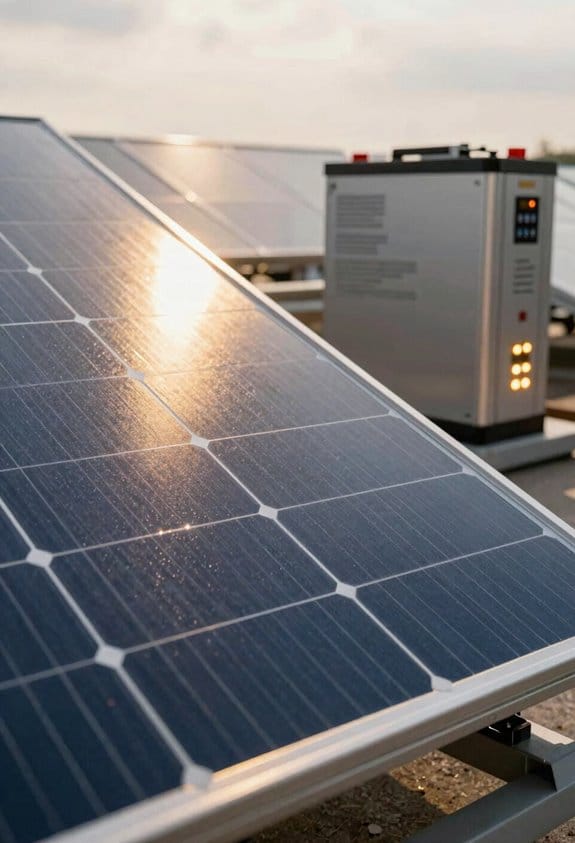
Monocrystalline panels generally maintain higher output under elevated temperatures, shaded sections, and low‑light irradiance, because their single‑crystal silicon cells exhibit lower temperature coefficients (‑0.3 % to ‑0.5 %/°C) compared with polycrystalline cells (‑0.3 % to ‑1 %/°C), which means that for each degree Celsius increase above 25 °C the power loss is reduced by up to 0.2 % in monocrystalline modules, while polycrystalline modules can lose nearly double that amount; consequently, in a 35 °C environment a monocrystalline array may retain roughly 92 % of its rated power versus 86 % for a comparable polycrystalline array, and when partial shading covers 20 % of the surface, the series‑connected monocrystalline cells, thanks to higher open‑circuit voltage and lower leakage currents, typically deliver about 78 % of their full‑sun rating, whereas polycrystalline cells drop to approximately 70 % under the same conditions, a difference that becomes more pronounced as the diffuse light fraction rises to 40 % of total irradiance, at which point monocrystalline modules can still generate near 85 % of their rated output, while polycrystalline modules fall below 75 %. Thermal degradation accelerates in polycrystalline units under sustained heat, further widening the performance gap during extended low‑light periods, whereas monocrystalline structures preserve efficiency longer despite partial shading and elevated ambient temperatures.
Lifespan & Durability of Monocrystalline vs Polycrystalline Panels
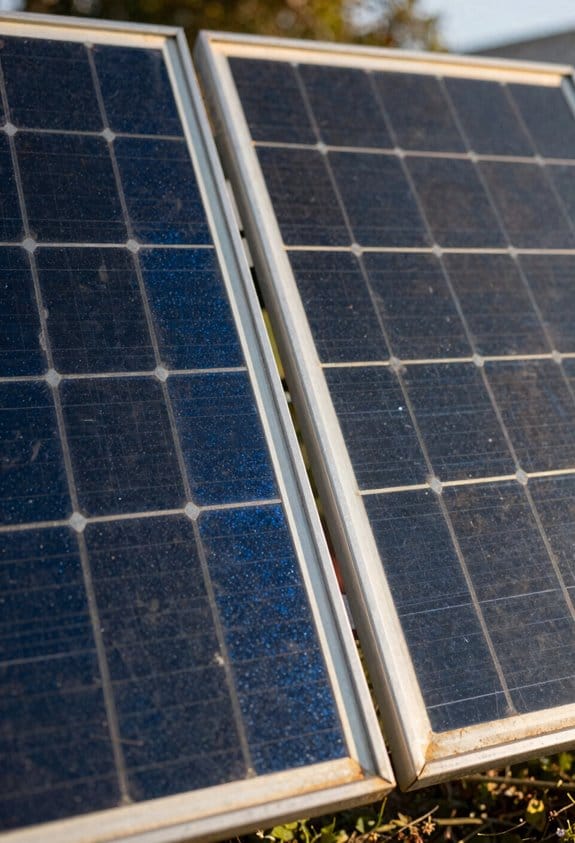
Because silicon purity directly influences degradation rates, monocrystalline modules typically sustain 25‑40 years of service, whereas polycrystalline units generally last 20‑35 years, a span that reflects differences in crystal lattice integrity, thermal expansion coefficients, and micro‑crack propagation under cyclic loading. I note that manufacturers often back monocrystalline panels with 25‑year warranties, while polycrystalline warranties may end at 20 years, indicating warranty differences that mirror the longer degradation rates observed in the purer silicon structures. In practice, monocrystalline cells exhibit annual power loss of roughly 0.3 % to 0.5 %, compared with polycrystalline loss of 0.5 % to 0.8 %, a disparity that accumulates over decades and influences total energy yield. Consequently, durability assessments must weigh these degradation rates against environmental stressors, thermal cycling, and mechanical fatigue, ensuring that long‑term performance projections remain grounded in empirical data.
Frequently Asked Questions
How Do Recycling Types Affect Recycling and Disposal Processes?
I find that monocrystalline panels simplify end‑of‑life logistics, boosting material recovery efficiency, while polycrystalline’s fragmented cells complicate disassembly, reducing recovery rates and increasing disposal challenges.
Which Panel Type Is Better for Rooftop Installations With Limited Space?
Monocrystalline’s sleek, space‑efficient design beats polycrystalline for cramped rooftops; its lower temperature sensitivity yields more power per square foot, letting me squeeze maximum output from limited space.
Do Monocrystalline Panels Require Different Mounting Hardware Than Polycrystalline?
I tell you they don’t need special frames; both fit standard mounting racks. Just make certain frame compatibility and allow for thermal expansion, so the panels stay secure across temperature swings.
How Does Panel Type Influence the Need for Cleaning in Dusty Environments?
I find monocrystalline panels collect less dust, so I clean them less often; their smoother, darker surface resists accumulation, while polycrystalline’s textured, lighter cells gather more grime, demanding higher cleaning frequency.
Are There Notable Differences in Warranty Terms Between the Two Panel Types?
I’ll tell you straight: both monocrystalline and polycrystalline panels typically carry a 25‑year warranty duration, and they both include performance guarantees, though monocrystalline often promises slightly higher output retention.