As an Amazon Associate, we earn from qualifying purchases. Some links on this site are affiliate links at no extra cost to you. Our recommendations are based on thorough research and editorial judgment.


How Does a Battery Bank Connect to Solar Panels? A Simple Diagram

I connect the solar panels to a charge controller using MC4 connectors torqued to 1.5 Nm, verify the controller’s 48–100 V input window matches a series string of two 38 V panels (76 V) or a single panel for lower voltage, then route the controller’s plus and minus leads with stranded copper cables stripped to 10 mm and ferruled with 6 mm² AWG, tightening screws to 1.2 Nm, while feeding the battery bank through 2/0 AWG conductors rated for 75 °C, busbars bolted with 6 mm hex nuts, and setting the output limit to 25 A to stay below the 30 A battery charge rating; the diagram below shows each step, and the next section expands on those details.
Key Takeaways
- Solar panel strings connect via MC4 connectors to the charge controller’s positive and negative inputs, ensuring correct polarity and torque (1.5 Nm).
- The controller’s input voltage range (e.g., 48–100 V) must encompass the panel string voltage (e.g., 76 V) to avoid false ground‑fault trips.
- Controller output terminals link to the battery bank using stranded‑copper conductors (e.g., 2/0 AWG) with ferrules, tightened to 1.2 Nm for low resistance.
- Parallel‑connected batteries are tied to common positive and negative busbars with equal‑length, low‑resistance cables (e.g., 4 AWG) to ensure balanced charging.
- Protective devices—ground‑fault detectors, fuses, and proper grounding—are installed at the controller input and battery connections for safety.
How Solar Panels and a Battery Bank Communicate
When the solar panels generate electricity, their MC4‑connected positive and negative leads feed the charge controller’s plus and minus terminals, respectively, and the controller then regulates voltage and current before delivering power to the battery bank’s parallel‑configured positive and negative busbars, which are linked by equal‑length, stranded‑copper cables sized to handle the array’s maximum amperage, typically 8.7 A for two 330 W panels in series, while the controller continuously monitors state‑of‑charge, prevents over‑voltage, and guarantees that each 12 V 100 Ah battery in the parallel bank receives balanced charging current, thereby maintaining voltage at 12 V and total capacity at 200 Ah without manual intervention. I explain that data communication between panels and batteries occurs through voltage signaling that the controller interprets, and that battery telemetry is transmitted via the same busbars, allowing control protocols to adjust charge rates, limit current spikes, and synchronize charging cycles across the parallel array, ensuring consistent performance and preventing imbalance.
Connecting Solar Panels to the Charge Controller With MC4 Connectors

I’ll start by wiring the MC4 connectors from portable solar panels to the charge controller, ensuring the positive panel lead plugs into the controller’s plus terminal while the negative lead plugs into the minus terminal, both connections secured with crimped sleeves rated for at least 10 A and 600 V, which prevents voltage drop and maintains polarity under load. I verify MC4 polarity before tightening each screw, because reversed polarity can cause controller shutdown, and I check that each connector’s gasket and O‑ring are seated correctly, providing weatherproof sealing that resists moisture ingress and UV degradation, which is essential for outdoor reliability over years of operation. I also measure the resistance across each pair, confirming it stays below 10 mΩ, thereby ensuring minimal power loss and consistent performance across the array.
Wiring the Charge Controller: Plus, Minus, and Stranded Copper Tips
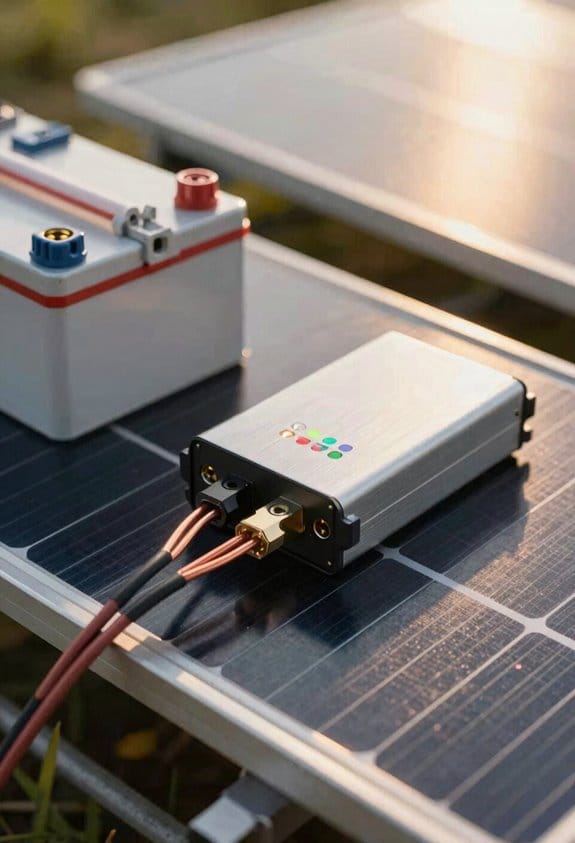
Connecting the charge controller’s plus terminal to the battery’s positive lead, and the minus terminal to the negative lead, involves stripping the stranded copper wire to 10 mm, crimping a 6 mm ² AWG ferrule, and tightening the screw to a torque of 1.2 Nm, which guarantees a low‑resistance joint, minimizes voltage drop under a 30 A load, and maintains mechanical integrity in vibration‑prone environments. I then slide insulated ferrules onto each wire end, ensuring the protective coating prevents accidental short circuits, and I verify that each terminal torque setting complies with the manufacturer’s specifications, thereby sustaining consistent contact pressure. After confirming the polarity markings, I route the cables away from heat sources, use cable ties to secure them, and double‑check continuity with a multimeter, ensuring that resistance remains below 0.02 Ω, which is critical for efficient power transfer.
Recommended Products

Self-Adjustable Ferrule Crimper Plier: the Ferrule Crimper Plier (6-4A) supplied from side 0.25-10mm²(AWG: 23 ~7), Low grip, Lightweight, power amplification through the elbow,Ideal for crimping insulated and non-insulated wire ferrules, .

Ferrule pliers Tool Kit, Include for AWG10-24 (0.2-6mm2) Automatic wire stripper , AWG 23-7 ( 0.25-10mm²) Self-Adjustable Ratchet Wire Ferrule Plier and 1900PCS Wire Terminals.This tools are designed to handle a wide range of wire sizes and types to meet your diverse needs. You'll have the right tools for any electrical project.

Nylon Insulated Crimp Ferrules - Our Nylon Insulated Ferrules are perfect for Din Rail Terminal Block Applications and other terminations.
Choosing Series or Parallel Panel Strings for Optimal Controller Voltage

The wiring steps I described for the charge controller’s terminals set the stage for evaluating how panel strings should be arranged, because the controller’s input voltage range dictates whether panels are best linked in series or parallel, and the decision hinges on matching the combined panel voltage to the controller’s maximum power point tracking (MPPT) window while keeping current within the controller’s limit, which, for a 40‑V‑to‑60‑V MPPT range, means two 38‑V panels in series produce 76‑V—exceeding the safe limit—whereas a single panel at 38‑V stays comfortably inside, yet parallel strings double the current to 17.4 A, approaching the controller’s 20‑A rating, so I must compare the voltage‑boost benefit of series connections against the current‑increase risk of parallel configurations, ensuring that cable sizing, fuse protection, and thermal considerations remain within the specified 2/0 AWG and 30‑A fuse parameters.
For voltage optimization I calculate the ideal MPPT window, then I size each string so that the total open‑circuit voltage stays just below the controller’s maximum input, while the combined short‑circuit current does not exceed the controller’s amperage rating, using the 2/0 AWG conductors for high‑current paths and 30‑A fuses for protection.
Connecting Batteries in Parallel: Equal‑Length Cables, Busbars, and Balancing

Balancing multiple 12 V batteries in parallel requires identical cable lengths, because mismatched resistance creates uneven current distribution, which can lead to over‑charging of lower‑impedance cells and under‑charging of higher‑impedance ones. I consequently use equal length, thermal matching cables, typically 4 AWG copper, to connect each positive terminal to a common busbar and each negative terminal to a separate busbar, ensuring that each path has the same impedance and heat dissipation characteristics, which minimizes voltage drop and temperature gradients across the bank. When I implement staggered charging, I schedule charge‑controller pulses so that each cell receives equivalent charge intervals, and I monitor the system with a cell balancing system that actively equalizes state‑of‑charge, thereby preserving capacity and extending cycle life.
Recommended Products
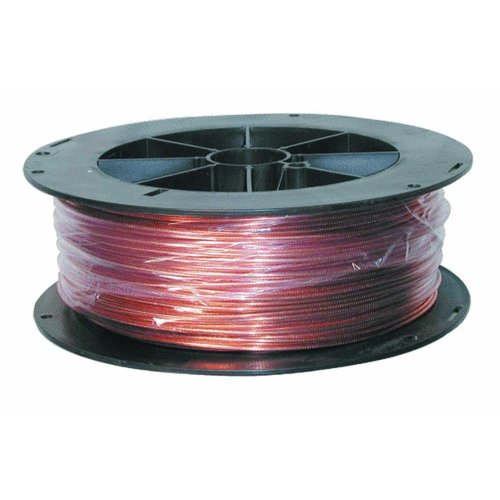

Bus Bar:A reinforced electrical connection method with high-power modular connection structural components;It improves electrical continuity and integrity by centralizing the management of multiple electrical devices

DISTRIBUTION BAR - Allows you to link up to four batteries for those that are looking to build a large car audio system. These distribution bars can handle the high-power and keeping everything clean and safe
When to Wire Batteries in Series – Why Voltage Rises While Capacity Stays the Same
I’ve been wiring batteries in parallel to keep capacity high while maintaining a constant voltage, so when I need a higher system voltage without increasing amp‑hour storage, I connect cells in series; this arrangement adds each cell’s nominal voltage—such as six 2 V lead‑acid units producing 12 V—while the total capacity remains the same as a single cell’s amp‑hour rating, for example a 100 Ah battery stays 100 Ah after series connection, which means the energy (Wh) scales with voltage but the current‑delivery capability does not change, and because internal resistance adds in series, the overall voltage rise is predictable, the power delivery limit stays constrained by the lowest‑capacity cell, and the system can supply higher‑voltage loads like a 48 V inverter without requiring larger conductors, provided that each cell’s state‑of‑charge is matched before connection to avoid imbalance. Battery chemistry influences internal resistance, thermal effects become more pronounced at higher voltage, cell balancing must be verified after each series connection, and ageing patterns show that mismatched cells accelerate capacity loss.
Building a Series‑Parallel Hybrid: Combining Panel Strings and Battery Banks
At the outset, integrating series‑connected panel strings with parallel‑configured battery banks creates a hybrid architecture that simultaneously raises system voltage while preserving amp‑hour capacity, allowing a 76‑V, 8.7‑A array of two 330‑W panels to charge a 12‑V, 200‑Ah bank composed of two 12‑V, 100‑Ah batteries wired in parallel, provided the charge controller’s input range (typically 48–100 V) matches the panel voltage and its output rating (often 30 A) exceeds the combined battery charging current, which guarantees efficient power transfer without excessive voltage drop, while busbars and equal‑length cabling maintain balanced current distribution across the parallel batteries, and the series‑parallel configuration supports both daytime inverter operation directly from the panels and nighttime load support from the batteries, thereby optimizing overall system performance. I then connect a microinverter to each panel, ensuring each inverter receives the full panel voltage, which simplifies grounding and reduces voltage stress, while I also install ground‑fault mitigation devices at the controller input to detect leakage currents, protect equipment, and maintain safety compliance without affecting charge efficiency.
Safety Checklist Before Powering Up: Secure Connections, Cable Gauge, Controller Settings
Before I energize the system, I verify that every MC4 connector is tightened to the manufacturer‑specified torque of 1.5 Nm, that the stranded copper cables are stripped to the correct 6 mm length, and that the busbars linking the parallel 12 V 100 Ah batteries are bolted with 6 mm hex nuts to prevent loose contacts, while simultaneously confirming that the 2/0 AWG conductors feeding the 30 A charge controller are rated for at least 75 °C insulation temperature, that the controller’s input voltage range of 48–100 V matches the 76 V panel string, and that the output current limit is set to 25 A to stay below the battery’s 30 A maximum charge rate, thereby ensuring secure connections, appropriate cable gauge, and correct controller settings before power‑up. I also inspect fire suppression devices, verify that they are positioned near the battery enclosure, and confirm that personal protective equipment, including insulated gloves and safety glasses, is readily available, ensuring compliance with safety standards and preventing accidental short circuits or thermal events during initial energization.
Troubleshooting Common Wiring Issues With a Simple Diagram
When a voltage drop appears at the controller’s input, I first verify that each MC4 connector is seated with the specified 1.5 Nm torque, that the 2/0 AWG conductors are stripped to a consistent 6 mm length, and that the busbar bolts linking the parallel 12 V 100 Ah batteries are tightened to 6 mm hex nuts, because any loosened contact can introduce resistance, cause localized heating, and trigger the controller’s undervoltage protection, which in turn may prevent the 76 V panel string from delivering its rated 8.7 A to the 30 A charge controller, while also checking that the controller’s input voltage range of 48–100 V matches the panel string and that the output current limit is set to 25 A to remain below the battery’s 30 A maximum charge rate. I then examine the diagram for any reversed polarity, confirming that the positive panel wire attaches to the controller plus terminal and the negative to the minus terminal, because a polarity error can cause a ground fault, leading to a voltage sag that reduces panel output and may trip protective circuits; I also measure busbar contact resistance with a milliohm meter, ensuring it stays below 5 mΩ, because excess resistance can mimic a ground fault and produce a sag that compromises charge efficiency.
Frequently Asked Questions
How Do I Size the Fuse for the Panel‑To‑Controller Connection?
I’d size the fuse a little above the panel’s maximum current—typically 1.25 × the controller’s input amperage—and pick a wire gauge that handles that current safely, following NEC tables.
Can I Mix Different Wattage Panels in the Same Series String?
I’d avoid mixing different wattage panels in one series string because it creates mixing voltages and unequal currents, which can overload the controller and reduce overall efficiency. Use matched panels for reliable performance.
What Is the Recommended Voltage Drop Limit for Battery Bank Cables?
I’d say keep voltage drop under 2 % for good voltage efficiency and minimal conductor heating, so a 12 V bank should lose no more than 0.24 V across your cables. This keeps power flowing smoothly.
Do I Need a Separate Grounding Rod for the Charge Controller?
I recommend installing a grounding conductor for the charge controller; it provides lightning protection and guarantees safety, so you don’t need a separate grounding rod unless local codes specifically require one.
How Often Should I Balance‑Charge Parallel Batteries?
I’d say, like a Victorian clockmaker, check your parallel batteries monthly; a quick capacity testing each month keeps them balanced, prevents sulfation, and guarantees long‑term performance.