As an Amazon Associate, we earn from qualifying purchases. Some links on this site are affiliate links at no extra cost to you. Our recommendations are based on thorough research and editorial judgment.


How Many Cycles Does a LiFePO4 Battery Bank Last?

I’m able to tell you that a typical LiFePO₄ cell delivers 2,000–4,000 full‑depth‑of‑discharge cycles, while a 50 % depth of discharge extends that range to roughly 6,000–8,000 cycles, and shallow discharges of 20 % can push the total beyond 10,000 cycles under low‑temperature, 0.5 C charging conditions; manufacturers usually warranty 80 % capacity after 2,000 cycles and 90 % after 5,000 cycles, and internal resistance rises modestly with age, causing longer charge times at the end of life, so if you keep the state‑of‑charge between 20 % and 80 % and limit charge voltage to 3.6 V per cell, you’ll see the expected longevity, and the next sections will explain how temperature, maintenance, and usage patterns further influence service years.
Key Takeaways
- Typical LiFePO4 cells provide 2,000–4,000 full‑depth cycles; shallow 50 % DoD can extend to 6,000–8,000 cycles, and 20 % DoD may exceed 9,000 cycles.
- Cycle life drops sharply above 80 % DoD, with capacity falling below 70 % after roughly 4,000–5,000 full‑depth cycles.
- Maintaining charge voltage ≤ 3.6 V, charge current ≤ 0.5 C, and state‑of‑charge between 20 %–80 % maximizes cycle count.
- Ambient temperatures above 30 °C accelerate degradation; keeping the bank at 20 °C–25 °C preserves the rated cycle life.
- Replace the bank when measured capacity reaches ~70 % of original or internal resistance causes noticeably longer charge times.
How Many Cycles Can a LiFePO4 Battery Deliver?
Typically, a LiFePO4 cell delivers between 2,000 and 4,000 full‑depth‑of‑discharge (DoD) cycles, with manufacturers often quoting 4,000 + cycles at 100 % DoD, while shallower discharges can extend the count to 6,000–8,000 cycles at 50 % DoD and even up to 10,000 + cycles under ideal temperature, charge‑rate, and maintenance conditions; this range reflects the intrinsic stability of the olivine cathode, the low‑expansion coefficient of the phosphate lattice, and the reduced solid‑electrolyte‑interphase growth compared with lithium‑ion chemistries, resulting in capacity fade of about 10 % after roughly 3,000 cycles and a gradual increase in internal resistance that modestly lengthens charging times as the battery ages. I note that battery chemistry directly influences warranty considerations, since manufacturers typically guarantee 80 % capacity after 2,000 cycles, extending to 90 % after 5,000 cycles when operating within specified DoD limits, and they often stipulate temperature and charge‑rate constraints to preserve the stated cycle life.
How Does Depth of Discharge Affect LiFePO4 Cycle Life?
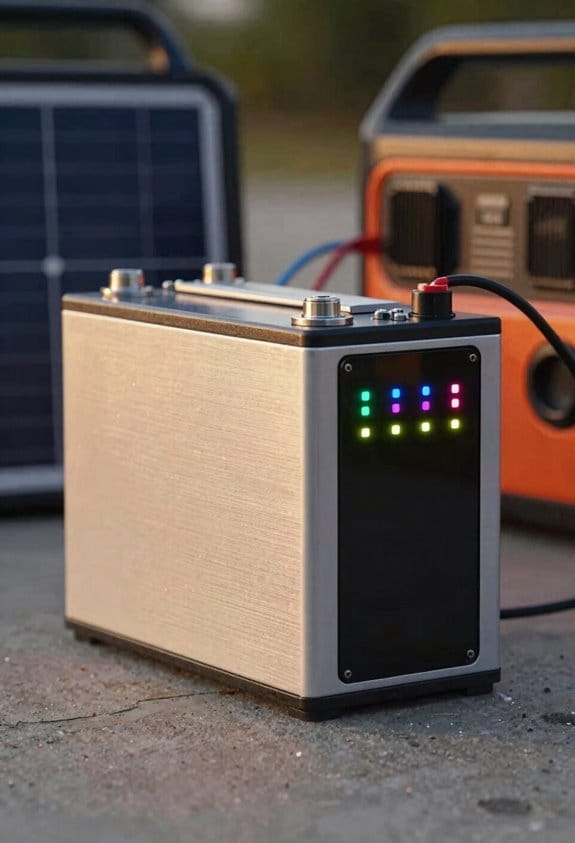
When the depth of discharge (DoD) is reduced in a LiFePO4 pack inside a home solar generator, the number of achievable cycles rises, because shallower discharges mitigate lattice strain and limit solid‑electrolyte‑interphase growth, which together preserve capacity. I explain that a 50 % DoD typically yields 6 000–8 000 cycles, whereas a 100 % DoD drops to roughly 4 000 cycles, and that operating at 20 % DoD can extend life beyond 9 000 cycles under ideal conditions, with internal resistance increasing more slowly and capacity fade remaining under 10 % after 3 000 cycles. I also note that partial charging, especially when combined with pulse charging, reduces peak voltage stress, thereby supporting the same cycle‑life benefits observed with shallow DoD, while maintaining charge acceptance efficiency and limiting electrolyte depletion.
How Do Temperature and Maintenance Habits Impact LiFePO4 Cycle Life?
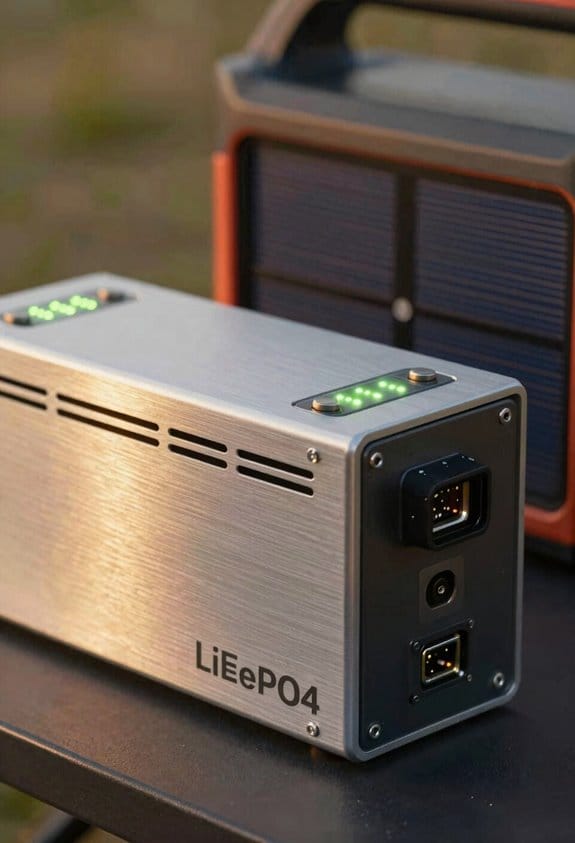
If the operating temperature exceeds 30 °C, internal resistance rises, capacity fade accelerates, and the cycle‑life rating drops from the nominal 4 000–8 000 cycles at moderate temperatures to roughly 2 500–5 000 cycles under prolonged high‑heat exposure, while maintaining a 20 °C–25 °C environment preserves the manufacturer‑specified 10 % capacity loss after 3 000 cycles and sustains the projected 5‑10‑year calendar life. I observe that ambient storage at 15 °C–20 °C reduces self‑discharge, thereby extending usable cycles, whereas storage above 35 °C increases degradation, leading to earlier capacity loss. Conducting preventive inspections quarterly, checking terminal corrosion, voltage balance, and electrolyte temperature, allows early detection of thermal drift, which, when corrected, can preserve up to 8 % more cycles. Consistent voltage regulation, avoiding deep discharge beyond 80 % DoD, and employing temperature‑controlled charging further stabilizes internal chemistry, ensuring that the battery approaches its rated 10 000‑cycle ceiling under ideal maintenance habits.
LiFePO4 vs. Lead‑Acid, NMC, LCO, NiCd, NiMH Cycle Life?
Temperature and maintenance set the baseline for LiFePO4 longevity, and comparing that baseline with other chemistries reveals stark differences in cycle durability, capacity retention, and calendar life. I note that LiFePO4 delivers 4 000–10 000 cycles at 80‑100 % depth of discharge, far exceeding lead‑acid’s 300‑500 cycles, NMC’s 1 000‑2 000 cycles, LCO’s 500‑1 000 cycles, NiCd’s 1 000‑1 500 cycles, and NiMH’s 500‑1 000 cycles, while maintaining roughly 90 % capacity after 3 000 cycles and showing minimal thermal runaway risk compared with higher‑energy‑density chemistries. Energy density for LiFePO4 remains lower than NMC or LCO, yet its stability and slower capacity fade translate into longer service periods under similar charge‑discharge regimes, and its resistance to high‑temperature induced degradation further separates it from lead‑acid, which suffers accelerated sulfation and reduced cycle count under comparable conditions.
Recommended Products

[All-Scenario Power] - Apex 300 (2764.8Wh, 3840W) keeps homes lit, RVs rolling & off-grid sites running. Parallel 2-3 units (5.5-8.3kWh), expand to 58kWh with B300K. Never powerless.

🔋 Massive 7200Wh Capacity & Expandable: Never run out of power during outages. With a massive 7200Wh base capacity, it powers essential home appliances for days. Supports daisy-chaining up to 15 additional power packs (sold separately) to expand total capacity to 57.6kWh, ideal for whole-house off-grid living or extended RV trips.

𝐍𝐨𝐭𝐞: 𝐓𝐡𝐞 𝐇𝐨𝐦𝐞𝐏𝐨𝐰𝐞𝐫 𝟑𝟎𝟎𝟎 𝐝𝐨𝐞𝐬 𝐧𝐨𝐭 𝐬𝐮𝐩𝐩𝐨𝐫𝐭 𝐩𝐚𝐫𝐚𝐥𝐥𝐞𝐥 𝐜𝐨𝐧𝐧𝐞𝐜𝐭𝐢𝐨𝐧 𝐨𝐟 𝐭𝐰𝐨 𝐮𝐧𝐢𝐭𝐬.
What Calendar Lifespan Can a Well‑Maintained LiFePO4 Bank Expect?
Typically, a well‑maintained LiFePO4 bank delivers a calendar lifespan ranging from five to ten years, extending to fifteen years under ideal storage conditions, while its capacity retention remains above 80 % after a decade of regular cycling, provided that ambient temperature stays within the 0 °C–30 °C range, charge‑to‑balance protocols are observed, and depth‑of‑discharge limits are respected. I follow a maintenance schedule that includes quarterly voltage checks, monthly balance‑charging, and annual thermal inspections, which aligns with warranty terms that often guarantee performance for eight years under specified conditions; I also assess environmental impact by selecting units with low‑toxicity electrolytes, and I plan for end‑of‑life recycling options that recover lithium, iron, and phosphate, thereby reducing landfill waste and supporting sustainable material loops.
How Does Capacity Fade Progress Over Thousands of LiFePO4 Cycles?
I’ve observed that LiFePO4 cells lose roughly 10 % of their nominal capacity after about 3 000 full‑depth cycles, a trend that accelerates modestly as internal resistance climbs, while the rate of fade remains comparatively flat between 2 000 and 4 000 cycles, allowing capacity to stay above 80 % for up to 5 000–6 000 cycles when discharged to 50 % DoD, and when temperature is controlled between 0 °C and 30 °C the degradation curve often follows a near‑linear decline, extending usable life to 8 000–10 000 cycles under shallow‑discharge regimes, whereas exceeding 80 % DoD typically truncates the cycle count to 4 000–5 000 before capacity falls below 70 % of original. I attribute the gradual loss to electrode degradation, which manifests as loss of active material and micro‑cracking, and to electrolyte decomposition, which accelerates at higher temperatures and deeper depths, both contributing to increased internal resistance and reduced charge acceptance, yet the combined effect remains predictable, allowing designers to model capacity retention accurately across thousands of cycles.
Which Charging Habits Keep My LiFePO4 Battery Healthy?
Consistently limiting charge voltage to 3.6 V per cell, avoiding the 3.65 V maximum except during brief high‑power bursts, and maintaining state‑of‑charge between 20 % and 80 % during routine use together reduce stress on the cathode‑anode interface, limit electrolyte oxidation, and curb the growth of solid‑electrolyte interphase layers that otherwise increase internal resistance and accelerate capacity fade. I follow regular top‑ups, which keep the battery within the optimum window, and I practice balanced charging, ensuring each cell reaches the same voltage before the charger terminates, thereby preventing cell imbalance that could otherwise raise local temperature and accelerate degradation. I also avoid prolonged float at full voltage, limit charge current to 0.5 C when possible, and keep the pack temperature below 30 °C, because thermal stress compounds voltage stress, shortening cycle life.
Recommended Products
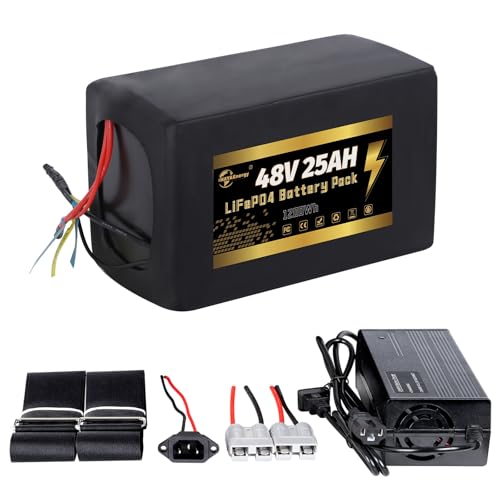
👉【48V 25Ah LiFePO4 B attery Specifications】B attery dimensions: 9.25*5.7*5.1 inches; Weight: 16.75 lbs. Connection Type:16S1P, 48V 25AH LiFePO4 B attery=52V 25AH LiFePO4 B attery,because all connections are: 16S1P. 30A BMS, Maximum Constant Current Discharge: 30A, Peak Discharge Current: 60A 5S, 25+ miles of range per charge without pedaling.

【2X Fast Charging & Saving 50% Time】Timeusb 14.6V 40A lithium battery charger has a 40A high efficient charging current, which is 2 times more charging current than a 14.6V 20A charger. The 40A charger just takes 5 hours to fully charge one 12V 200Ah LiFePO4 battery. Save 5 hours than a 12V 20A charger directly, it means saving even 50% time.
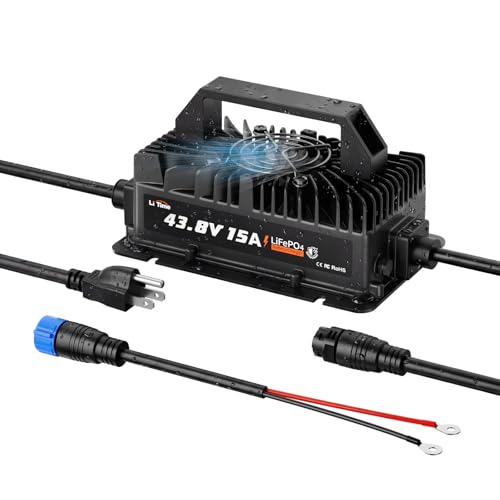
Fast Charging & Battery Activation:LiTime 36V 15A LiFePO4 battery charger features an intelligent 3-stage charging system (Pre-Charge, Constant Current, Constant Voltage) for faster and more efficient charging. Lithium battery activation function helps wake up over-discharged lithium batteries and restore normal charging.
Which Use‑Cases Benefit Most From High‑Cycle LiFePO4 Batteries?
Often, high‑cycle LiFePO4 batteries excel in applications where frequent deep‑discharge events occur, such as solar‑plus‑storage systems that cycle 80‑100 % DoD daily, electric‑wheel‑mobility platforms that require 3000‑5000+ cycles over a 5‑year lifespan, and off‑grid telecom backup units that demand 4000‑6000 cycles with minimal capacity loss. I find that off‑grid cabins benefit from 2500‑9000 cycles at 50 % DoD, allowing daily night‑time draw without premature degradation, while peak‑shaving installations on commercial rooftops leverage 4000‑6000 cycles at 80 % DoD to flatten demand spikes and reduce utility tariffs. Marine vessels, especially those using 12 V DC propulsion, appreciate the 10‑year calendar life combined with 5000‑7000 cycles at 70 % DoD, ensuring reliable power during long voyages. Backup‑power kits for data centers, requiring 4000‑6000 cycles at 100 % DoD, rely on the low internal resistance and temperature tolerance of LiFePO4 to maintain capacity during frequent discharge‑charge events.
Recommended Products

【32153Wh LiFePO4 Battery】 Dawnice’s newest line of batteries –2 sets 51.2V 314Ah LiFePO4 battery provides 6000+ cycles & a 10 years lifetime with built-in 100A Battery Management System (BMS) protects it from overcharge, deep discharge, overloading, overheating and short circuit, and excessive low self-discharge rate. Support in parallel up to 16 sets, can be expanded in the future.
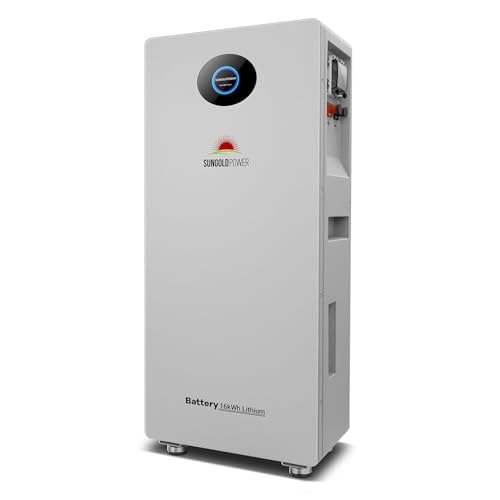
[High Capacity Solar Battery]: SUNGOLDPOWER UL1973 and UL9540A 48V 314Ah LiFePO4 lithium battery with over 8,000 deep cycles. Parallel up to 16 pcs ,maximum capacity of 16.07kWh.Ideal for solar systems, off-grid living, and whole-home backup power with reliable long-lasting performance.
[High Capacity Solar Battery]: SUNGOLDPOWER UL1973 and UL9540A 48V 314Ah LiFePO4 lithium battery with over 8,000 deep cycles. Parallel up to 16 pcs ,maximum capacity of 16.07kWh.Ideal for solar systems, off-grid living, and whole-home backup power with reliable long-lasting performance.
How to Estimate Service Years From Daily LiFePO4 Cycling?
High‑cycle LiFePO4 batteries, which we just examined for off‑grid and marine use, can be evaluated for service life by converting daily depth‑of‑discharge (DoD) patterns into total cycle counts, then dividing those counts by the number of cycles performed each year; for example, a system that cycles 50 % DoD daily accumulates roughly 365 × 1 = 365 cycles per year, and if the manufacturer specifies 6000‑8000 cycles at that DoD, the projected calendar life ranges from 7.5 to 22 years. I calculate daily calendarization by multiplying the DoD‑specific cycle rating by the annual usage factor, then apply cycling psychology to recognize that shallow discharges, for instance 20 % DoD, may double the rated cycle count, yielding an estimated 15‑year service span when the system runs 365 days annually. This method, using precise cycle‑to‑year conversion, allows objective lifespan projection without speculative assumptions.
Recommended Products

【Top-Flight Performance 】The 51.2V 100Ah liFePO4 battery is manufactured by 16Pcs Automotive Grade A grade prismatic cells with higher energy density, more stable performance & greater power. And has a compact 5.12kWh energy, which is equivalent to 4pcs 12V 100Ah LiFePO4 batteries in 4S (or even 8pcs 12V 100Ah AGM batteries in 8S). Fully compliant with the UL1973 safety standard and certified by Intertek ETL for reliable safe operation.

Version Update Notice: The former 48V 314Ah V1 is now upgraded to Powermega 48V 314Ah, featuring newly added Active Cell Balancing and Integrated Aerosol Fire Protection for higher safety and longer service life. It also comes with an extended 10-year warranty, while maintaining full compatibility with V1 units for parallel expansion

Self-Heating Function: Automatically activates when charging at -20°C to 5°C (-4°F to 41°F). Choose between Regular and Energy-efficient heating modes via the LiTime APP for optimal cold-weather performance.
When Is It Time to Replace a LiFePO4 Battery Bank?
Typically, you’ll know it’s time to replace a LiFePO4 battery bank when the measured capacity has dropped to roughly 70 % of its original rating, the internal resistance has risen enough to noticeably lengthen charge times, and the cycle‑count data—derived from daily depth‑of‑discharge logs—approaches the manufacturer’s specified limit for the prevailing DoD, which for 50 % DoD is usually 6000–8000 cycles, while for shallower 20 % DoD it can exceed 10 000 cycles. I conduct performance testing each quarter, comparing load‑response curves to baseline data, and I track end‑of‑life trends by logging temperature‑related resistance spikes. If warranty claims become relevant, I verify that degradation aligns with documented cycle limits, and I integrate those findings into replacement planning, ensuring that system downtime remains minimal and that new modules meet the same voltage and current specifications.
Recommended Products

[Ideally Output of 9.36KWH] The power of 9.36KWh per day under 4 hours full sunshine by the 2340W solar panel system, very suitable for home, shed, cabin, farm or other energy backup, and it will provide enough power for portable ac, air condition, TV, refrigerator, coffee maker, microwave and other AC 240V (split-phase)devices.

★Character: SUNGOLDPOWER 51.2V 100AH Lithium Battery is compact, well-designed, and cable/accessories ready for installation. It supports a maximum of 32 parallel connections, offers over 7000 cycles of deep cycling, and comes with a 10-year warranty. Designed for a lifespan of up to 15 years, UL 1973 Certificates.

【Grade A battery Cell】: SUNGOLDPOWER 51.2V 100Ah LiFePO4 Battery Manufactured with automotive grade battery cells. High quality battery cells make LiFePO4 battery to provides 7000+deep cycles and up to 15- year life time.
Frequently Asked Questions
Does Using a Battery Management System (BMS) Affect Lifepo4 Cycle Life?
I’ve found that a BMS boosts LiFePO4 cycle life by keeping cells balanced and applying firmware updates, which prevent over‑charge, deep‑discharge, and temperature spikes, ultimately extending usable cycles.
How Does High-Rate (Fast) Charging Impact Long‑Term Durability?
I picture a marathon runner sprinting, then cooling down; fast charging spikes stress, so without solid thermal management the LiFePO4’s lifespan shrinks, while proper cooling preserves cycles and long‑term durability.
Can Lifepo4 Batteries Be Safely Stacked for Higher Voltage?
I can stack LiFePO4 cells safely if I use proper voltage balancing and a robust BMS, ensuring each block stays within its limits; otherwise, mismatched voltages can cause overheating or failure.
What Is the Effect of Occasional Deep Discharges on Overall Lifespan?
I’ve found that occasional deep discharges add strain, but the battery can still recover capacity; however, each deep cycle trims a few hundred of the total lifespan you’d otherwise enjoy.
Are There Specific Brands That Consistently Exceed 10,000 Cycles?
I’ve seen brands like BattleBorn and SimpliPhi push past 10,000 cycles, their brand longevity impressive; warranty comparisons often highlight 10‑year guarantees, underscoring confidence in those extended‑life cells.