As an Amazon Associate, we earn from qualifying purchases. Some links on this site are affiliate links at no extra cost to you. Our recommendations are based on thorough research and editorial judgment.


What Is LFP vs NMC Battery Chemistry? Which Is Safer for Home Use?

I compare LFP (LiFePO₄) and NMC (LiNiMnCoO₂) chemistries by noting that LFP’s olivine lattice yields a 3.2 V nominal voltage, 90‑160 Wh/kg specific energy, 3,000‑10,000 cycles, and thermal runaway only above ~270 °C, while NMC’s layered oxide provides 3.7 V, 150‑250 Wh/kg, 500‑5,000 cycles, and runaway near ~210 °C, making LFP’s cobalt‑free, iron‑phosphate composition intrinsically safer for residential storage, especially given its broader temperature window of −20 °C to 60 °C and lower susceptibility to exothermic cascade, and if you continue you’ll discover deeper design implications.
Key Takeaways
- LFP (LiFePO₄) uses an olivine lattice, offering inherent thermal stability and a higher runaway threshold (~270 °C) than NMC’s layered oxide (~210 °C).
- NMC (LiNiMnCoO₂) delivers higher nominal voltage (3.7 V) and specific energy (150‑250 Wh/kg) but requires stricter temperature and voltage monitoring.
- LFP’s safe operating window (‑20 °C to 60 °C) and lower exothermic risk make it safer for residential installations.
- NMC provides greater energy density, useful when space is limited, but its lower thermal runaway threshold and narrower temperature window increase safety complexity.
- For home use, LFP’s cobalt‑free composition, longer cycle life (3,000‑10,000 cycles), and lower cost per kWh generally make it the safer, more economical choice.
LFP vs. NMC: Quick Chemistry Comparison
When comparing LFP and NMC chemistries, the cathode composition immediately distinguishes them: LFP utilizes lithium iron phosphate (LiFePO₄), an olivine‑structured material that provides inherent thermal stability, whereas NMC employs lithium nickel manganese cobalt oxide (LiNiMnCoO₂), a layered oxide whose performance depends on the proportion of nickel, manganese, and cobalt. I note that LFP’s redox kinetics are slower, yielding a nominal voltage of 3.2 V per cell, while NMC’s kinetics are faster, achieving 3.7 V, and that both chemistries require electrolyte compatibility with conductive salts, though LFP tolerates a broader temperature range. The olivine lattice of LFP offers higher structural stability, whereas NMC’s layered lattice facilitates higher energy density but demands stricter electrolyte formulation to prevent dissolution of intercalated metals during cycling.
How to Choose Between LFP and NMC for Home Storage?

If you’re evaluating battery chemistries for a residential energy system or a home solar generator, consider that LFP delivers 3.2 V per cell, 90‑160 Wh/kg energy density, 3,000‑10,000 cycles, and thermal runaway above 270 °C, whereas NMC provides 3.7 V per cell, 150‑250 Wh/kg, 500‑5,000 cycles, and runaway near 210 °C; this contrast in voltage, specific energy, cycle life, and thermal stability, however, translates directly into differences in weight, cost, and safety margins, which must be weighed against the installed capacity, expected discharge depth, and ambient temperature range of the home installation, while also accounting for the higher material cost of nickel and cobalt in NMC versus the cobalt‑free, abundant iron and phosphate composition of LFP. I compare long term maintenance schedules, noting LFP’s slower capacity fade reduces service intervals, while NMC often demands more frequent checks; warranty comparisons reveal LFP typically offers ten‑year coverage versus NMC’s five‑year terms, and the installation footprint for NMC can be smaller due to higher energy density, yet backup prioritization favors LFP because of its superior thermal stability and longer cycle life.
Why LFP’s Olivine Structure Gives LFP vs. NMC Superior Thermal Stability?
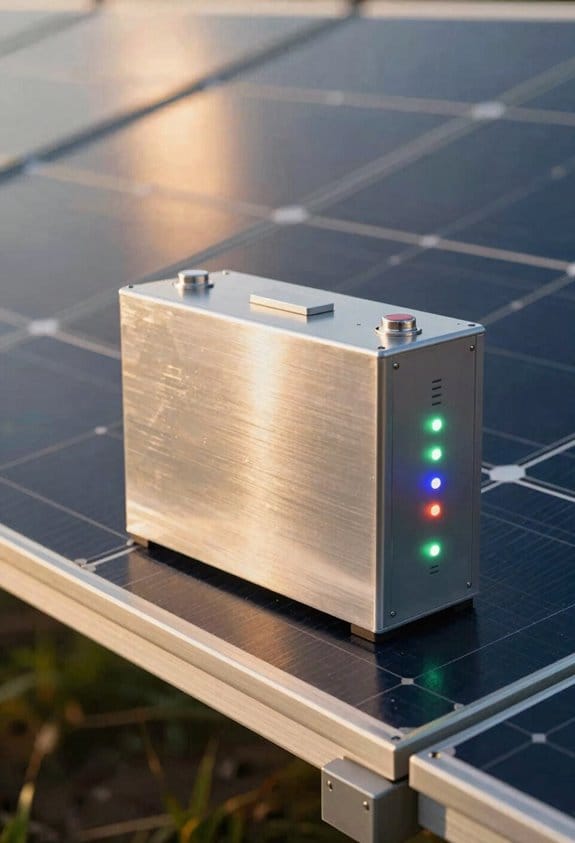
Because the olivine crystal lattice of LiFePO₄ forms a three‑dimensional framework that tightly binds iron and phosphate ions, the cathode remains structurally intact at temperatures exceeding 270 °C. I note that Olivine rigidity prevents lattice collapse, while strong phosphate bonding suppresses oxygen release, limiting exothermic reactions that trigger runaway. In contrast, NMC’s layered oxide, composed of nickel, manganese, and cobalt, exhibits weaker interlayer forces, allowing rapid phase change near 210 °C, which accelerates heat generation. The Fe‑PO₄ framework, with its high melting point and low electronic conductivity, reduces internal heating, maintaining voltage stability up to 500 °C before degradation. Consequently, thermal runaway thresholds for LFP exceed those of NMC by roughly 60 °C, providing a measurable safety margin for stationary storage applications.
How NMC’s Layered Oxide Increases Energy Density Compared to LFP?

The olivine lattice that gives LFP its high thermal stability also limits its volumetric energy, because LiFePO₄’s crystal structure packs fewer lithium ions per unit cell than the layered oxide of NMC, whose LiNiMnCoO₂ composition allows a higher lithium‑to‑metal ratio, resulting in a nominal cell voltage of 3.7 V versus LFP’s 3.2 V and a specific energy that can reach 250 Wh kg⁻¹, compared with LFP’s 90‑160 Wh kg⁻¹; this increase in voltage and lithium density, combined with the ability to use thinner electrodes and higher tap densities, translates into a 30‑40 % higher energy density for NMC cells of comparable size, while still requiring more sophisticated battery‑management systems to mitigate the lower thermal runaway threshold. I note that the layered structure provides higher capacity per gram, because the interlayer spacing accommodates more lithium, and the three‑dimensional diffusion pathways enable faster diffusion of lithium ions during charge and discharge, which, in turn, supports higher power output and tighter packing of active material, further boosting overall energy density without sacrificing volumetric efficiency.
Cycle‑Life Comparison: 3,000‑10,000 vs. 500‑5,000 Cycles

Observing the cycle‑life specifications, LFP cells typically sustain 3,000–10,000 charge‑discharge cycles, whereas NMC cells generally endure 500–5,000 cycles, a disparity that translates into markedly different service lifetimes for stationary versus mobile applications, and this difference is reflected in the projected operational years—over ten years for LFP under typical home‑storage conditions compared with three to five years for NMC in comparable environments, assuming similar depth‑of‑discharge and temperature regimes. I note that LFP’s slower capacity fade, often under 0.5 % per 1,000 cycles, contrasts with NMC’s faster decline, which can reach 1–2 % per 1,000 cycles, especially when calendar aging accelerates at higher temperatures. Consequently, the longer cycle‑life of LFP reduces replacement frequency, while NMC may require more frequent maintenance to preserve usable capacity over its shorter service horizon.
Safety & Operating Temperature Ranges for LFP vs. NMC
When temperatures rise above 250 °C, LFP cells typically maintain structural integrity, whereas NMC cells begin thermal runaway near 210 °C, a difference that stems from LFP’s olivine cathode stability and NMC’s layered‑oxide composition, which both affect heat‑generation rates, electrolyte decomposition thresholds, and gas‑evolution dynamics. I note that LFP operates safely between ‑20 °C and 60 °C, while NMC’s safe window narrows to roughly 0 °C‑45 °C, a constraint that forces stricter charge protocols for NMC to avoid exceeding its lower thermal runaway threshold. In practice, the higher thermal stability of LFP translates to reduced risk of exothermic cascade under high‑current discharge, whereas NMC requires more sophisticated battery‑management systems to monitor temperature, voltage, and current, ensuring that charge protocols prevent conditions that could trigger thermal runaway.
Cost Drivers: Cobalt‑Free LFP vs. Nickel‑Heavy NMC
Cobalt‑free lithium‑iron‑phosphate (LFP) cells typically cost 30‑40 % less per kilowatt‑hour than nickel‑heavy lithium‑nickel‑manganese‑cobalt oxide (NMC) packs, because LFP relies on abundant iron and phosphate while NMC depends on volatile nickel and cobalt markets, which drive material price volatility and increase refining expenses, leading to higher upfront investment for comparable capacity. I note that LFP’s raw‑material cost, often under $60 / kWh, contrasts with NMC’s $90‑$120 / kWh, reflecting the differing supply chains where LFP benefits from stable, geographically diverse iron extraction, whereas NMC suffers from concentrated nickel‑cobalt mining regions subject to geopolitical risk. Additionally, recycling programs for LFP, focusing on iron‑phosphate recovery, tend to be simpler and cheaper than NMC’s complex cobalt‑separation processes, further reducing lifecycle expenses.
Recommended Products
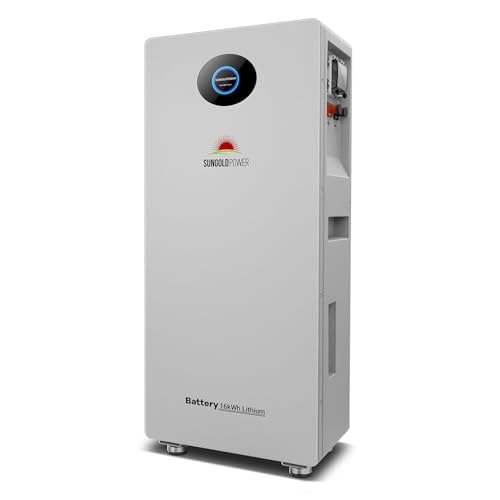
[High Capacity Solar Battery] – SUNGOLDPOWER 48V 314Ah LiFePO4 lithium battery with over 8,000 deep cycles. Parallel up to 16 pcs ,maximum capacity of 16.07kWh.Ideal for solar systems, off-grid living, and whole-home backup power with reliable long-lasting performance.

🌞【51.2V 410Ah LiFePo4 Battery】Connecting 16S2P 3.2V 410Ah A-grade batteries in series increases the maximum power to 10240W, and the maximum discharge current is 200A, that is, when the maximum output power is 10240W, the recommended charging current is 150A. Built-in 200A BMS, with RS485, RS232, CAN interface. Uses Grade A cells, with high safety, 6000+ cycles life, large current charge and discharge capability, high temperature resistance and small size, Increased to 15 years lifetime.

【Reliable Quality & Grade A Cells】: We have a professional lithium battery research and production factory, using A-grade battery cells to produce our batteries. Each battery leaving the factory has strict inspection standards, and most importantly, we have this absolute cost advantage while ensuring quality. We have a one month no reason return period. What are you still worried about? Give NewtiPower a try now!
10‑Year Savings: LFP vs. NMC for Home Storage
The cost advantage of cobalt‑free LFP, highlighted in the previous discussion, directly influences the annual financial outcome for residential energy storage, because lower material expenses translate into reduced upfront capital outlay and consequently smaller depreciation charges each year; I calculate that a 10 kWh LFP system, costing roughly $120/kWh, yields a yearly saving of about $150 after accounting for a 5 % retail incentive, whereas an NMC system at $150/kWh, even with the same incentive, incurs higher depreciation, reducing net savings to approximately $90. Additionally, LFP’s longer cycle life of 3,000–10,000 cycles compared with NMC’s 500–5,000 cycles translates to fewer replacement expenses over a decade, further widening the annual financial gap in favor of LFP.
Recommended Products

【Massive Whole-House Energy Bank】Eliminate power anxiety with the DATOUBOSS 48.24 kWh battery system. This high-capacity 314Ah setup provides enough stored energy to run critical household appliances—including HVAC systems, refrigerators, and pumps—during extended grid outages or for full off-grid living.

🌞【48V 206Ah LiFePo4 Battery】Connecting 16S1P 3.2V 206Ah A-grade batteries in series increases the maximum power to 5120W, and the maximum discharge current is 100A, that is, when the maximum output power is 5120W, the recommended charging current is 50A. Built-in 100A BMS, with RS485, RS232, CAN interface. Uses Grade A cells, with high safety, 6000+ cycles life, large current charge and discharge capability, high temperature resistance and small size, Increased to 15 years lifetime.

【Grade A battery】Uses Grade A battery, using the latest lithium phosphate battery, It has multiple advantages, including high safety, long cycle life, large current charge and discharge capability, high temperature resistance and small size,Increased to 10-years lifetime and 6000+ cycles
Installing LFP Batteries in Home Energy Systems
Because the LiFePO₄ chemistry provides thermal runaway resistance up to 500 °C, the installation must include a battery management system that monitors cell voltage within 3.0–3.6 V, temperature between –20 °C and 60 °C, and state‑of‑charge to prevent over‑charging, while also integrating with the home’s solar inverter and grid‑tie controller to allow seamless switching between grid, solar, and battery power without exceeding the 150 A fuse rating commonly specified for residential AC‑DC conversion equipment. I begin by locating the panel installation site, ensuring that mounting rails are level, that conduit runs are sized for 10 AWG conductors, and that the inverter compatibility matrix confirms 48 V DC input for the LFP bank. I then connect the BMS communication bus to the inverter’s CAN‑bus, calibrate voltage cut‑off points to 3.0 V per cell, set temperature alarms at 60 °C, and verify that the charge‑controller respects the 3.6 V upper limit, guaranteeing safe operation across the entire energy‑storage system.
Recommended Products

Version Update Notice: The former 48V 314Ah V1 is now upgraded to Powermega 48V 314Ah, featuring newly added Active Cell Balancing and Integrated Aerosol Fire Protection for higher safety and longer service life. It also comes with an extended 10-year warranty, while maintaining full compatibility with V1 units for parallel expansion

★Character: SUNGOLDPOWER 51.2V 100AH Lithium Battery is compact, well-designed, and cable/accessories ready for installation. It supports a maximum of 32 parallel connections, offers over 7000 cycles of deep cycling, and comes with a 10-year warranty. Designed for a lifespan of up to 15 years, UL 1973 Certificates.

★Character: SUNGOLDPOWER 51.2V 100AH LFP Battery is compact, well-designed, LCD, and cable/accessories ready for installation. Rechargable ≥7000 cycles deep cycle 10 years warranty, designed for up to 15-year life with certification of UL1973 and UL9540A.
When NMC Might Still Be a Good Fit for Residential Power?
If space is limited and higher energy density is required, NMC cells, with a nominal voltage of 3.7 V and a specific energy of 150‑250 Wh/kg, can reduce the overall footprint of a residential battery bank, allowing more kilowatt‑hours to be stored in a smaller enclosure, which is advantageous for retrofit installations where roof‑mounted cabinets must fit within tight dimensions. I note that despite range limitations inherent to NMC’s lower temperature tolerance, its higher energy density makes it suitable for homes with constrained roof space, especially when the charging infrastructure already supports 48 V or 400 V DC bus configurations. In such cases, the trade‑off between compactness and slightly reduced cycle life (500‑5,000 cycles) may be acceptable, provided that a robust BMS monitors temperature and voltage.
Recommended Products
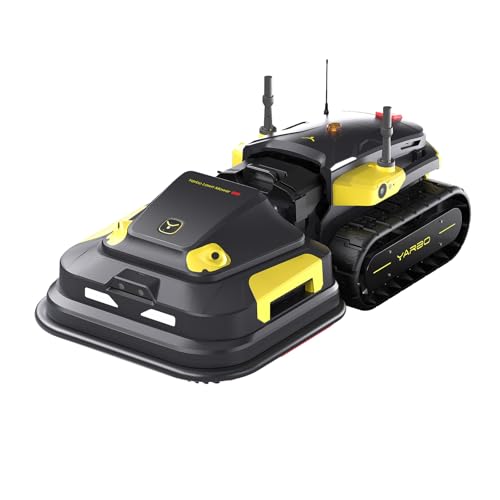
Ideal for Premium Property Owners: The Yarbo Lawn Mower Pro features modular design, strong cutting system and fully autonomous navigation for low-effort, reliable lawn care. It cuts thick, wet, overgrown grass with ease, suitable for homes, golf courses, turf farms, luxury hotels and resorts.

【21.5kWh High-Capacity Energy Storage】The SANIU 48V 420Ah LiFePO4 Battery delivers 21.5kWh of reliable energy storage, making it ideal for home backup power, solar energy storage systems, off-grid living, workshops, cabins, and emergency preparedness. Support for parallel expansion allows flexible capacity growth to meet increasing energy demands.
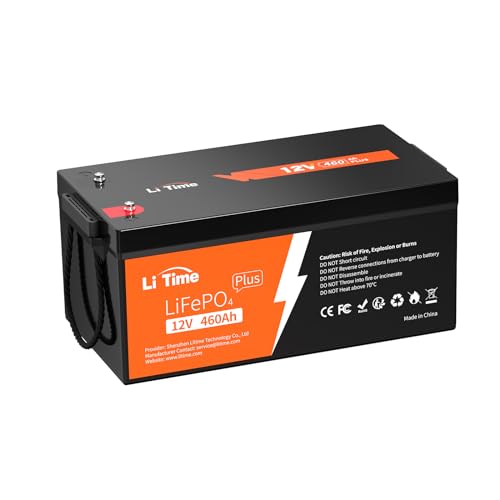
100% DOD Longer Run-Time: LiTime battery stays above 12.8V for full capacity (lead-acid only 50%). You get all the power, devices run way longer than traditional batteries
Frequently Asked Questions
Can LFP Batteries Be Recycled as Easily as NMC?
I picture batteries as puzzles; LFP pieces fit into existing recycling infrastructure more smoothly, so material recovery’s easier, while NMC’s complex mix makes its puzzle harder to dismantle and refurbish.
Do LFP and NMC Batteries Require Different Inverter Specifications?
I tell you they need different inverter sizing and waveform compatibility; LFP’s lower voltage and stable chemistry often allow broader, simpler waveforms, while NMC’s higher voltage may require tighter voltage regulation and specific waveform matching.
How Does State‑Of‑Charge Affect the Lifespan of LFP vs. NMC?
I’ve seen LFP retain 90% capacity after 5,000 cycles at 80% state‑of‑charge, while NMC drops noticeably. Keeping depth of discharge shallow extends cycle life and reduces capacity fade for both chemistries.
Are There Any Noise or Vibration Differences Between LFP and NMC Modules?
I’ve found LFP modules usually have a quieter acoustic signature and better mechanical damping than NMC, so they tend to produce less audible noise and vibration during charge‑discharge cycles.
What Warranty Periods Are Typical for Residential LFP Versus NMC Systems?
I’ve seen typical warranties of ten years for residential LFP systems and around five to seven years for NMC, and many manufacturers allow warranty transfers if you sell the home, keeping coverage intact.