As an Amazon Associate, we earn from qualifying purchases. Some links on this site are affiliate links at no extra cost to you. Our recommendations are based on thorough research and editorial judgment.

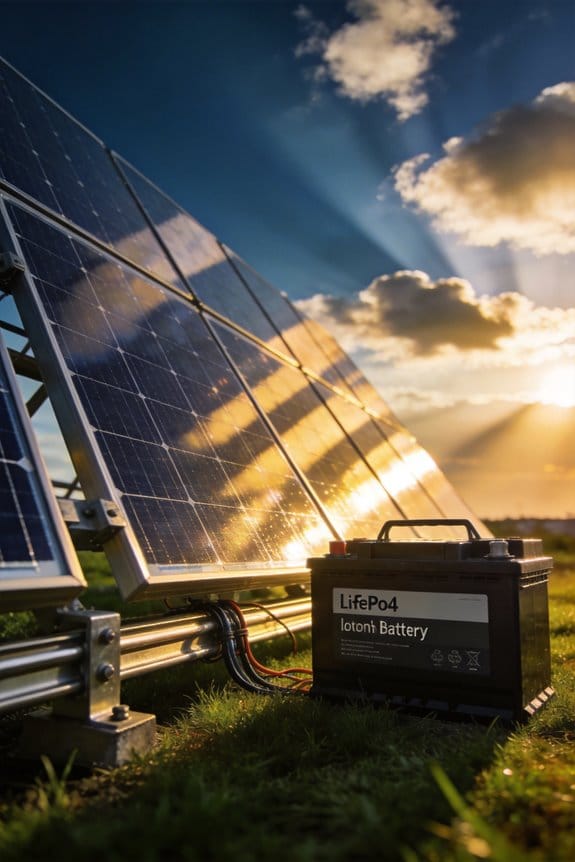
LiFePO4 vs Lithium-Ion: Which Battery Is Better for Solar Storage?

I find LiFePO4 outperforms lithium‑ion for solar storage because its chemical stability, provided by strong covalent Fe‑P bonds, limits thermal‑runaway risk, allowing operation up to 60 °C versus about 45 °C for lithium‑ion, while its 2,000–6,000 cycle life maintains over 85 % capacity after 3,000 cycles compared with lithium‑ion’s 800–1,000 cycles dropping near 70 % after 1,200 cycles; although its 90–120 Wh/kg energy density yields a 30‑45 % larger volume for equal capacity, its broader temperature range (–20 °C to 60 °C) and lower lifecycle emissions, roughly 30 % less, reduce cooling needs and environmental impact, and the non‑toxic iron‑phosphate matrix simplifies recycling, so if you continue you’ll discover additional details.
Key Takeaways
- LiFePO4 offers superior safety, with thermal‑runaway resistance up to 60 °C and lower fire risk than lithium‑ion.
- Cycle life is dramatically longer: 2,000–6,000 full‑depth cycles versus 800–1,000 for lithium‑ion, reducing replacement costs.
- Energy density is lower (90–120 Wh/kg vs 150–220 Wh/kg), so LiFePO4 systems are 30–45 % larger for the same capacity.
- Operating temperature range is broader (–20 °C to 60 °C), allowing reliable discharge in cold climates without active heating.
- Environmental impact is reduced: LiFePO4 avoids cobalt, has ~30 % lower lifecycle emissions, and simplifies recycling.
LiFePO4 vs. Lithium‑Ion: Safety Benefits for Solar Power
While evaluating solar‑storage options, I note that LiFePO4 batteries exhibit higher chemical stability because their strong covalent bonds reduce thermal‑runaway risk, which translates into a lower probability of fire or explosion under overcharge or mechanical damage. This chemical stability directly lowers fire risk, allowing installers to meet stricter installation safety standards without requiring extensive fire‑suppression hardware, whereas lithium‑ion cells often demand additional safeguards. I also observe that LiFePO4’s thermal profile remains within safe limits up to 60 °C, compared with lithium‑ion’s 45 °C ceiling, which reduces the likelihood of overheating during peak solar input. Maintenance concerns are minimal because LiFePO4 tolerates full depth‑of‑discharge and shows negligible capacity loss after 2,000 cycles, whereas lithium‑ion requires regular monitoring for voltage drift and temperature excursions.
Recommended Products

Version Update Notice: The former 48V 314Ah V1 is now upgraded to Powermega 48V 314Ah, featuring newly added Active Cell Balancing and Integrated Aerosol Fire Protection for higher safety and longer service life. It also comes with an extended 10-year warranty, while maintaining full compatibility with V1 units for parallel expansion
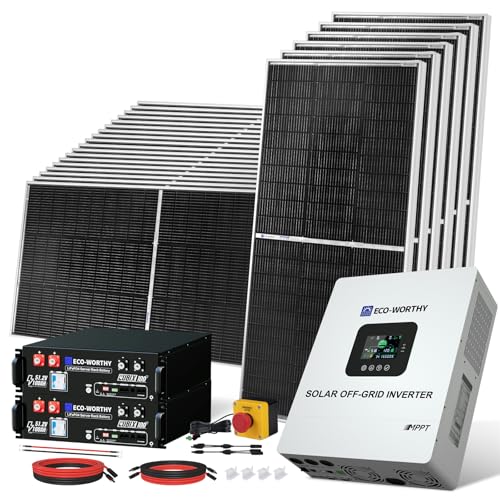
Full Off-Grid Solar Solution: Achieve energy independence with a robust renewable solution! Take control of your energy independence with the ECO-WORTHY comprehensive off-grid solar kit. This package includes two 48V 100Ah LiFePO4 integrated communication batteries, 24pcs 195W N-Type bifacial solar panels, and a powerful 5000W off-grid solar inverter equipped with a 100A MPPT solar charge controller, as well as all the necessary cables and mounting brackets.
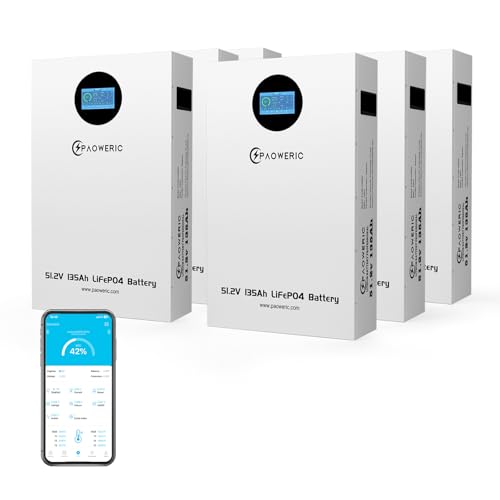
【Grade A Prismatic Cells]】The PAOWERIC 51.2V 135Ah wall-mounted lithium-ion battery is meticulously crafted using 16 state-of-the-art Grade A+ prismatic cells. Compared to the cylindrical cells commonly used in the industry, it is lighter, safer, and more energy-efficient, redefining the quality standards for energy storage batteries. The cells have undergone rigorous testing across all scenarios and deliver a stable output of 5.12 kWh of high-capacity energy. They are perfectly suited for home energy storage, solar systems, backup power, and other applications, meeting long-term, continuous power supply needs while significantly reducing long-term operating costs.
LiFePO4 vs. Lithium‑Ion: Cycle‑Life Comparison for Home Solar
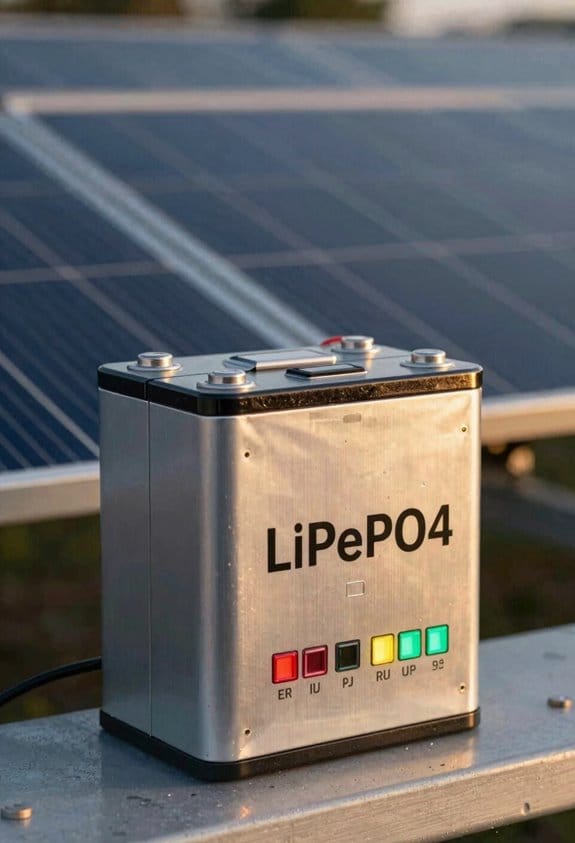
If you compare the rated cycle counts, LiFePO4 cells typically deliver 2,000‑6,000 full‑depth cycles, whereas conventional lithium‑ion packs reach only about 800‑1,000 cycles before capacity falls below 80 % of nominal. I note that this disparity translates directly into cycle longevity, because LiFePO4 maintains performance retention above 85 % after 3,000 cycles, while lithium‑ion often drops to 70 % after 1,200 cycles under identical depth‑of‑discharge conditions. The higher cycle count of LiFePO4 also means fewer replacements over a typical ten‑year home solar lifespan, reducing total cost of ownership, whereas lithium‑ion’s shorter lifespan may require mid‑term battery swaps. Consequently, for frequent daily cycling, LiFePO4 offers superior durability and consistent output, whereas lithium‑ion provides higher energy density at the expense of reduced long‑term performance retention.
Recommended Products

Reliable LiFePO4 Technology: Our 16-cell LiFePO4 battery boasts an impressive lifespan of 2500 to 7000 cycles over 10 years. Equipped with an advanced Battery Management System (BMS), it's safeguarded against overcharging, deep discharges, overloads, overheating, short circuits, low temperature cut-off, and boasts an exceptionally low self-discharge rate.
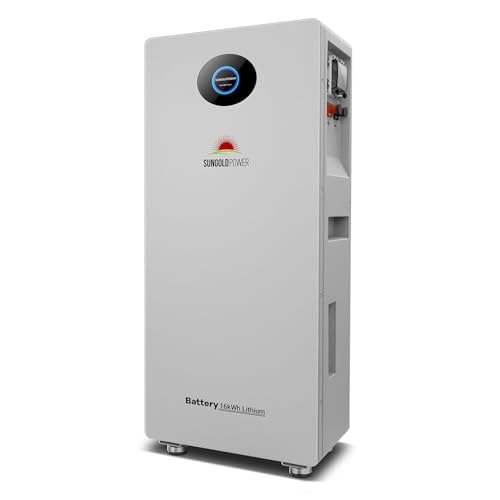
[High Capacity Solar Battery]: SUNGOLDPOWER UL1973 and UL9540A 48V 314Ah LiFePO4 lithium battery with over 8,000 deep cycles. Parallel up to 16 pcs ,maximum capacity of 16.07kWh.Ideal for solar systems, off-grid living, and whole-home backup power with reliable long-lasting performance.
[High Capacity Solar Battery] – SUNGOLDPOWER 48V 314Ah LiFePO4 lithium battery with over 8,000 deep cycles. Parallel up to 16 pcs ,maximum capacity of 16.07kWh.Ideal for solar systems, off-grid living, and whole-home backup power with reliable long-lasting performance.
LiFePO4 vs. Lithium‑Ion: Energy‑Density Impact on System Size
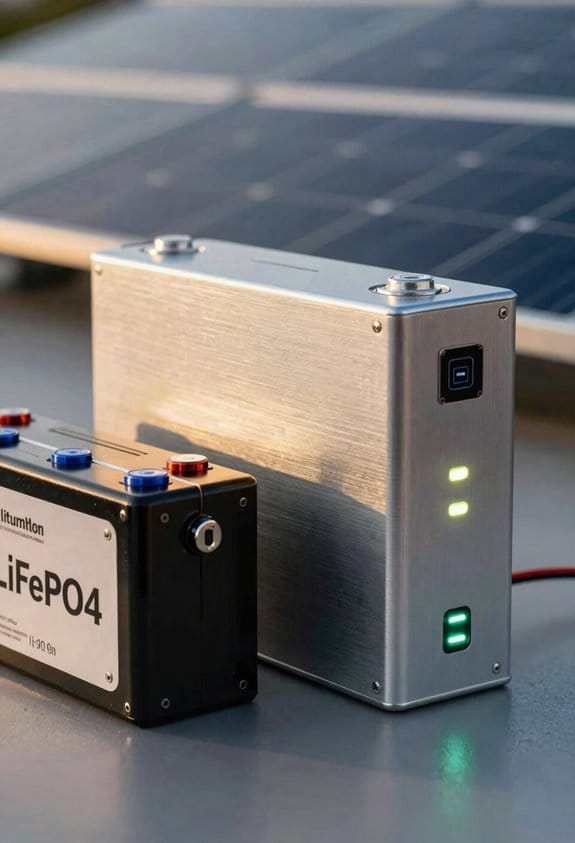
Typically, LiFePO4 cells deliver about 90‑120 Wh/kg, whereas lithium‑ion packs achieve roughly 150‑220 Wh/kg, a difference that directly expands the volume or weight required for a given storage capacity. Because LiFePO4’s lower energy density translates into larger mass for the same kilowatt‑hours, the packaging volume of a 10 kWh system can increase by roughly 30‑45 %, which in turn expands the rack footprint, often necessitating additional floor space or higher mounting structures. In contrast, lithium‑ion’s higher specific energy allows a comparable 10 kWh array to occupy about 70‑80 % of the LiFePO4‑based enclosure, reducing structural support requirements and enabling tighter integration within limited‑space installations. Consequently, system designers must balance the trade‑off between safety and longevity benefits of LiFePO4 against the compactness advantage conferred by lithium‑ion’s superior energy density.
Recommended Products

【52.7KWh LiFePO4 Battery】5 sets Dawnice’s newest line of batteries – 51.2V 206Ah LiFePO4 battery provides 6000+ cycles & a 10 years lifetime with built-in 100A Battery Management System (BMS) protects it from overcharge, deep discharge, overloading, overheating and short circuit, and excessive low self-discharge rate.
[High Capacity Solar Battery]: SUNGOLDPOWER UL1973 and UL9540A 48V 314Ah LiFePO4 lithium battery with over 8,000 deep cycles. Parallel up to 16 pcs ,maximum capacity of 16.07kWh.Ideal for solar systems, off-grid living, and whole-home backup power with reliable long-lasting performance.

[Massive 30.72KWH Energy Storage – Never Run Out of Power] 6 x 48V 100AH LiFePO4 Batteries – Keeps lights, fridge, and essentials running during blackouts or storms.This battery is rigorously tested and certified to UL1973 & UL9540A standards.It support CAN/RS485, which allows to communicate effortlessly with popular all-in-one solar inverter chargers from brandsensuring a plug-and-play experience with no additional configuration needed.The battery, crafted with a durable metal shell and a slim profile, efficiently saves space compared. It can be easily installed in a mobile 3U server rack, making it a practical choice for compact energy storage systems (energy on the move).
LiFePO4 vs. Lithium‑Ion: Temperature Limits for Solar Installations

The lower energy density of LiFePO4, which already expands system volume, also influences how temperature extremes affect solar storage installations, because LiFePO4 cells operate reliably from –20 °C up to 60 °C, whereas lithium‑ion packs are limited to roughly 0 °C–45 °C, a range that can restrict performance in cold climates and raise safety concerns in hot environments. I note that LiFePO4’s broader range improves cold performance, allowing discharge at –15 °C without significant voltage sag, while lithium‑ion may lose 20 % capacity below 0 °C, necessitating supplemental heating. Thermal management becomes essential; LiFePO4 tolerates passive cooling up to 55 °C, yet active heat exchangers are recommended above 45 °C to prevent electrolyte degradation, whereas lithium‑ion requires more aggressive cooling to stay below 40 °C, thereby increasing system complexity.
Recommended Products

【High-Capacity Home & Off-Grid Energy Storage】48V 100Ah LiFePO4 lithium battery delivers 5120Wh per unit, expandable up to 40kWh. It supports 10kW AC output and 15000W solar input, suitable for whole house backup, residential solar storage, on-grid and off-grid home energy storage to ensure continuous power supply.

【Top-Flight Performance 】The 51.2V 100Ah liFePO4 battery is manufactured by 16Pcs Automotive Grade A grade prismatic cells with higher energy density, more stable performance & greater power. And has a compact 5.12kWh energy, which is equivalent to 4pcs 12V 100Ah LiFePO4 batteries in 4S (or even 8pcs 12V 100Ah AGM batteries in 8S).

LF-PV Series Pure Sine Wave Inverter is a combination of an inverter, AC charger and Auto-transfer switch into one complete system.It is packed with unique features and it is one of the most advanced inverter/chargers in the market today
LiFePO4 vs. Lithium‑Ion: Environmental Impact and Total‑Cost‑of‑Ownership

Because LiFePO4 chemistry eliminates cobalt and relies on abundant iron and phosphate, its raw‑material extraction generates far lower ecological footprints than lithium‑ion cells, which depend on cobalt and nickel mining that contributes to habitat disruption, water contamination, and significant carbon emissions, I note that lifecycle emissions for LiFePO4 are typically 30 % lower, reflecting reduced mining intensity and longer service life, while lithium‑ion’s higher energy density yields marginally higher usage‑phase efficiency but is offset by shorter cycle counts of 800–1 000 versus 2 000–6 000 for LiFePO4, increasing total‑cost‑of‑ownership; disposal costs also differ, as LiFePO4’s non‑toxic iron‑phosphate matrix simplifies recycling, whereas lithium‑ion requires costly hazardous‑material handling, making overall ownership expenses more predictable for LiFePO4 over a 10‑year solar storage deployment.
Recommended Products

【Reliable Quality & Grade A Cells】: We have a professional lithium battery research and production factory, using A-grade battery cells to produce our batteries. Each battery leaving the factory has strict inspection standards, and most importantly, we have this absolute cost advantage while ensuring quality. We have a one month no reason return period. What are you still worried about? Give NewtiPower a try now!

【Elite 314Ah Capacity Upgrade】 Stop settling for smaller cells. The DATOUBOSS 314Ah LiFePO4 battery delivers triple the energy of standard 100Ah units. With 64 kWh of total energy, this kit is the perfect foundation for high-performance DIY solar projects, RV bus conversions, or off-grid cabins.

【24 hours Customer Service】Cloudenergy provides technical support and online customer service with fast feedback within 24 hours. If you have any product-related issues or questions, please get in touch with us directly, Cloudenergy support team is always here for you.
Frequently Asked Questions
How Does Lifepo4 Performance Change With Deep Discharge Cycles?
I’ve found that deep‑discharge cycles cause modest capacity fade and occasional voltage sag, but the impact stays limited because LiFePO4 tolerates near‑100 % DoD without severe degradation.
Can Lifepo4 Batteries Be Recycled Like Lithium‑Ion Cells?
I can confirm that LiFePO4 batteries are recyclable; the process focuses on battery recycling and material recovery, extracting iron, phosphate, and graphite for reuse, much like traditional lithium‑ion cells.
What Is the Optimal Charge‑Rate for Lifepo4 in Solar Systems?
I recommend a 0.5 C ideal C rate and a gentle charging strategy—fast enough to fill the bank quickly, yet slow enough to preserve longevity and safety in your solar system.
How Does Lifepo4 Handle Intermittent Shading or Cloud Cover?
I handle partial shading and dynamic clouds well; my voltage stays stable, and I can quickly absorb fluctuating input without overheating, so you won’t notice performance drops during intermittent sunlight.
Are There Specific Inverter Compatibility Issues With Lifepo4?
I’ve found that LiFePO4 works fine with most inverters, but you must make sure the battery communication protocol matches the inverter’s firmware; otherwise the system may refuse to recognize the pack.