As an Amazon Associate, we earn from qualifying purchases. Some links on this site are affiliate links at no extra cost to you. Our recommendations are based on thorough research and editorial judgment.


What Is a Home Battery Storage System and Do You Need One?

I’m a lithium‑ion battery array, typically LiFePO₄, composed of cells/modules, a battery management system, a bidirectional inverter, and an energy‑management controller that together capture surplus solar DC, convert it to AC for household loads, and store up to 95 % of the energy with round‑trip efficiency while tolerating 6,000–8,000 cycles, delivering 5–10 kWh backup for 4–8 hours and enabling time‑of‑use arbitrage; if you continue, you’ll discover whether this technology fits your home’s load profile and tariff structure.
Key Takeaways
- A home battery storage system (BESS) stores excess solar or grid electricity in chemical cells for later use, typically using LiFePO₄ lithium‑ion chemistry.
- It consists of cells, a battery management system, a power conversion inverter, thermal management, and an energy management controller that coordinates charging and discharging.
- The system improves self‑consumption, provides backup power during outages, and can reduce electricity bills through time‑of‑use arbitrage.
- Suitability depends on your household’s load profile, solar surplus, tariff structure, and need for reliable backup; a 5‑10 kWh unit often covers essential loads for 4‑8 hours.
- Evaluate cost ($800‑$1,200 per usable kWh), incentives, and ROI; most homeowners see payback in 6‑12 years when savings and backup value are factored in.
Define What a Home Battery Storage System Is
Define a home battery storage system as a battery energy storage system (BESS) that stores electrical energy for later use, converting chemical energy into electrical energy, comprises cells or modules, a battery management system (BMS), a power conversion system (PCS) or inverter, an enclosure, and an energy management system (EMS), and integrates with residential solar panels or grid sources to provide backup power, energy management, and grid support, typically employing lithium‑ion chemistry such as LiFePO₄ for its high energy density, 95 % round‑trip efficiency, and 6,000‑8,000 cycle lifespan. I explain that residential resilience depends on reliable storage, while energy literacy enables homeowners to interpret performance metrics, such as depth‑of‑discharge limits, thermal monitoring thresholds, and state‑of‑charge algorithms, which together determine system efficiency, lifespan, and cost‑benefit analysis.
Explain How Home Battery Core Components Work Together to Store Solar Power
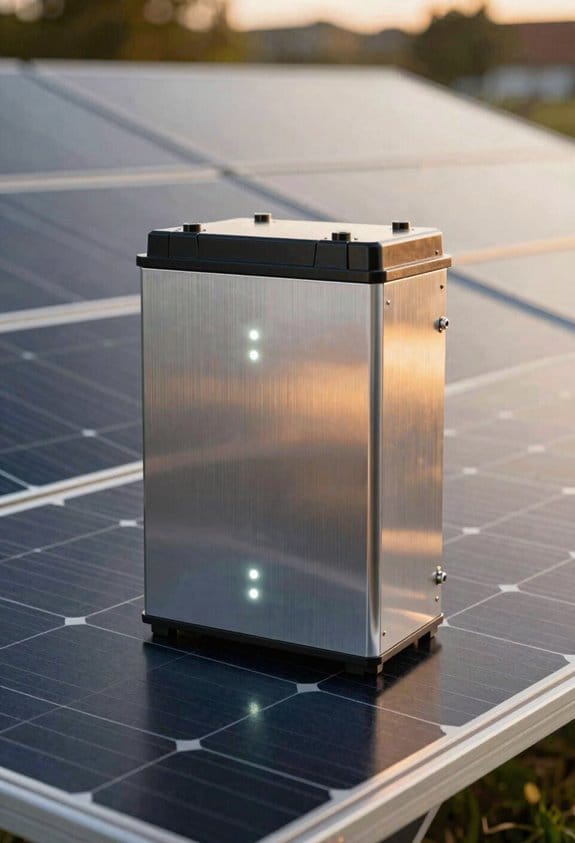
When solar panels in a home solar power system generate DC electricity during daylight, the power conversion system, typically a bidirectional inverter, first rectifies any grid‑derived AC into DC, then directs that DC into the battery cells or modules, which are arranged in series‑parallel configurations to achieve the required voltage and capacity, while the battery management system continuously monitors each cell’s voltage, temperature, and state‑of‑charge, balances charge across the array, and enforces safety limits such as a 95 % maximum depth‑of‑discharge and a 5 % over‑voltage margin, and the energy management system subsequently evaluates real‑time load demand, time‑of‑use pricing, and forecasted solar output to decide when to store excess energy, when to discharge for peak‑shaving, and when to reserve capacity for backup, ensuring overall round‑trip efficiency approaches 95 % and that the LiFePO₄ chemistry, rated for 6,000–8,000 cycles, operates within its ideal thermal envelope. The battery topology, often a modular stack of 12 V cells in parallel strings, enables scalable capacity while thermal management, implemented via liquid‑coolant plates or forced‑air ducts, maintains cell temperature between 15 °C and 35 °C, preventing degradation and preserving efficiency throughout charge‑discharge cycles.
Recommended Products

【42.18KWh LiFePO4 Battery】 4 sets Dawnice’s newest line of batteries – 51.2V 206Ah LiFePO4 battery provides 6000+ cycles & a 10 years lifetime with built-in 100A Battery Management System (BMS) protects it from overcharge, deep discharge, overloading, overheating and short circuit, and excessive low self-discharge rate.

Reliable LiFePO4 Technology: Our 16-cell LiFePO4 battery boasts an impressive lifespan of 2500 to 7000 cycles over 10 years. Equipped with an advanced Battery Management System (BMS), it's safeguarded against overcharging, deep discharges, overloads, overheating, short circuits, low temperature cut-off, and boasts an exceptionally low self-discharge rate.
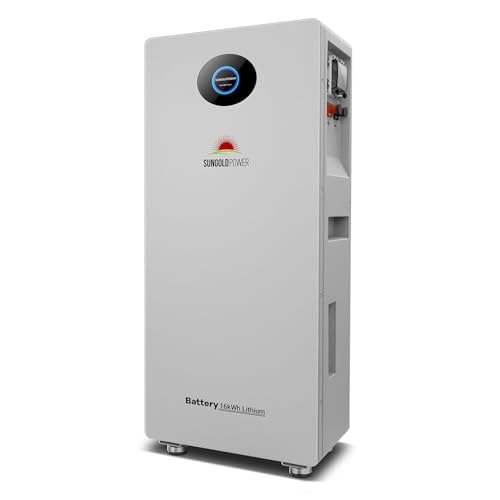
[High Capacity Solar Battery]: SUNGOLDPOWER UL1973 and UL9540A 48V 314Ah LiFePO4 lithium battery with over 8,000 deep cycles. Parallel up to 16 pcs ,maximum capacity of 16.07kWh.Ideal for solar systems, off-grid living, and whole-home backup power with reliable long-lasting performance.
Show the Three Main Benefits for Homeowners: Backup, Savings, Grid Independence

If a home battery system is installed alongside a photovoltaic array, it provides three primary advantages: reliable backup during grid outages, measurable electricity cost savings through time‑of‑use arbitrage, and increased grid independence by reducing reliance on external supply. I note that backup reliability is quantified by discharge capacity, often 5‑10 kWh, which can sustain essential loads for 4‑8 hours, and that savings strategies involve shifting solar‑generated energy to peak‑price periods, yielding annual bill reductions of 10‑25 % depending on tariff structures. I also observe that grid independence grows as the round‑trip efficiency, typically 92‑95 %, maximizes self‑consumption, while the battery management system optimizes charge‑discharge cycles, extending lifespan beyond 6,000 cycles and ensuring consistent performance under varying temperature and load conditions.
Recommended Products
[High Capacity Solar Battery] – SUNGOLDPOWER 48V 314Ah LiFePO4 lithium battery with over 8,000 deep cycles. Parallel up to 16 pcs ,maximum capacity of 16.07kWh.Ideal for solar systems, off-grid living, and whole-home backup power with reliable long-lasting performance.
[High Capacity Solar Battery]: SUNGOLDPOWER UL1973 and UL9540A 48V 314Ah LiFePO4 lithium battery with over 8,000 deep cycles. Parallel up to 16 pcs ,maximum capacity of 16.07kWh.Ideal for solar systems, off-grid living, and whole-home backup power with reliable long-lasting performance.

Version Update Notice: The former 48V 314Ah V1 is now upgraded to Powermega 48V 314Ah, featuring newly added Active Cell Balancing and Integrated Aerosol Fire Protection for higher safety and longer service life. It also comes with an extended 10-year warranty, while maintaining full compatibility with V1 units for parallel expansion
Is a Home Battery Right for You? Who Benefits Most?

Because a home battery’s suitability depends on load profile, tariff structure, and renewable generation, I evaluate its technical fit by comparing peak‑shaving potential, round‑trip efficiency, and cycle life against the household’s daily energy demand, which typically ranges from 20 kWh to 40 kWh for a four‑person residence. I find elderly households benefit when backup reliability outweighs cost, because reduced mobility increases reliance on uninterrupted power, and a 10 kWh system can sustain essential medical devices for several hours, while remote cabins with limited grid access experience significant self‑consumption gains, as a 5 kWh unit stores excess solar output, reducing diesel generator runs by up to 40 %, provided that temperature‑controlled BMS maintains cell balance and depth‑of‑discharge stays below 80 % to preserve cycle life.
Recommended Products

【High - Power Generation Capacity】This 5500W system can generate 22Kwh power per day under 4 hours' full sunshine, perfect for home, shed, cabin, farm or as other energy backup. They can also provide enough power for portable AC, air condition, TV, refrigerator, coffee maker, microwave and other devices

🌞【48V 206Ah LiFePo4 Battery】Connecting 16S1P 3.2V 206Ah A-grade batteries in series increases the maximum power to 5120W, and the maximum discharge current is 100A, that is, when the maximum output power is 5120W, the recommended charging current is 50A. Built-in 100A BMS, with RS485, RS232, CAN interface. Uses Grade A cells, with high safety, 6000+ cycles life, large current charge and discharge capability, high temperature resistance and small size, Increased to 15 years lifetime.

【51.2V 314Ah LiFePo4 Battery】Connecting 16S1P 3.2V 314Ah A-grade batteries in series increases the maximum power to 7680W, and the maximum discharge current is 150A, that is, when the maximum output power is 7680W, the recommended charging current is 100A
Guide You to Choose the Right Chemistry and Size for Your Home
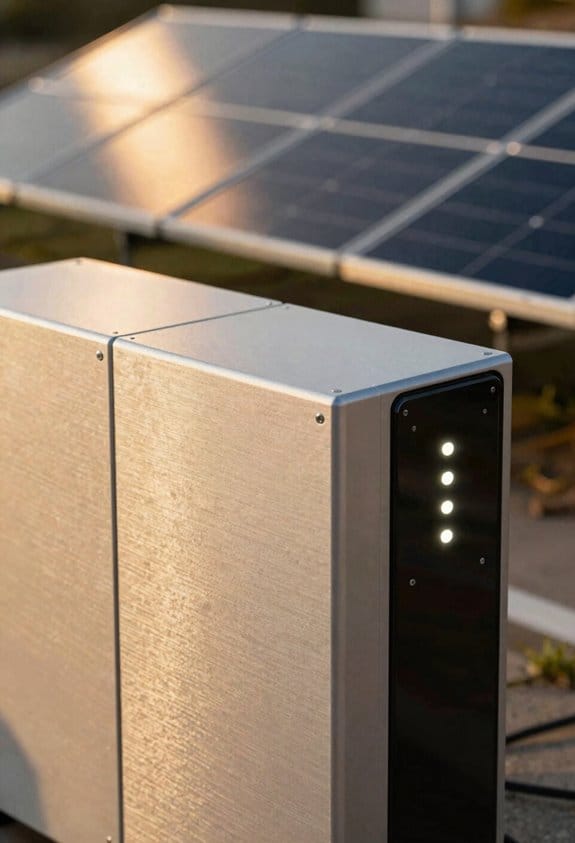
Most households that already rely on solar panels for a portion of their electricity consumption need to evaluate battery chemistry and capacity together, because the choice determines round‑trip efficiency, cycle life, and safety margins. I compare lithium‑ion variants, noting that lithium‑iron‑phosphate (LiFePO₄) offers 95 % efficiency, 6,000‑8,000 cycling performance, and reduced thermal runaway risk, while nickel‑manganese‑cobalt (NMC) provides higher energy density, 2,500‑3,000 cycles, and greater sensitivity to temperature excursions. I assess size by matching daily solar surplus, typically 5–10 kWh, to desired backup duration, calculating that a 10 kWh system supplies 4 hours at 2.5 kW load, whereas a 15 kWh unit extends coverage to 6 hours. I also factor depth‑of‑discharge limits, BMS‑controlled voltage windows, and warranty terms, ensuring that selected capacity aligns with projected load profiles and safety specifications.
Recommended Products
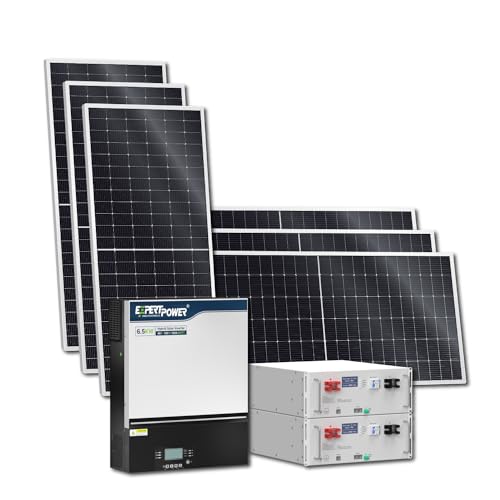
Complete Off-Grid Solar Solution: Take control of your energy independence with our comprehensive Off-Grid Solar Kit. This all-inclusive package features two 48V 100Ah LiFePO4 batteries, six high-efficiency 540W Solar Panels, and a powerful 6500W Hybrid Solar Inverter equipped with a 120A MPPT Solar Charge Controller. (Please note: Wiring cables, fuses, breakers, connectors, and panel mounting brackets are not included.)

【Massive Whole-House Energy Bank】Eliminate power anxiety with the DATOUBOSS 48.24 kWh battery system. This high-capacity 314Ah setup provides enough stored energy to run critical household appliances—including HVAC systems, refrigerators, and pumps—during extended grid outages or for full off-grid living.

[Ideally Output of 9.36KWH] The power of 9.36KWh per day under 4 hours full sunshine by the 2340W solar panel system, very suitable for home, shed, cabin, farm or other energy backup, and it will provide enough power for portable ac, air condition, TV, refrigerator, coffee maker, microwave and other AC 240V (split-phase)devices.
Help You Calculate Home Battery Costs, Incentives, and ROI Before You Buy
When evaluating a home battery system, I first gather the upfront capital cost, which typically ranges from $800 to $1,200 per kilowatt‑hour of usable capacity, then add installation fees that can vary between $1,000 and $3,000 depending on wiring complexity, permitting requirements, and enclosure type. I then calculate total installation costs by summing labor rates, permit charges, and any required electrical upgrades, while also accounting for financing options such as zero‑interest loans, lease‑to‑own programs, or power purchase agreements that spread cash outlay over five to ten years. Next, I review incentive deadlines, noting that state rebates often expire within six months of allocation, and federal tax credits may phase down after 2026, which directly impacts the payback timeline. By inputting utility rate structures, peak‑shaving savings, and backup power value into a spreadsheet, I derive a projected ROI, typically expressed as years until the net present value of savings equals the initial expenditure.
Recommended Products

【32768Wh LiFePO4 Battery】 Dawnice’s newest line of batteries – 51.2V 320Ah LiFePO4 battery provides 6000+ cycles & a 10 years lifetime with built-in 100A Battery Management System (BMS) protects it from overcharge, deep discharge, overloading, overheating and short circuit, and excessive low self-discharge rate.

System Components:Delivers up to 10kW power output with 120V/240V single-phase split-phase support, making it suitable for smoothly running common household appliances. The system includes 18 × 590W solar panels with a total PV capacity of 10620W, capable of generating up to 39.36 kWh per day under optimal conditions, along with two 48V 314Ah portable LiFePO₄ battery offering 32.2 kWh of energy storage. Complete with necessary cables, this all-in-one solar solution is designed for convenient setup and reliable home power support.

Reliable LiFePO4 Technology: Our 16-cell LiFePO4 battery boasts an impressive lifespan of 2500 to 7000 cycles over 10 years. Equipped with an advanced Battery Management System (BMS), it's safeguarded against overcharging, deep discharges, overloads, overheating, short circuits, low temperature cut-off, and boasts an exceptionally low self-discharge rate.
Frequently Asked Questions
Can a Home Battery Be Integrated With a Non‑Solar Backup Generator?
I can integrate a home battery with a non‑solar backup generator using generator compatibility and a transfer switching system, so the battery charges when the generator runs and supplies power during outages.
What Noise Level Does a Residential Battery Storage System Produce?
I’ll tell you: a residential battery typically emits a quiet hum, barely louder than a refrigerator, while its cooling fans spin softly, keeping noise well below 40 dB, so you hardly notice them.
Do Home Batteries Affect My Home Insurance Premiums?
I’ve found that home batteries can nudge insurance costs upward because insurers factor them into risk assessment, but the impact varies—some carriers treat them as a minor premium increase, others may require additional safety documentation.
How Does Temperature Affect Battery Lifespan and Performance?
I’ve seen batteries lose 20 % capacity after just five degrees above ideal, so temperature sensitivity matters. Good thermal management keeps cells cool, preserving lifespan and performance for years of reliable home use.
Can I Monitor My Battery’s Health Remotely via a Smartphone App?
I can monitor my battery’s health remotely via a smartphone app, which provides remote diagnostics and usage insights, letting me track charge cycles, temperature, and performance without leaving home.