As an Amazon Associate, we earn from qualifying purchases. Some links on this site are affiliate links at no extra cost to you. Our recommendations are based on thorough research and editorial judgment.


What Is an Off-Grid Solar System? How It Differs From Grid-Tied

I’m an off‑grid solar system, which consists of 300 W monocrystalline panels (20‑22 % efficiency, −0.35 %/°C temperature coefficient) wired through 6 AWG copper to a 40 A MPPT charge controller (95‑99 % efficiency) that charges a 12 V, 400 Ah lithium‑ion bank (~5 kWh usable), supplying a 3‑kW pure‑sine‑wave inverter (≈95 % efficiency at 0.8 power factor) for autonomous AC loads, while a grid‑tied system connects panels directly to the utility via an inverter, feeds excess power to the grid, and omits batteries and charge controllers, reducing capital cost and achieving ~95 % overall efficiency; if you continue, you’ll discover the detailed trade‑offs and sizing considerations.
Key Takeaways
- An off‑grid solar system includes batteries, charge controller, and inverter to store and convert energy for independent operation without utility power.
- Grid‑tied systems connect directly to the utility, feeding excess electricity to the grid and typically omit batteries and charge controllers.
- Off‑grid designs must size panels, storage, and inverter to meet daily load and autonomy requirements, often targeting 3–5 days of reserve.
- Grid‑tied setups prioritize inverter capacity for peak export and rely on net‑metering or feed‑in tariffs for economic benefit.
- Hybrid systems combine both approaches, adding battery storage to a grid‑tied inverter for backup and peak‑demand reduction.
How Off‑Grid Solar Works and Why It Might Be Right for You
Off‑grid solar systems convert sunlight into direct current (DC) electricity via photovoltaic panels, regulate that energy with maximum‑power‑point‑tracking (MPPT) charge controllers, store surplus in deep‑cycle batteries, and invert DC to alternating current (AC) for household loads using off‑grid inverters, a process that operates independently of utility infrastructure and requires precise sizing of each component to match daily load profiles, seasonal irradiance variations, and battery depth‑of‑discharge limits, ensuring continuous power availability even during prolonged cloudy periods or nighttime. I assess seasonal usage by comparing winter insolation of 3.2 kWh/m²/day to summer peaks of 6.5 kWh/m²/day, then adjust panel wattage and battery amp‑hour capacity accordingly, which yields energy autonomy measured by days of reserve, typically three to five days for residential loads of 2‑4 kW. This analytical approach quantifies independence without referencing grid interaction.
Identify Core Components of an Off‑Grid Solar Setup

A typical off‑grid solar installation—closer to a self-contained home solar power system—comprises five essential components, each serving a distinct function that together enable autonomous power generation, storage, and delivery. The solar array, consisting of 300‑W monocrystalline panels, captures sunlight and feeds DC electricity through properly sized solar wiring, which must be rated for at least 10 % above maximum current to prevent voltage drop. The charge controller, preferably MPPT with a 40 A rating, regulates this input, protecting the battery bank—often a 12 V, 400 Ah lithium‑ion stack capable of delivering 5 kWh usable energy. The inverter, a 3 kW pure‑sine‑wave unit, converts stored DC to AC for household loads, while mounting hardware, such as galvanized steel racks with adjustable tilt angles of 15‑30°, secures panels to ground or roof, ensuring peak irradiance capture and structural stability.
Recommended Products
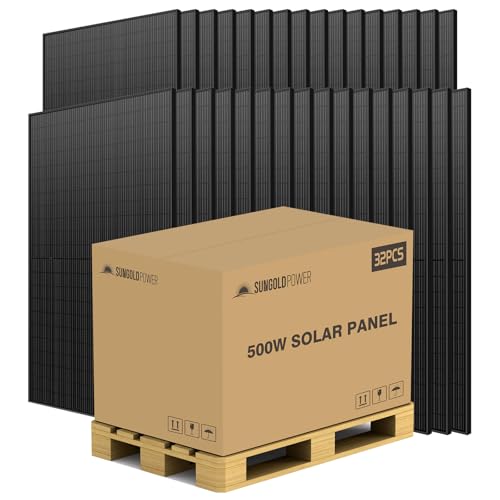
【High Efficiency Module】 : Sungoldpower UL61730 500W Solar panel comes with Mono PERC Half-Cut Technology and has a module efficiency up to 21.05%. Sungoldpower 500 watt solar panels provide more output per surface area than most traditional panels.

30% Higher Energy Yield with Bifacial Design: Comparing to the traditional solar panels, Renogy's innovative 320W solar panels capture sunlight on both sides, delivering up to 30% more power output than conventional solar panels.

【Max Output】High-efficiency 16BB N-type cells deliver more energy per square foot, helping you maximize solar panel output even in tight installation spaces. With up to 25% cell efficiency, this solar panel provides higher watt output than conventional panels – a true power upgrade for your system.
Choose the Right Solar Panel Type for Your Location

Typically, I evaluate panel efficiency, temperature coefficient, and degradation rate before selecting a type, because each factor directly influences energy yield under specific climatic conditions. I compare monocrystalline cells, which deliver 20‑22 % efficiency, with polycrystalline units at 15‑17 % and thin‑film modules ranging 10‑12 %, noting that monocrystalline maintains higher performance when panel orientation is ideal and local shading is minimal, while thin‑film tolerates diffuse light and temperature spikes better. I assess temperature coefficients, where monocrystalline typically loses 0.35 %/°C, polycrystalline loses 0.45 %/°C, and thin‑film loses 0.20 %/°C, which influences output in hot climates. I also examine degradation rates, expecting monocrystalline to lose 0.5 % annually, polycrystalline 0.7 % and thin‑film 0.3 %, ensuring long‑term reliability for off‑grid applications.
Recommended Products

【52.7KWh LiFePO4 Battery】5 sets Dawnice’s newest line of batteries – 51.2V 206Ah LiFePO4 battery provides 6000+ cycles & a 10 years lifetime with built-in 100A Battery Management System (BMS) protects it from overcharge, deep discharge, overloading, overheating and short circuit, and excessive low self-discharge rate.

Reliable LiFePO4 Technology: Our 16-cell LiFePO4 battery boasts an impressive lifespan of 2500 to 7000 cycles over 10 years. Equipped with an advanced Battery Management System (BMS), it's safeguarded against overcharging, deep discharges, overloads, overheating, short circuits, low temperature cut-off, and boasts an exceptionally low self-discharge rate.
[Bifacial Technology] Designed to capture sunlight from both sides, this panel increases energy yield by up to 30%, making it ideal for various installations, including rooftops and ground mounts.
Learn How Batteries Keep Power On After Sunset

When sunlight wanes, battery banks—typically composed of deep‑cycle lithium‑ion cells rated 3.2 V per cell and 100 Ah per module—store the day’s excess DC energy, which the charge controller then delivers to the inverter at a regulated 48 V bus, allowing continuous AC load support up to 5 kW for several hours, while monitoring state‑of‑charge, temperature, and voltage drift to prevent over‑discharge and safeguard cycle life exceeding 2 000 cycles. I explain that battery management systems continuously balance cell voltage, temperature, and current, ensuring that each module operates within its ideal window, thereby extending usable capacity during night‑time demand. Load prioritization occurs automatically, with essential appliances receiving power first, while non‑critical loads are deferred until surplus energy is available, maintaining system stability and preventing premature depletion. This coordinated approach maximizes efficiency, preserves battery health, and guarantees reliable off‑grid operation after sunset.
Recommended Products

Reliable LiFePO4 Technology: Our 16-cell LiFePO4 battery boasts an impressive lifespan of 2500 to 7000 cycles over 10 years. Equipped with an advanced Battery Management System (BMS), it's safeguarded against overcharging, deep discharges, overloads, overheating, short circuits, low temperature cut-off, and boasts an exceptionally low self-discharge rate.

【Elite 314Ah Capacity Upgrade】 Stop settling for smaller cells. The DATOUBOSS 314Ah LiFePO4 battery delivers triple the energy of standard 100Ah units. With 64 kWh of total energy, this kit is the perfect foundation for high-performance DIY solar projects, RV bus conversions, or off-grid cabins.

30kWh Home Backup Solution: Equipped with a 10kW hybrid inverter and two 48V 314Ah LiFePO4 batteries, this integrated system delivers 30kWh+ of usable energy for whole-home backup, solar energy storage, off-grid living, and emergency power
Select MPPT or PWM Charge Controllers for Maximum Efficiency
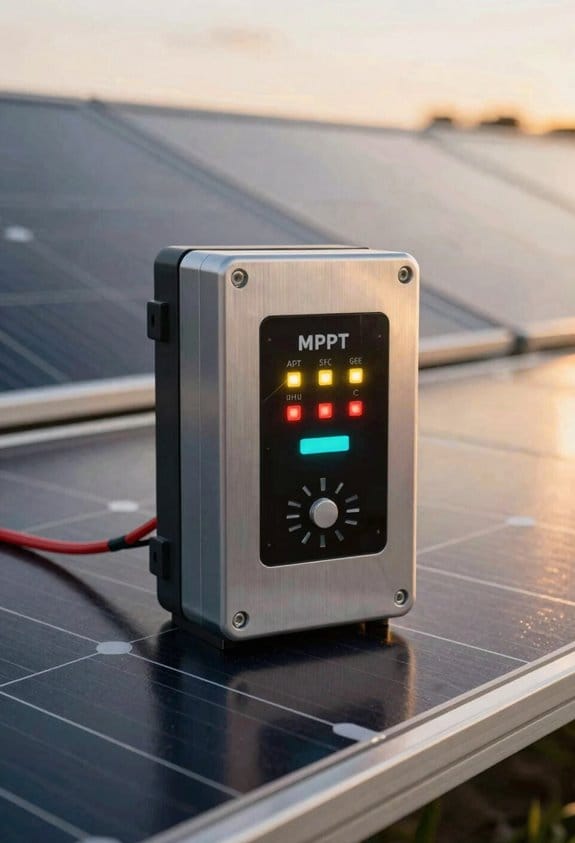
Choosing between MPPT and PWM charge controllers hinges on voltage‑to‑current conversion efficiency, with MPPT units typically achieving 95‑99 % of array power under varying irradiance, while PWM models often cap at 70‑80 % under the same conditions, especially when panel voltage exceeds battery voltage. I evaluate MPPT because its maximum power point tracking algorithm adjusts continuously, allowing higher input voltages and lower battery current, which translates into reduced wiring losses and smaller conduit sizes, whereas PWM simply connects the array directly to the battery, limiting voltage utilization. When troubleshooting MPPT, I monitor temperature coefficients, firmware updates, and sensor calibration, while noting that PWM lifespan generally exceeds ten years due to fewer active components, though its lower efficiency may necessitate larger arrays to meet the same daily energy demand.
Recommended Products


100A MPPT CONTROLLER: The revolutionary GenStar MPPT (Maximum Power Point Tracking) 100A solar charge controller represents Morningstar's best engineering efforts brought together into a single design, with ability to add additional technology such as Relay, Shunt and BMS functionality. The GenStar MPPT is available in 60, 80 and 100A charge ratings with a maximum Voc limit of 200V, and supports 12, 24, 36 and 48V Lithium and Lead-Acid batteries.

60A, 600V MPPT CONTROLLER: Morningstar TriStar Maximum Power Point Tracking (MPPT) 60A, 600V solar charge controller is perfect for larger solar systems with multiple panels or high-voltage outputs. It boosts energy output and accelerates charging times. Compatible with a wide variety of solar modules and array configurations, it ensures optimal energy harvest.
Size and Wire Your Off‑Grid Inverter for Household Loads
Determine the inverter’s continuous power rating by matching the sum of the household’s simultaneous AC loads, expressed in watts, to the inverter’s nominal output, typically expressed as 3 kW‑5 kW for modest residences, while also confirming that the surge rating exceeds the peak start‑up demand of motor‑driven appliances such as refrigerators, pumps, and air‑conditioners, which can reach 1.5‑2 times the continuous load for several seconds. I then calculate the required wire gauge by dividing the inverter’s maximum current by the allowable voltage drop, selecting a 6 AWG copper conductor for a 200 A peak, which maintains under 3 % loss over 30 feet, and I add surge protection devices at the inverter terminals to clamp transient spikes, ensuring that the protective devices, such as metal‑oxide varistors, are rated for at least 1.2 times the inverter’s surge current, thereby preserving battery and load integrity.
Recommended Products
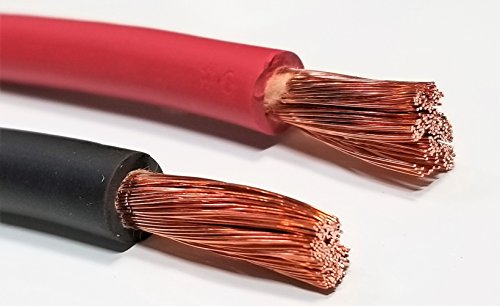
HIGHLY FLEXIBLE ANNEALED COPPER STRANDS CLASS K 30 AWG

Please refer to the photo gallery for a technical specification chart (amperage, voltage, stranding, insulation and copper thickness, etc.)
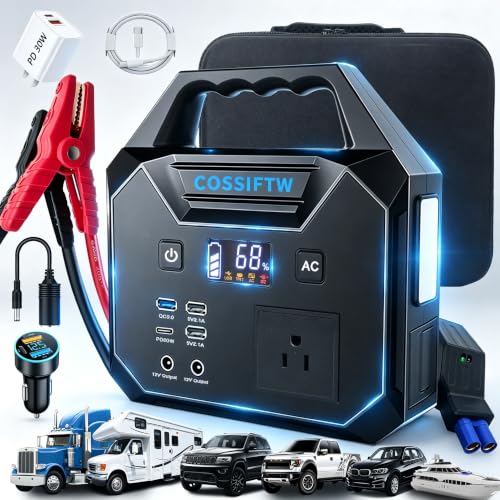
COSSIFTW 10000A starter with EC8 smart clip 6AWG cable, powerful current channel, suitable for all gasoline vehicles and 15L diesel vehicles, suitable for trucks, RVs, agricultural vehicles, mining vehicles
Explore Grid‑Tied Solar Systems: Features and Benefits
How do grid‑tied solar systems differ from off‑grid configurations, and what technical advantages do they offer? I connect my photovoltaic array directly to the utility, allowing real‑time power exchange, which eliminates the need for battery banks, charge controllers, and off‑grid inverters, thereby reducing capital cost by up to 40 % and increasing overall system efficiency to 95 % under standard test conditions. Net metering enables me to receive credit at the retail rate for each kilowatt‑hour exported, while feed‑in tariffs, when applicable, provide a fixed payment per kilowatt‑hour, often ranging from $0.05 to $0.12, depending on regional tariff structures. Export limits, typically set at 10 % of the system’s nameplate capacity, prevent over‑injection, ensuring grid stability, and allowing seamless integration of additional loads without requiring extensive protective relays.
Off‑Grid vs. Grid‑Tied Solar: Direct Comparison
When comparing off‑grid and grid‑tied solar installations, the primary distinction lies in the presence of energy storage and grid interconnection, because off‑grid systems incorporate battery banks, charge controllers, and dedicated inverters to convert DC to AC for isolated loads, whereas grid‑tied configurations feed DC‑generated electricity directly to the utility through a grid‑synchronizing inverter, eliminating the need for batteries and reducing upfront capital by roughly 30‑40 % while achieving module‑level efficiencies of 95 % under standard test conditions. I note that off‑grid setups typically incur higher maintenance costs due to battery periodic checks, electrolyte top‑ups, and inverter cooling, whereas grid‑tied systems require less frequent servicing, though they face regulatory challenges such as interconnection permits and net‑metering compliance. Both architectures demand precise sizing, yet off‑grid designs must balance storage capacity against load profiles, while grid‑tied designs prioritize inverter capacity to handle peak export, influencing overall system economics.
Decide When a Hybrid (Grid‑Tied + Battery) System Makes Sense
Off‑grid systems rely on batteries for autonomy, while grid‑tied installations feed excess power to the utility; adding a battery to a grid‑tied configuration creates a hybrid that can store surplus energy, provide backup during outages, and reduce peak‑demand charges, especially when the utility tariff includes time‑of‑use rates that can exceed $0.30 /kWh during peak periods. I evaluate a hybrid when my load profile shows a 40 % evening consumption spike, because a 10 kWh lithium bank can offset that peak, lowering demand charges by up to $200 annually, while a cost analysis reveals a payback of 7 years versus a pure grid‑tied system. Policy considerations such as net‑metering caps, interconnection fees, and incentive rebates for storage must be quantified, because they directly affect the net present value and regulatory compliance of the installation.
Real‑World Off‑Grid Solar Applications: Homes, Farms, and RVs
Because many remote residences lack reliable utility service, I evaluate off‑grid solar installations for homes, farms, and RVs by comparing panel efficiency, battery capacity, and inverter rating, noting that monocrystalline modules typically deliver 20‑22 % conversion efficiency, lithium‑ion banks provide 3‑5 years cycle life, and 3‑kW pure‑sine inverters maintain 95 % efficiency under 0.8 power factor load. In remote cabins I prioritize high‑capacity batteries, often 10 kWh‑12 kWh lithium packs, to sustain refrigeration and heating through night and cloudy periods, while sizing a 5‑kW inverter to handle simultaneous loads. Mobile tiny homes and RVs benefit from flexible thin‑film panels, typically 250 W each, paired with 2‑kWh lithium‑ion modules, allowing rapid deployment and weight reduction, and a 2‑kW inverter that preserves 96 % efficiency at 0.9 power factor. Farm applications integrate larger arrays, up to 10 kW, with 20 kWh battery banks, supporting irrigation pumps and livestock lighting, while maintaining inverter loads under 85 % to extend component lifespan.
Frequently Asked Questions
How Many Days of Autonomy Should My Battery Bank Provide?
I’d recommend at least three to five days autonomy for typical loads, but if you face long winter lows or seasonal storage gaps, bump it up to seven or more days to stay safe.
Can I Integrate a Wind Turbine Into an Off‑Grid Solar System?
I’ll tell you yes—turbine compatibility’s a breeze, but mounting considerations matter. Pair a wind turbine with your off‑grid solar, guarantee sturdy supports, align wind direction, and match voltage to your charge controller.
What Maintenance Is Required for Lithium Versus Lead‑Acid Batteries?
I’ll tell you: lithium batteries need only periodic voltage checks and cleaning, while lead‑acid require regular water top‑ups and equalization charges; lithium offers longer cycle life but higher temperature sensitivity.
How Do I Protect My System From Lightning Strikes?
I’ll tell you, “nothing’s more fun than a lightning‑kissed panel,” so I install surge arrestors and grounding improvements, then I relax, knowing my system won’t suddenly audition for a fireworks show.
Is a Separate Backup Generator Necessary for Off‑Grid Reliability?
I’d say a backup generator isn’t strictly required, but I rely on one when fuel logistics are uncertain; it guarantees power during prolonged low‑sun periods or battery failures.