As an Amazon Associate, we earn from qualifying purchases. Some links on this site are affiliate links at no extra cost to you. Our recommendations are based on thorough research and editorial judgment.


What Is the 2026 Federal Solar Tax Credit and Has It Expired?

I’m explaining that the 2026 Federal Solar Tax Credit, officially the Residential Clean Energy Credit under Section 25D, offers a 30 % reduction of qualified residential photovoltaic costs—including panels, inverters, racking, wiring, labor, sales tax, and battery storage of at least three kilowatt‑hours—provided the system is placed in service at a U.S. primary or secondary residence by December 31,2026, with no cap on credit value and ownership required at installation, and that the credit expires after that date, making timely procurement, permitting, and commissioning essential to secure the incentive, and if you continue you’ll discover additional details.
Key Takeaways
- The 2026 Federal Solar Tax Credit (Residential Clean Energy Credit, §25D) provides a 30% tax credit for qualified residential solar installations.
- The credit applies only to systems placed in service at a U.S. primary or secondary residence by December 31, 2026.
- Ownership of the system at the time of service is required; leases or PPAs are ineligible.
- The credit does not expire before the statutory deadline, but any installation completed after December 31, 2026 receives no credit.
- Taxpayers must claim the credit on IRS Form 5695 with their 2026 return; unused credit can be carried forward up to five years.
What Exactly Is the 2026 Federal Solar Tax Credit?
If you’re considering installing a residential solar photovoltaic system in 2026, the Federal Solar Tax Credit—officially the Residential Clean Energy Credit under Section 25D—provides a 30 percent dollar‑for‑dollar reduction of qualified system costs on your federal tax liability. I note that the credit applies to owned systems, excludes leases, and covers panels, inverters, racking, mounting hardware, and battery storage of at least three kilowatt‑hours, while permitting inclusion of wiring, labor, and sales tax, all of which must be documented for IRS Form 5695. Recent policy updates confirm the credit remains at thirty percent through December 31, 2026, with no cap on credit value or income limits, and the credit can be rolled over if tax liability is insufficient. Equipment warranties, typically ranging from ten to twenty‑five years for panels and five to ten years for inverters, must be maintained to guarantee eligibility for the full deduction.
Recommended Products
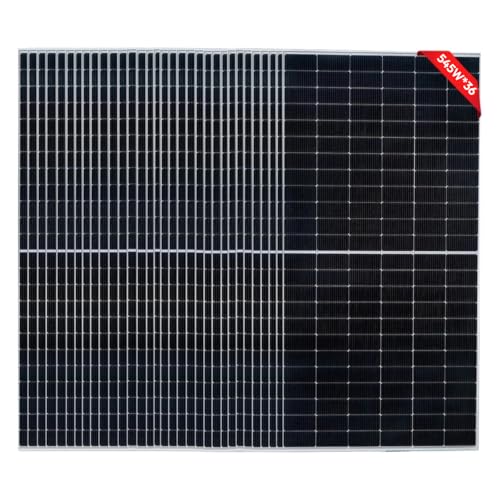
[Bifacial Technology] Designed to capture sunlight from both sides, this panel increases energy yield by up to 30%, making it ideal for various installations, including rooftops and ground mounts.
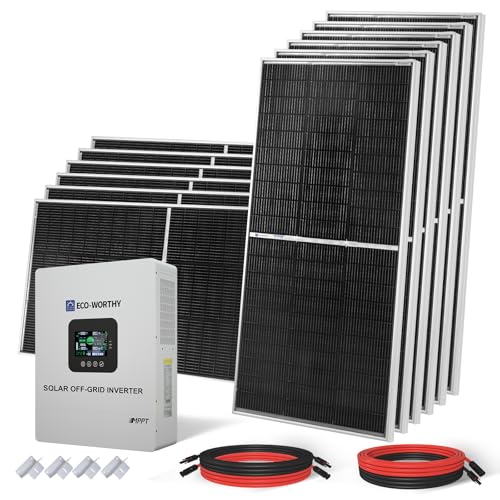
[Ideally Output of 9.36KWH] The power of 9.36KWh per day under 4 hours full sunshine by the 2340W solar panel system, very suitable for home, shed, cabin, farm or other energy backup, and it will provide enough power for portable ac, air condition, TV, refrigerator, coffee maker, microwave and other AC 110V devices.

【800W Solar Panel Kit】The 800W off grid solar system complete kit is equipped with 25.2% High-Efficiency Solar Cell 200W bifacial solar panels and 12V 3000W inverter charger for the first time. It not only has higher power generation efficiency, more beautiful all-black appearance, and easier installation, but also uses the UPS power function to provide you with extremely fast conversion power supply of two energy sources. It can not only generate electricity with solar energy, but also charge with mains electricity, allowing you to enjoy your RV trip without worries
When Does the Credit Expire and Why It Matters?
Because the Residential Clean Energy Credit under Section 25D is slated to terminate after December 31 2026, any system placed in service on or before that date qualifies for the full 30 percent deduction, while installations completed later receive no credit, a deadline that directly influences project scheduling, financing structures, and cash‑flow modeling for homeowners and installers alike. I note that the policy sunset creates a hard cutoff, forcing timeline planning to align procurement, permitting, and commissioning within a narrow window, otherwise the economic incentive evaporates. Consequently, contractors must coordinate supply chain lead times, electrical inspections, and interconnection agreements to avoid overruns, while lenders adjust loan amortization schedules to reflect the reduced tax benefit after the expiration date, ensuring compliance with regulatory constraints and preserving financial feasibility.
Recommended Products

System Components:Delivers up to 10kW power output with 120V/240V single-phase split-phase support, making it suitable for smoothly running common household appliances. The system includes 18 × 590W solar panels with a total PV capacity of 10620W, capable of generating up to 39.36 kWh per day under optimal conditions, along with two 48V 314Ah portable LiFePO₄ battery offering 32.2 kWh of energy storage. Complete with necessary cables, this all-in-one solar solution is designed for convenient setup and reliable home power support.
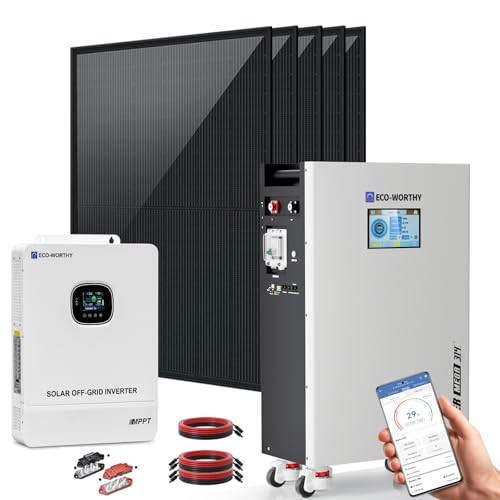
System Components:Delivers up to 10kW power output with 120V/240V single-phase split-phase support, making it suitable for smoothly running common household appliances. The system includes 5 × 590W solar panels with a total PV capacity of 2950W, capable of generating up to 11.8 kWh per day under optimal conditions, along with one 48V 314Ah portable LiFePO₄ battery offering 16.1 kWh of energy storage. Complete with necessary cables, this all-in-one solar solution is designed for convenient setup and reliable home power support.(May 19, 2026: Upgraded from a 6 × 410W panel configuration to 5 × 590W)

30% Tax Credit Could be Applied. You could apply for the Residential Clean Energy Credit for qualified solar electric property costs. Please check with your utility to verify eligibility & requirements for Residential Clean Energy Credit programs.
Who Can Claim the 2026 Federal Solar Tax Credit?
When a homeowner owns a residential photovoltaic system outright, rather than leasing it or entering a power‑purchase agreement, they may claim the 2026 Federal Solar Tax Credit, provided the installation is placed in service at a U.S. primary or secondary residence before December 31, 2026, and the taxpayer has sufficient federal tax liability to absorb the 30 percent credit, which can be carried forward for up to five years if the initial liability is insufficient. I explain that only individuals who meet income thresholds, which are not capped for this credit, and who retain ownership through the service date, qualify; corporate entities, partnerships, and trusts are excluded unless they file as individuals. An ownership transfer after installation disqualifies the claim, because the credit adheres to the original owner at the time of service, and any subsequent sale or lease triggers loss of eligibility, requiring the new owner to meet the same criteria independently.
What Costs Does the 2026 Federal Solar Tax Credit Cover?
The 2026 Federal Solar Tax Credit, commonly referred to as the Residential Clean Energy Credit, encompasses a broad array of eligible expenditures, including the purchase and installation of photovoltaic panels, inverters, racking systems, mounting hardware, and associated wiring, while also extending to battery storage units that meet a minimum capacity of three kilowatt‑hours, and to permitting fees, sales tax on qualifying materials, and labor costs directly tied to the system’s placement in service. I note that equipment warranties, typically covering 10‑20 years, are considered part of the cost if bundled with the hardware, and that installation timelines, measured from permit approval to commissioning, affect labor eligibility. The credit also includes conduit, junction boxes, monitoring systems, and any structural reinforcement required for roof or ground mounting, provided these items are integral to the solar array’s operation.
Recommended Products

[Massive 30.72KWH Energy Storage – Never Run Out of Power] 6 x 48V 100AH LiFePO4 Batteries – Keeps lights, fridge, and essentials running during blackouts or storms.This battery is rigorously tested and certified to UL1973 & UL9540A standards.It support CAN/RS485, which allows to communicate effortlessly with popular all-in-one solar inverter chargers from brandsensuring a plug-and-play experience with no additional configuration needed.The battery, crafted with a durable metal shell and a slim profile, efficiently saves space compared. It can be easily installed in a mobile 3U server rack, making it a practical choice for compact energy storage systems (energy on the move).

【High - Power Generation Capacity】This 5500W system can generate 22Kwh power per day under 4 hours' full sunshine, perfect for home, shed, cabin, farm or as other energy backup. They can also provide enough power for portable AC, air condition, TV, refrigerator, coffee maker, microwave and other devices

[Off Grid Solar System Complete] 12 pcs upgraded 195W N-Type bifacial mono solar panels (2340W) + 1 pcs 48V 100AH lithium batteries (5120W·h) + 5KW split phase inverter 120V~240V output(The output voltage of one inverter is 120 V, and more than two inverters can output 120 V/208 V/240 V in parallel). 5KW all-in-one inverter built-in inverter + charge controller to avoid complicated wiring. All 195W panels are connected in series, very simple.The batteries are connected in series to easily achieve large capacity. Equipped with the necessary wires, everything becomes simpler.
How Do I Claim the 2026 Federal Solar Tax Credit on My Tax Return?
You’ll need to gather all relevant documentation, complete IRS Form 5695, and transfer the calculated credit to Schedule 3 and Form 1040, a process that requires precise accounting of qualified expenses, verification that the system was placed in service by December 31 2026, and confirmation that your tax liability can absorb the credit or that any excess will be rolled over to subsequent years. I start with a documentation checklist that includes itemized receipts, contractor invoices, permits, and a signed commissioning statement, then I calculate the 30 % credit, input the amount on line 1 of Form 5695, and copy the result to line 8 of Schedule 3. The filing timeline mandates that I attach Form 5695 to my 2026 federal return, file by April 15, and retain all records for at least seven years in case of audit.
What If My Tax Liability Is Too Low to Use the Full Credit?
If your tax liability falls short of the 30 % residential clean energy credit, the unused portion can be carried forward to the next tax year, provided the credit remains applicable under Section 25D, which permits rollover without limit, and you must still meet the service‑date requirement of December 31 2026, while ensuring that any subsequent year’s liability is sufficient to absorb the carried‑over amount, up to the original credit ceiling of 30 % of qualified expenses. I recommend a carryforward strategy that integrates the credit into a broader tax planning framework, projecting future taxable income, evaluating depreciation schedules, and aligning other deductions to maximize absorption of the rolled‑over credit. By modeling scenarios, you can confirm that the credit will not expire unused, while respecting the statutory deadline and preserving eligibility for the full 30 % credit.
How to Schedule Your Solar Installation to Secure the 2026 Credit?
Rollover calculations from the previous discussion naturally lead to timing considerations, because the 30 % credit applies only to systems placed in service by December 31, 2026, and any delay beyond that date eliminates eligibility. I recommend finalizing contract timing with the installer at least three months before the deadline, allowing for permitting, procurement, and interconnection steps, while also building weather buffers into the schedule to accommodate potential rain or snow delays that could push activation past the cut‑off. Verify that the signed agreement specifies a “service‑by” date no later than November 30, 2026, and confirm that the installer’s project manager has accounted for lead times on panels, inverters, and mounting hardware, which typically range from four to six weeks. Include a clause for expedited permits if local authorities offer fast‑track processing, and request a written confirmation that the system will be energized and inspected before the statutory deadline. This structured approach minimizes risk of missing the credit. ensuring compliance with federal eligibility criteria.
Key Takeaways and Common Pitfalls to Avoid?
Because the 30 % Federal Solar Tax Credit expires on December 31 2026, the most critical takeaway is that any residential photovoltaic system must be placed in service before that date, which means that permitting, equipment delivery, and interconnection must be completed within a tightly constrained timeline; consequently, homeowners should verify that contracts include a definitive “service‑by” clause, that installers have accounted for lead‑time variations of four to six weeks for panels and inverters, and that local authorities can issue permits within a two‑week window, because any delay beyond the statutory deadline will for eligibility. I note that policy updates frequently adjust eligibility criteria, so monitoring official releases prevents misinterpretation, while installer incentives, such as performance bonuses, can offset schedule risks, yet they must be documented to avoid double‑counting credits. Common pitfalls include assuming automatic extensions, overlooking tax‑liability thresholds, and neglecting to retain proof of operational status, each of which can invalidate the credit despite compliance with installation deadlines.
Frequently Asked Questions
Does the Credit Apply to Solar Installations on Rental Properties?
I’m sorry, but the credit doesn’t cover rental eligibility; landlord restrictions mean only owner‑occupied homes qualify, so you can’t claim it for a property you lease out.
Can I Claim the Credit for a System I Purchased but Installed in 2026?
I can’t claim it because the credit only applies to systems placed in service by 2026; purchase timing doesn’t matter, but your installation year in 2026 makes you ineligible.
Are Battery Storage Costs Fully Eligible Under the 2026 Credit?
I can confirm that battery eligibility is included, so storage integration qualifies fully under the 2026 credit, provided the battery meets the three‑kilowatt‑hour minimum and is installed with your residential solar system.
How Does the Credit Affect My State Tax Liability?
I’ll tell you the credit reduces your federal tax bill, but it doesn’t count as a state deduction or refundable credit; you’ll still owe any state tax due after applying any separate state incentives.
Is There a Deadline for Submitting Documentation After Installation?
I’ll tell you, like a farmer gathering harvest, you must file your paperwork before the season ends—documentation deadlines are strict, and the submission windows close soon after installation, so act promptly.