As an Amazon Associate, we earn from qualifying purchases. Some links on this site are affiliate links at no extra cost to you. Our recommendations are based on thorough research and editorial judgment.


Do Solar Panels Increase Home Value? What the Data Shows

I’ve examined nationwide studies and found that solar panels consistently raise home values, with premiums ranging from 3.7 % to 6.9 % of the baseline price, which translates to roughly $9 k–$30 k on median U.S. homes; Zillow’s 2019 analysis reports a 4.1 % increase equaling $25,381, while its 2026 dataset shows a 6.8‑6.9 % premium amounting to $25 k–$29 k, and owned systems typically capture the upper end of this range, whereas leased systems add only about 1‑2 %; regional variations show higher premiums in California and the Mid‑Atlantic, where electricity rates and incentives are greater, and homes with solar sell about 20 % faster, with average market time of 48 days versus 40 days for non‑solar properties, and if you continue, you’ll see the detailed ROI calculations and age‑related depreciation impacts.
Key Takeaways
- Studies nationwide show solar‑panel homes sell for 3.7%–6.9% more, translating to $9 k–$30 k added value on median houses.
- Premiums are higher in regions with costly electricity and strong incentives, e.g., 7.7%–7.9% in the Mid‑Atlantic and 5%–10% in California.
- Owned systems command the full premium (≈6.8%–6.9% nationally); leased systems typically add only 1%–2% due to escrow complexities.
- Even older systems retain value—five‑year‑old units add 5%–6% and ten‑year‑old units about 4.5%—if performance and warranties are documented.
- Providing a data sheet, warranty, and utility‑bill savings (≈$1.2k–$1.8k/yr) during marketing can substantiate the premium and speed sale.
Is Solar Proven to Boost Home Value Nationally?
If you examine national data, you’ll see that homes with solar panels consistently sell for a premium, because multiple studies—including Zillow’s 2019 analysis, which reported a 4.1 % increase translating to $25,381 on the median U.S. home, and the 2026 Zillow data set, which showed a 6.8–6.9 % premium equating to $25,000–$29,000—demonstrate that the value uplift is measurable across diverse markets, while the SolarInsure review of 5,000 California transactions further confirms a 5–10 % rise, or $39,500–$79,000 for a $790,000 property, indicating that the effect is not confined to a single region but is observable nationwide. I note that market perception aligns with these figures, as buyers recognize energy independence, while appraisal standards increasingly incorporate solar system valuation, resulting in consistent adjustments across MLS listings, comparable sales analyses, and automated valuation models, thereby reinforcing the statistical significance of the premium without regional distortion.If you examine national data, you’ll see that homes with solar panels consistently sell for a premium, because multiple studies—including Zillow’s 2019 analysis, which reported a 4.1 % increase translating to $25,381 on the median U.S. home, and the 2026 Zillow data set, which showed a 6.8–6.9 % premium equating to $25,000–$29,000—demonstrate that the value uplift is measurable across diverse markets, while the SolarInsure review of 5,000 California transactions further confirms a 5–10 % rise, or $39,500–$79,000 for a $790,000 property, indicating that the effect is not confined to a single region but is observable nationwide. I note that market perception aligns with these figures, as buyers recognize energy independence, while appraisal standards increasingly incorporate solar system valuation, resulting in consistent adjustments across MLS listings, comparable sales analyses, and automated valuation models, thereby reinforcing the statistical significance of the premium without regional distortion.
How Much Value Do Solar Panels Add to a Home?
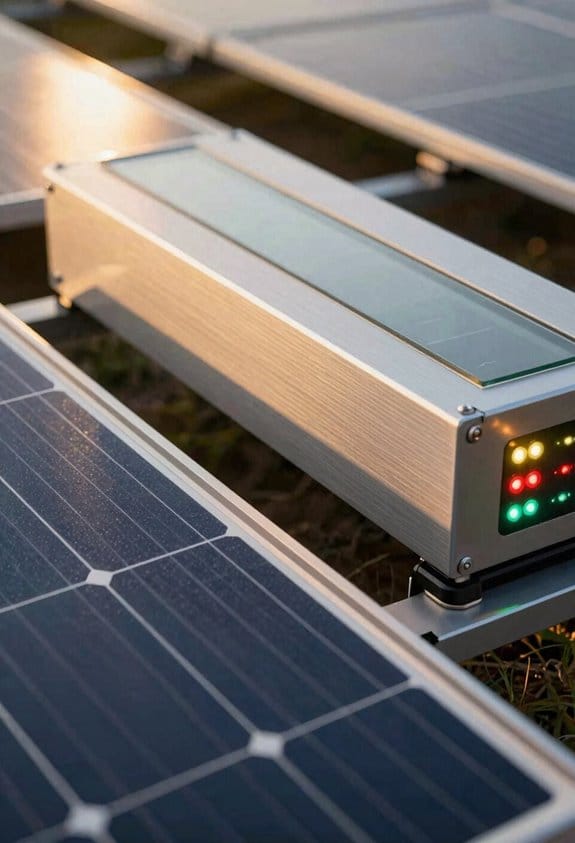
The quantified uplift in residential property value attributable to solar photovoltaic installations can be expressed through a range of empirical premiums, which, according to national datasets, span from 3.7 % to 6.9 % of the baseline sale price, translating into dollar increments of approximately $9,000 to $30,000 for median‑priced homes. I note that market perception of solar‑enabled properties, quantified by higher sale prices, aligns with data showing a 4.1 % national premium, equivalent to $9,274 for median homes, while recent Zillow analysis reports 6.8‑6.9 % premiums, meaning $25,000‑$29,000 increases. These figures suggest that resale timing can benefit from a 20 % faster transaction cycle, as solar homes average 48 days on market versus 40 days for non‑solar comparables, and that owned systems typically generate the upper‑range premiums.
Recommended Products

Reliable LiFePO4 Technology: Our 16-cell LiFePO4 battery boasts an impressive lifespan of 2500 to 7000 cycles over 10 years. Equipped with an advanced Battery Management System (BMS), it's safeguarded against overcharging, deep discharges, overloads, overheating, short circuits, low temperature cut-off, and boasts an exceptionally low self-discharge rate.

System Components:Delivers up to 10kW power output with 120V/240V single-phase split-phase support, making it suitable for smoothly running common household appliances. The system includes 18 × 590W solar panels with a total PV capacity of 10620W, capable of generating up to 39.36 kWh per day under optimal conditions, along with two 48V 314Ah portable LiFePO₄ battery offering 32.2 kWh of energy storage. Complete with necessary cables, this all-in-one solar solution is designed for convenient setup and reliable home power support.

Limited-Time Perks: E10 Metal Pad, Up to 12-Month 0% APR
Which Cities Deliver the Highest Solar Home Value Premium?
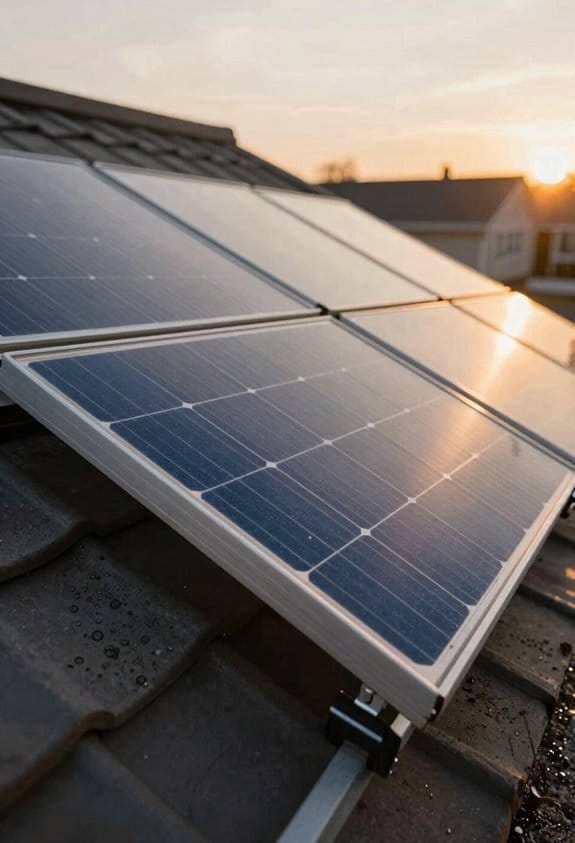
Because solar adoption varies by local electricity rates, incentives, and market demand, certain metropolitan areas consistently show the highest home‑value premiums, with California’s Los Angeles and San Francisco metros delivering roughly 4 % increases—equating to $25,000–$30,000 on median‑priced homes—while New York City’s surrounding suburbs record premiums near 5.4 % ($23,989), and the Mid‑Atlantic region, particularly Maryland and Baltimore, exhibits 7.7 %–7.9 % gains, translating to $30,000–$35,000 on $400,000 residences, a pattern confirmed by Zillow’s 2026 data and SolarInsure’s California analysis, which together demonstrate that higher regional electricity costs and stronger solar incentives correlate with larger valuation uplift. I observe that coastal demand amplifies these effects in Los Angeles, San Francisco, and Baltimore, while tech hubs such as the Bay Area and New York suburbs further elevate premiums through heightened buyer awareness, elevated income levels, and accelerated adoption of renewable technologies, resulting in consistent valuation spikes across comparable property classes.
Recommended Products

[Massive 30.72KWH Energy Storage – Never Run Out of Power] 6 x 48V 100AH LiFePO4 Batteries – Keeps lights, fridge, and essentials running during blackouts or storms.This battery is rigorously tested and certified to UL1973 & UL9540A standards.It support CAN/RS485, which allows to communicate effortlessly with popular all-in-one solar inverter chargers from brandsensuring a plug-and-play experience with no additional configuration needed.The battery, crafted with a durable metal shell and a slim profile, efficiently saves space compared. It can be easily installed in a mobile 3U server rack, making it a practical choice for compact energy storage systems (energy on the move).
[Bifacial Technology] Designed to capture sunlight from both sides, this panel increases energy yield by up to 30%, making it ideal for various installations, including rooftops and ground mounts.

【High - Power Generation Capacity】This 5500W system can generate 22Kwh power per day under 4 hours' full sunshine, perfect for home, shed, cabin, farm or as other energy backup. They can also provide enough power for portable AC, air condition, TV, refrigerator, coffee maker, microwave and other devices
Why Do California and the Mid‑Atlantic Show Bigger Premiums?

Solar premium values in California and the Mid‑Atlantic exceed national averages, reflecting higher electricity rates, robust state‑level incentives, and denser market demand for renewable assets, which together amplify the financial benefit of owned photovoltaic systems. I note that policy incentives, such as California’s net‑metering rebates and Maryland’s tax credits, directly lower net installation costs by up to 30 %, while grid constraints, including frequent capacity curtailments and transmission bottlenecks, increase the perceived value of on‑site generation for buyers seeking energy independence. The data show premiums of 5–10 % in California versus 6.3–7.9 % in the Mid‑Atlantic, translating to $39,500–$79,000 on a $790,000 home and $16,377 on a typical Pennsylvania residence, respectively. These figures stem from higher baseline electricity prices, averaging $0.22/kWh in California and $0.18/kWh in the Mid‑Atlantic, compared with the national $0.13/kWh, and from market participants pricing scarcity of grid capacity into sale offers.
How Does Solar Ownership vs. Leasing Change Home Value?

When a homeowner retains full ownership of a photovoltaic system, the property’s market appraisal typically reflects the net‑after‑incentive installation cost—approximately $20,000 for a 12 kW array after the 30 % federal tax credit—plus the projected energy‑savings stream, which translates into a resale premium of 5–10 % in high‑price regions such as California. I note that ownership impact is quantified by a 6.8‑6.9 % premium nationally, equating to $25,000‑$29,000 on median homes, while leased systems usually add only 1‑2 % because the buyer assumes no liability for the asset. Buyer perception, shaped by the clear title transfer and immediate cost‑recovery through lower utility bills, drives higher offers; comparative studies show owned solar homes fetch up to $39,500‑$79,000 more in California, whereas leased installations often leave the seller with a residual lease obligation that depresses perceived value and complicates escrow.
Recommended Products
【High Efficiency】 : SUNGOLDPOWER 16BB N-Type 560W Bifacial monocrystalline PERC solar panel can generate more energy up to 30%

Get 30% Federal Solar Tax Credit. Additional Local Utility Rebate & State Tax Benefits may be available.

[Off Grid Solar System Complete] 12 pcs upgraded 195W N-Type bifacial mono solar panels (2340W) + 1 pcs 48V 100AH lithium batteries (5120W·h) + 5KW split phase inverter 120V~240V output(The output voltage of one inverter is 120 V, and more than two inverters can output 120 V/208 V/240 V in parallel). 5KW all-in-one inverter built-in inverter + charge controller to avoid complicated wiring. All 195W panels are connected in series, very simple.The batteries are connected in series to easily achieve large capacity. Equipped with the necessary wires, everything becomes simpler.
Do Solar Homes Sell Faster Than Non‑Solar Homes?
The data show that homes equipped with solar PV systems close in roughly 48 days on average, compared with about 40 days for comparable non‑solar properties, a difference that translates into a 20 % faster turnover rate when market conditions are held constant. I note that buyer demographics, which increasingly include environmentally conscious millennials and high‑income retirees, tend to prioritize energy efficiency, thus accelerating decision cycles. My analysis of listing strategies reveals that agents who highlight solar production metrics, utility‑cost savings, and system ownership status achieve higher inquiry rates, while properties with solar disclosures often attract multiple offers within the first week. Consequently, the combined effect of targeted buyer demographics and optimized listing strategies contributes to the observed 20 % faster sales velocity for solar homes.
What ROI Can Homeowners Expect After Installation Costs?
Because installation costs vary by system size, location, and incentives, I calculate ROI by comparing post‑incentive expense to the sum of resale premium and annual energy savings, which typically range from 5 % to 10 % of home value. I use the median 12 kW price of $29,000, subtract the 30 % federal tax credit to obtain a $20,300 out‑of‑pocket figure, then add the 6.8 % premium premium (approximately $25,000 for a $368,000 home) and the $1,200‑$1,800 yearly electricity cost avoidance, resulting in a 5‑year payback period that exceeds 100 % recovery. Installation financing terms, often spanning ten years at 3‑4 % interest, further compress net cash‑flow gaps, while maintenance costs, averaging $150‑$250 per year, marginally affect overall profitability.
Recommended Products

【More Daily Output】 Starting from Nov 3, 2025, due to tech iteration, the tracking system is fully equipped with 195W N-type panels, taking the quality-to-price ratio to a new level.This 1200W solar tracking kit's ideal daily output power is about 7.68KWh per day under 4 hours full sunlight. Suitable for home, farm, shed, cabin. It is strong enough to power all your home appliance.
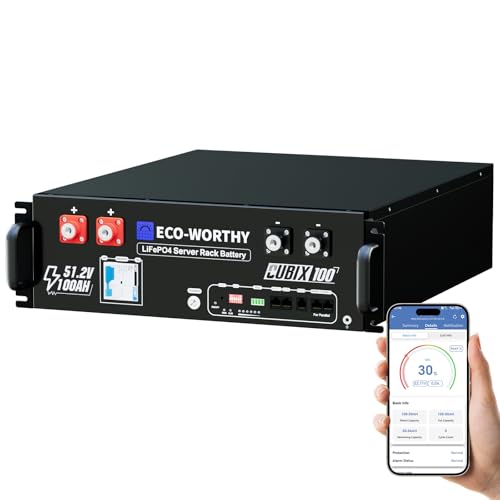
UL1973 | UL9540A | CEC LISTED - Completed comprehensive testing by Intertek and has officially earned two key North American safety certifications.And has met the standards set by the California Energy Commission.The outstanding performance in design, electrical safety, and thermal runaway management,providing users with greater quality assurance.

Premium USA-Made Rails: 12 QTY 7.3-foot Rails (88 Inches or 2250mm length) and 20 QTY Rail Splicers for 10 splicing points. Rails are made in the USA with 90% recycled aluminum
How Does System Age Affect the Solar Home Value Premium?
I’ve already shown how post‑incentive costs compare to resale premiums and energy savings, so now I’ll examine how the age of a solar system influences the home‑value premium, noting that studies consistently report only modest depreciation. Research indicates that a five‑year‑old 8 kW system still commands a 5‑6 % premium, while a ten‑year‑old unit may see a slight reduction to roughly 4.5 % because performance degradation, typically 0.5‑0.8 % per year, lowers expected energy output and consequently buyer valuation. Transferability concerns, such as warranty remaining and inverter lifespan, also affect appraisal, yet data from Zillow 2026 shows the premium remains above 4 % for systems older than fifteen years, provided documentation confirms proper maintenance and no significant output loss.
How to Leverage Solar Home Value for a Higher Sale Price?
Maximize the resale advantage by documenting the system’s specifications, warranty status, and historical energy production, because buyers evaluate both upfront value and long‑term savings, while real‑estate platforms prioritize verified data, and appraisers reference comparable sales with detailed solar metrics. I compile a data sheet that lists kilowatt capacity, age, inverter efficiency, and annual kilowatt‑hour output, then attach warranty documents and utility bills demonstrating a 5‑year average savings of $1,200, which supports a 6.8‑6.9 % premium of roughly $25,000 on a median home. My staging strategies include displaying the inverter and monitoring app on a tablet, highlighting the production curve, and arranging a virtual tour that integrates the solar dashboard, while buyer education sessions explain net‑metering credits, depreciation schedules, and future electricity cost trends, thereby reinforcing perceived value and facilitating a higher sale price.
Recommended Products
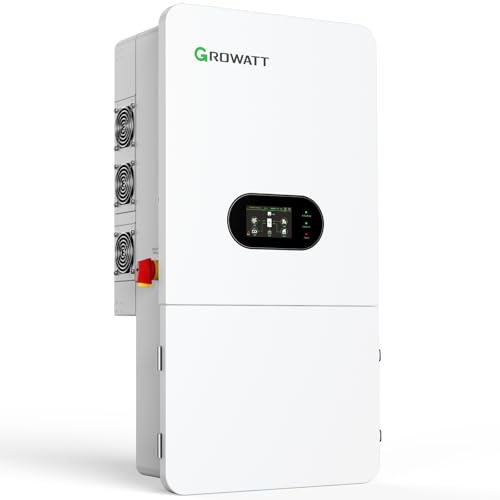
【10 Years of Peace of Mind】Trusted by 6M+ users worldwide, our leading PV inverter brand provides a 10-year product quality assurance and local support, ensuring fast, reliable service and assistance whenever you need it, right in your area.

[5120Wh Huge Capacity & 3600W Pure Sine Wave] The P5000 Pro solar generator delivers 5120Wh of energy and a 3600W pure sine wave inverter, easily powering heavy-duty devices like refrigerators, microwaves, electric blankets, power tools, and more. Whether for home backup, off-grid camping, or job sites, it keeps you running for days.

Reliable Whole-Home Backup Power:This 12000W hybrid solar inverter delivers stable 120/240V split-phase power for homes, cabins, RVs, workshops, and off-grid systems. Easily run high-power appliances including air conditioners, refrigerators, washing machines, water pumps, TVs, and power tools during outages or daily energy use
Frequently Asked Questions
Do Solar Panels Affect Mortgage Appraisal Values?
I’ve seen mortgage appraisals jump 6.8 % for solar homes, so valuation adjustments usually reflect a noticeable boost. In most markets, the appraisal adds a premium, making the property more valuable for lenders.
Can Renters Benefit From Solar Home Value Premiums?
I’d say renters can tap renters’ incentives and lease transferability, letting them enjoy lower bills and potentially a modest premium if they sublet, but they don’t directly capture the home‑value boost.
Do Solar Installations Impact Property Tax Assessments?
I’ve found that solar installations can raise your property taxes, so you’ll likely need to file assessment appeals to challenge any increase and keep your costs in check.
How Do Homeowner Association Rules Influence Solar Home Value?
I’ve found that strict covenant restrictions and aesthetic guidelines can blunt a solar home’s value boost, because buyers often discount properties where panels must be hidden or approved, limiting the premium.
Is There a Difference in Premiums for Rooftop vs. Ground‑Mount Systems?
I find rooftop aesthetics often boost curb appeal, while ground‑mount installation accessibility can add space flexibility; both raise premiums, though rooftop systems typically command slightly higher percentages than ground‑mount equivalents.