As an Amazon Associate, we earn from qualifying purchases. Some links on this site are affiliate links at no extra cost to you. Our recommendations are based on thorough research and editorial judgment.


What Is NEM 3.0 and How Does It Affect California Solar Owners?

I’m explaining that NEM 3.0 replaces the flat retail‑rate export credits of NEM 2.0 with an Avoided Cost Calculator that assigns each hour a specific price, ranging from roughly 2¢/kWh off‑peak to up to 12¢/kWh during peak demand, which aligns compensation with utility marginal costs and cuts average export value by about 60%; this new tariff structure ties credits to time‑of‑use rates, making self‑consumption more valuable, while battery storage can capture excess generation for later discharge at peak ACC values, and systems installed before April 15 2023 retain NEM 2.0 rates for 20 years, although the final grandfathering deadline is April 15 2026, so aligning solar‑plus‑storage with ACC and scheduling peak‑shaving discharges can improve economics, and further details are available if you continue.
Key Takeaways
- NEM 3.0 replaces retail‑rate export credits with a utility‑calculated Avoided Cost Calculator (ACC) that varies by month, day, and hour.
- Export credits now range from about 2¢/kWh off‑peak to up to 12¢/kWh during peak demand, roughly 25 % of previous retail rates.
- Solar‑only owners receive lower compensation for midday excess generation, making self‑consumption more financially attractive.
- Adding a battery (2.5–3× daily solar capacity) lets owners store excess energy and discharge during high ACC periods, improving ROI to 5‑7 % annually.
- Systems grandfathered before April 15 2023 retain NEM 2.0 rates for 20 years; new installations must follow NEM 3.0 rules and can lose protection if repowered beyond original size.
What Is NEM 3.0 and How It Replaces NEM 2.0 Credits?
When NEM 3.0 took effect on April 15, 2023, it replaced the retail‑rate export credits that characterized NEM 2.0 with a utility‑calculated Avoided Cost Calculator (ACC), which determines compensation based on month‑specific, day‑specific, and hour‑specific avoided‑cost values, thereby shifting the credit structure from a flat retail rate to a variable, cost‑reflective tariff that reflects the utility’s marginal cost of generation and distribution. I explain the policy overview, noting that export valuation now follows ACC outputs, which typically average 25 % of prior retail credits, and that the new tariff varies hourly, peaking at 12 ¢/kWh during demand spikes while dropping below 2 ¢/kWh off‑peak. This shift reduces overall solar owner savings by roughly 60 %, shortens payback periods to 8–10 years, and incentivizes self‑consumption and storage deployment, while maintaining compliance with California Public Utilities Commission mandates.
How Does the Avoided Cost Calculator Set Your Export Rate?

Even though the Avoided Cost Calculator (ACC) derives its values from utility‑reported marginal generation and distribution costs, it assigns each export hour a specific price that reflects month‑, day‑, and hour‑specific avoided‑cost inputs, which means your solar system’s credit will fluctuate between roughly 2 ¢/kWh off‑peak and up to 12 ¢/kWh during peak demand, thereby replacing the flat retail‑rate credit with a variable tariff that aligns compensation with the utility’s real‑time cost structure and incentivizes self‑consumption and storage deployment. I explain that the ACC translates utility‑level market signals into a granular grid value metric, which you see as a time‑varying export rate that mirrors the marginal cost of replacing your generation. Consequently, the rate you receive each hour reflects the utility’s avoided cost, producing higher credits when demand spikes and lower credits during periods of excess solar, thereby encouraging load shifting and battery use.
Recommended Products

HPE ProLiant ML350 Gen10 4U Tower Server for small business or Enterprise
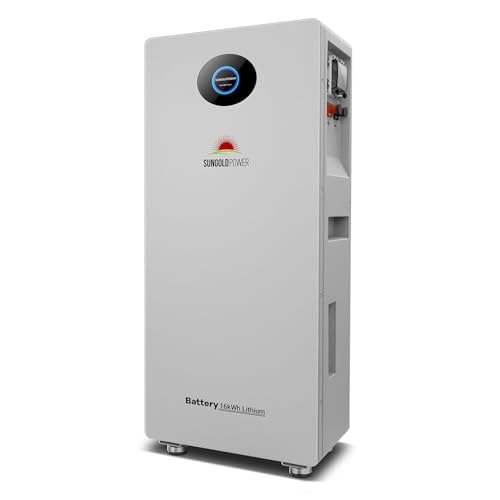
[High Capacity Solar Battery]: SUNGOLDPOWER UL1973 and UL9540A 48V 314Ah LiFePO4 lithium battery with over 8,000 deep cycles. Parallel up to 16 pcs ,maximum capacity of 16.07kWh.Ideal for solar systems, off-grid living, and whole-home backup power with reliable long-lasting performance.

System Components:Delivers up to 10kW power output with 120V/240V single-phase split-phase support, making it suitable for smoothly running common household appliances. The system includes 18 × 590W solar panels with a total PV capacity of 10620W, capable of generating up to 39.36 kWh per day under optimal conditions, along with two 48V 314Ah portable LiFePO₄ battery offering 32.2 kWh of energy storage. Complete with necessary cables, this all-in-one solar solution is designed for convenient setup and reliable home power support.
Why Do NEM 3.0 TOU Rates Matter for Solar‑Only Systems?

The avoided‑cost calculator assigns each export hour a price that reflects month‑, day‑, and hour‑specific utility marginal costs, which means a solar‑only system receives credits ranging from roughly 2 ¢/kWh off‑peak to up to 12 ¢/kWh during peak demand, and because NEM 3.0 ties compensation to time‑of‑use (TOU) rates rather than a flat retail rate, the value of exported energy now fluctuates with grid demand, making self‑consumption more financially attractive. I notice that TOU rates, which rise sharply during evening peaks, incentivize shifting load to periods when export timing yields higher credits, while midday curtailment, often triggered by excess generation, reduces the effective value of surplus energy, compelling me to prioritize on‑site consumption or storage. Consequently, the interplay between TOU pricing and export timing directly determines the economic viability of a solar‑only installation, as each kilowatt‑hour exported during low‑value windows may be worth only a fraction of the peak‑hour credit, thereby affecting overall return on investment.
Recommended Products
[High Capacity Solar Battery]: SUNGOLDPOWER UL1973 and UL9540A 48V 314Ah LiFePO4 lithium battery with over 8,000 deep cycles. Parallel up to 16 pcs ,maximum capacity of 16.07kWh.Ideal for solar systems, off-grid living, and whole-home backup power with reliable long-lasting performance.

Limited-Time Perks: E10 Metal Pad, Up to 12-Month 0% APR

[Massive 30.72KWH Energy Storage – Never Run Out of Power] 6 x 48V 100AH LiFePO4 Batteries – Keeps lights, fridge, and essentials running during blackouts or storms.This battery is rigorously tested and certified to UL1973 & UL9540A standards.It support CAN/RS485, which allows to communicate effortlessly with popular all-in-one solar inverter chargers from brandsensuring a plug-and-play experience with no additional configuration needed.The battery, crafted with a durable metal shell and a slim profile, efficiently saves space compared. It can be easily installed in a mobile 3U server rack, making it a practical choice for compact energy storage systems (energy on the move).
How Does Adding a Battery Change Your Payback Timeline and Sizing Guidelines?

Adding a battery to a NEM 3.0‑compliant solar system shifts the economic balance by capturing excess generation for later discharge, which, because avoided‑cost credits peak at roughly 12 ¢/kWh during evening TOU periods, can raise the effective export value from the baseline 2–4 ¢/kWh off‑peak range. I calculate payback by comparing the upfront battery cost, typically $150‑$200 per kWh, against the incremental revenue from stored energy discharged at peak rates, often yielding a 5‑7 % annual ROI, and I factor in battery incentives that can offset up to 30 % of the purchase price, thereby shortening the recovery period by 1‑2 years relative to solar‑only scenarios. Discharge strategies, such as load‑following versus peak‑shaving, dictate ideal sizing; a rule of thumb recommends a battery 2.5‑3 times daily solar kWh to maximize self‑consumption, while maintaining a depth‑of‑discharge below 80 % to preserve cycle life and guarantee compliance with utility interconnection standards.
Recommended Products

Version Update Notice: The former 48V 314Ah V1 is now upgraded to Powermega 48V 314Ah, featuring newly added Active Cell Balancing and Integrated Aerosol Fire Protection for higher safety and longer service life. It also comes with an extended 10-year warranty, while maintaining full compatibility with V1 units for parallel expansion

【High - Power Generation Capacity】This 5500W system can generate 22Kwh power per day under 4 hours' full sunshine, perfect for home, shed, cabin, farm or as other energy backup. They can also provide enough power for portable AC, air condition, TV, refrigerator, coffee maker, microwave and other devices

【Reliable Quality & Grade A Cells】: We have a professional lithium battery research and production factory, using A-grade battery cells to produce our batteries. Each battery leaving the factory has strict inspection standards, and most importantly, we have this absolute cost advantage while ensuring quality. We have a one month no reason return period. What are you still worried about? Give NewtiPower a try now!
What Does the 2026 NEM 3.0 Grandfathering Deadline Mean for Existing Installations?

Grandfathering under NEM 3.0 means that any solar system receiving its Permission to Operate before April 14, 2023 retains NEM 2.0 credit rates, the utility‑avoided‑cost calculations for exports, and the 20‑year protection against future tariff changes, provided the system remains operational and does not exceed the original capacity. The April 15, 2026 deadline consequently marks the final point at which new interconnection applications can claim NEM 2.0 status, after which all installations must comply with NEM 3.0 avoided‑cost pricing, a shift that carries significant policy implications for cost recovery, grid‑impact assessments, and long‑term financial modeling. Transferability limits restrict the ability to relocate or repower a grandfathered system without forfeiting the protected rate, meaning any capacity increase beyond the original kilowatt rating triggers a reclassification, eliminates the 20‑year tariff shield, and subjects the system to the current ACC schedule.
How to Maximize Savings on Your California Solar System Under NEM 3.0?
Under NEM 3.0, you’ll need to align your solar‑plus‑storage configuration with the utility’s Avoided Cost Calculator, which assigns export values that fluctuate hourly, ranging from roughly $0.02/kWh during off‑peak periods to $0.12/kWh at peak demand, while simultaneously optimizing self‑consumption by scheduling battery discharge to match Time‑of‑Use (TOU) peaks, thereby converting otherwise low‑value exports into high‑value load offsets. I recommend installing a battery sized 2.5‑3 × daily solar production, programming it for load shifting during peak TOU windows, and monitoring demand charges to make certain that stored energy displaces the highest‑priced consumption intervals. By employing real‑time telemetry, I can verify that battery discharge aligns with demand‑charge spikes, reducing net bill impact by up to 30 % compared with export‑only strategies, while maintaining overall system efficiency above 85 % under typical California irradiance conditions.
Recommended Products
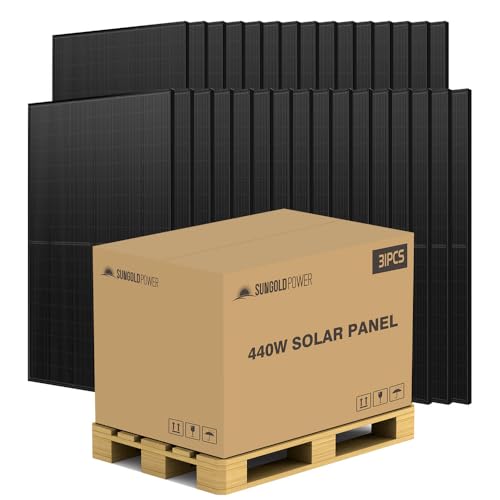
【High-Efficiency N-Type Technology】SUNGOLDPOWER 440W N-Type solar panels deliver superior performance with advanced N-Type cells and a 16-busbar (16BB) design. Achieving up to 22.5% module efficiency, they provide higher power output, improved reliability, and excellent performance in low-light conditions.
【High Efficiency N-Type Technology】SUNGOLDPOWER 440 Watt N-Type solar panels 16BB delivers superior performance with advanced N-Type cells and 16 busbar (16BB) design, offering up to 22.5% module efficiency and excellent low-light performance.

🌞【48V 314Ah LiFePo4 Battery】Connecting 16S1P 3.2V 314Ah A-grade batteries in series increases the maximum power to 7680W, and the maximum discharge current is 150A, that is, when the maximum output power is 7680W, the recommended charging current is 100A. Built-in 150A BMS, with RS485, RS232, CAN interface. Uses Grade A cells, with high safety, 6000+ cycles life, large current charge and discharge capability, high temperature resistance and small size, Increased to 15 years lifetime.
Frequently Asked Questions
Can I Transfer My Nem 2.0 Credit to a New Address?
I can’t transfer my NEM 2.0 credit; credits stay with the original meter. If you relocate the meter, the credit remains tied to that service point, not to a new address.
Will My HOA Rules Affect Nem 3.0 Eligibility?
“Don’t judge a book by its cover.” Your HOA disputes and installation approvals determine NEM 3.0 eligibility—if the board blocks the solar install, you can’t claim the new tariff.
Do Rooftop Solar Warranties Change Under Nem 3.0?
I can assure you that NEM 3.0 doesn’t alter rooftop solar warranties; they still transfer with ownership, and performance guarantees remain unchanged, so your protection continues exactly as before.
How Does Nem 3.0 Impact Commercial Versus Residential Customers?
I tell you NEM 3.0 slashes Commercial export rates while Residential billing still sees lower credits, so businesses lose more revenue from grid sales, and homeowners rely more on self‑consumption and storage.
Can I Opt Out of Nem 3.0 and Keep Nem 2.0 Rates?
Like a lock on a door, I can’t keep NEM 2.0 rates after April 2023; you must either stay on NEM 3.0 or pursue a buy‑out option, because legacy enrollment isn’t available.