As an Amazon Associate, we earn from qualifying purchases. Some links on this site are affiliate links at no extra cost to you. Our recommendations are based on thorough research and editorial judgment.


How Long Does a Home Solar Installation Actually Take?

I’ve found that a typical residential solar project runs 60‑90 days from contract signing to operational hand‑over, with permitting consuming roughly 25‑40 % of that period (4‑8 weeks), physical mounting of a standard 20‑30‑panel array requiring 1‑3 days, optional battery integration adding 1‑2 days, and utility interconnection plus final inspection extending the schedule by an additional 2‑4 weeks; supply‑chain constraints and labor shortages can increase total duration by 10‑15 % and push crew availability back 1‑3 weeks, so if you continue you’ll discover more details.
Key Takeaways
- Typical residential solar projects take 60‑90 days from contract signing to final activation.
- Permitting consumes 25‑40 % of the timeline, usually 4‑8 weeks, but can be as short as 7‑21 days in California.
- Physical installation of a standard 20‑30 panel array requires 1‑3 days; larger or complex roofs add 2‑3 days.
- Battery integration adds an extra 1‑2 days, and micro‑inverter or tile‑removal work can extend labor by half a day.
- Utility interconnection and final inspection add 10‑21 days after permitting, with net‑metering enrollment required before PTO.
How Long Does a Home Solar Installation Timeline Usually Take?
Typically, the entire home solar installation process spans 2‑6 months, with the average residential timeline falling between 60 and 90 days; this range reflects the cumulative duration of consultation, permitting, physical installation, and grid connection phases, each of which contributes distinct time intervals that collectively determine the overall schedule. I note that permitting alone occupies roughly 25‑40 % of total time, often extending 4‑8 weeks, while permit costs, ranging from $300 to $1,200, can influence contractor selection and scheduling efficiency. Physical installation typically requires 1‑3 days for mounting a standard 20‑30 panel array, yet larger systems or complex roofs may add 2‑3 days, with battery integration extending the schedule by an additional 1‑2 days. Consequently, energy savings calculations must incorporate these temporal variables to predict realistic payback periods.
What Happens During the Initial Consultation and Design Phase of a Home Solar Installation?
How long does the initial consultation and design phase actually take, and what specific steps does it involve? I typically schedule a site assessment within two to three business days after contract signing, during which I record roof dimensions, structural constraints, and orientation, then I conduct a shading analysis using drone‑captured imagery and solar path software to quantify hourly loss, followed by an energy audit that compares historic utility bills to projected generation, and finally I generate a panel placement layout that optimizes tilt, azimuth, and spacing while respecting local code setbacks. This phase usually spans one to two weeks, though complex roofs can extend to four weeks, and I provide a detailed engineering report, a cost‑benefit matrix, and a preliminary construction schedule before the client approves the final design.
How Long Does Permitting Take in Different States?
When I examine permitting timelines across the United States, I find that the average approval period ranges from four to eight weeks, yet regional regulations and utility coordination can compress or extend this window dramatically. In California, permits often close within seven to twenty‑one days, while Texas typically requires three to four months, reflecting a state‑specific variance that hinges on local building codes, zoning reviews, and utility interconnection timelines, which can add two to four weeks after permit issuance. Florida’s process averages six to nine weeks, with Miami‑Dade adding an extra week for storm‑risk assessments, whereas New York’s metropolitan areas demand eight to twelve weeks due to layered municipal approvals and extensive utility coordination. These differences illustrate how interconnection timelines and regulatory environments directly shape overall project schedules.
Recommended Products

【Daily Output】This 1600W solar tracking system with 8pcs 195W panel ,this kit's ideal daily output power is about 8.68KWh per day (under 4 hours full sunlight). Suitable for home, farm, shed, cabin. It is strong enough to power all your home appliance

【Quick Ways to Get After-Sales Support】For any product issues or concerns, please contact us through your order details to ensure we can provide the best service and conduct diagnostics by our engineers. If a product defect is confirmed, we promise a hassle-free replacement to resolve the issue swiftly. Your satisfaction is our top priority, and we are committed to resolving issues at the quickest speed to ensure a seamless experience.

Classic
Why Is Permitting Usually the Biggest Time‑Sink for Home Solar Projects?
The permitting phase dominates the schedule because it incorporates multiple regulatory layers, including building code compliance, fire safety review, and utility interconnection approval, each of which requires distinct documentation, engineering calculations, and stakeholder sign‑offs, often extending the timeline by 4‑8 weeks; in California, where streamlined online portals and pre‑approved plan sets reduce review cycles to 7‑21 days, the process still accounts for roughly 25‑40 % of total project duration, while in Texas the same steps involve municipal zoning checks and utility coordination that can stretch to three months, illustrating how the cumulative effect of statutory requirements, agency workload, and required revisions makes permitting the principal bottleneck in residential solar installations. I notice that permit variability across jurisdictions creates unpredictable waiting periods, and review backlogs at municipal offices exacerbate delays, because even when designs meet code, additional revisions are often demanded, forcing contractors to resubmit updated calculations, which further prolongs the schedule.
How Long Physical Installation Takes for Different Home Solar System Sizes?
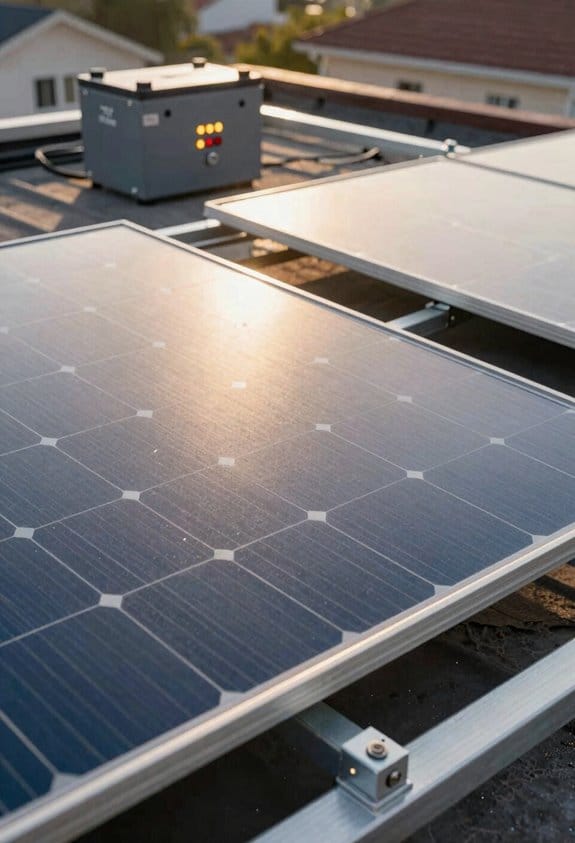
Mounting the panels typically consumes one to three days, a timeframe that expands proportionally with system size, roof complexity, and ancillary components. For a standard 20‑panel residential array, I usually finish mounting in a single day, while a 30‑panel system often requires two days, and installations exceeding 40 panels commonly extend to three days, especially when a ground mount is employed, which adds foundation work and alignment checks. When micro inverters replace a central inverter, I must install a separate inverter on each panel, a step that adds roughly 15 minutes per unit, thereby increasing total labor time by up to half a day for larger arrays. Consequently, the physical installation phase scales linearly with panel count, but non‑linear factors such as mounting type and inverter architecture introduce modest, predictable extensions.
Recommended Products
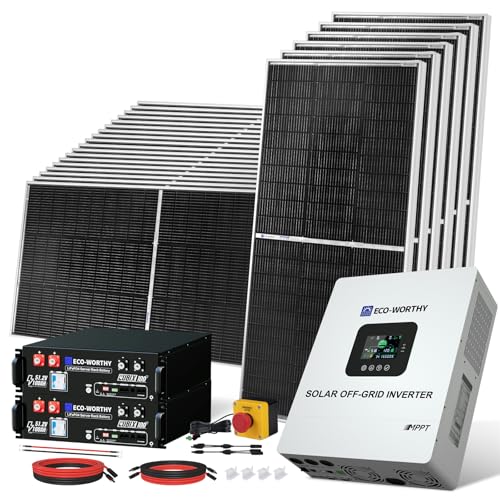
Full Off-Grid Solar Solution: Achieve energy independence with a robust renewable solution! Take control of your energy independence with the ECO-WORTHY comprehensive off-grid solar kit. This package includes two 48V 100Ah LiFePO4 integrated communication batteries, 24pcs 195W N-Type bifacial solar panels, and a powerful 5000W off-grid solar inverter equipped with a 100A MPPT solar charge controller, as well as all the necessary cables and mounting brackets.

[Ideally Output of 9.36KWH] The power of 9.36KWh per day under 4 hours full sunshine by the 2340W solar panel system, very suitable for home, shed, cabin, farm or other energy backup, and it will provide enough power for portable ac, air condition, TV, refrigerator, coffee maker, microwave and other AC 240V (split-phase)devices.

TECHNOLOGICALLY ADVANCED DESIGN - SwimJoy's technologically advanced design makes it one of the most durable, efficient, & longest-lasting solar pool heating systems available.
How Roof Complexity Affects Installation Time and Battery Add‑Ons Extend It?
If a roof includes multiple planes, steep pitches, or penetrations such as skylights, I must allocate additional time for custom mounting brackets, safety harness setup, and precise alignment, which typically adds 0.5–1.5 days to the base 1‑day estimate for a flat, unobstructed surface; consequently, a 30‑panel system on a complex roof may require 2.5–3 days, while a 20‑panel installation on the same roof can extend to 1.5–2 days, reflecting the linear increase in labor per panel combined with the non‑linear overhead of roof geometry. Roof prep often involves Tile removal, which adds 0.25 day per 10 tiles, and Attic upgrades may require 0.5 day for conduit routing, while Battery integration typically extends the schedule by 1–2 days due to inverter sizing, wiring harnesses, and safety inspections, ensuring compliance with code and performance specifications.
Recommended Products


[ Strong Adaptability ] ECO-WORTHY Mounting Bracket is 236"Lx39"W In. the front and rear pillars are 5.9 in higher, the front column is 13.78 in, and the rear column is 28.53 in,Which can better support 5*400W large Solar Panels.Suitable for home, farms, cabin and off-grid

Versatile Applicability: VEVOR 2 sets multi-piece solar panel mounting brackets support the installation of 4 to 8PCS solar panels. Single Bracket Recommended Installation Sizes: 4 panels (19.7 - 29.5 inch; 100W - 200W), 3 panels (29.5 - 39.3 inch; 200W - 300W), and 2 panels (39.4 - 58.3 inch; 400W).
How Seasonal Weather Impacts Solar Timing?
Winter weather can add 2–5 days to the overall schedule, because lower temperatures reduce crew productivity, increase the time needed for sealant curing, and sometimes require heated enclosures for battery installation, while snow or ice on the roof may halt mounting activities for up to 48 hours, forcing a shift in the 1‑day baseline to 1.5–2 days for a standard 20‑panel system and extending the 2‑day baseline to 2.5–3 days for larger arrays, especially when combined with the additional 0.5–1.5 days required for complex roof geometry; consequently, in regions where average winter temperatures fall below 5 °C, permitting and grid‑connection phases often experience a 10–15 % delay, as utility inspectors schedule fewer onsite visits, and the 4‑8‑week permitting window can stretch to 6–9 weeks, while in milder climates the impact remains under 1 day, preserving the typical 60‑90‑day total timeline. I also notice that winter storms can interrupt material deliveries, adding a day or two to logistics, and that spring inspections often become more stringent after heavy rain, requiring additional documentation that may extend the final approval by 0.5 day, especially when moisture‑related concerns arise on roof penetrations.
Typical Supply‑Chain and Installer Delays You Should Expect
When supply‑chain constraints intersect with installer scheduling, the project timeline typically extends by 2–4 weeks, because manufacturers may experience production bottlenecks that delay panel shipments, while regional labor shortages can push crew availability back by an additional 1–3 weeks, and this cumulative effect often adds 10–15 % to the overall duration, especially when the ordered inverter model requires custom firmware validation and the roof geometry necessitates specialized mounting hardware, which together increase logistical coordination and on‑site preparation time. I notice inventory bottlenecks often arise from semiconductor shortages, causing inverter back‑orders that add three to five business days per unit, while labor shortages reduce crew flexibility, extending installation windows by up to two days per roof segment. Consequently, scheduling buffers must account for these variables, and contractors typically allocate an extra 10 % contingency to mitigate unforeseen delays.
Typical Timeline for Grid Connection After a Home Solar Installation?
The permitting stage, which often adds 4‑8 weeks, directly influences the grid‑connection schedule, because utilities typically cannot issue a Permission‑to‑Operate (PTO) until the final inspection confirms compliance with interconnection standards. After the installer finishes mounting panels, I schedule the utility’s interconnection request, which usually takes 10‑14 days for paperwork processing, during which the utility may require a meter upgrade to handle bidirectional flow, and I confirm that the system is enrolled in net metering to credit excess generation. The utility’s field engineer then conducts a site inspection, often within 5‑7 days, verifying voltage, grounding, and disconnects, after which the utility issues a provisional approval, followed by a final PTO issuance within 7‑21 days, completing the grid‑connection phase.
How Can You Accelerate Your Solar Project to 3‑6 Weeks?
Accelerate your solar project by consolidating the design, permitting, and installation phases, which requires selecting a turnkey installer that offers pre‑engineered system layouts, submitting a complete digital permit package within 48 hours, and scheduling panel mounting for consecutive days, thereby reducing the typical 4‑8‑week permitting window to under two weeks; concurrently, leveraging a modular racking system that accommodates standard 20‑30 panel arrays in a single‑day deployment, coordinating utility interconnection requests immediately after the on‑site inspection, and securing a provisional Permission‑to‑Operate within five business days, together these measures compress the overall timeline to the 3‑6‑week range while maintaining compliance with local electrical codes, net‑metering requirements, and safety standards. I also engage parallel contractors for electrical work and roof reinforcement, which yields fast approvals, and I synchronize utility inspections with final commissioning, ensuring that each critical path segment overlaps without compromising code adherence, ultimately delivering operational solar generation within the projected six‑week horizon.
Recommended Products

WHAT'S IN IT: Solar Panel Crimper, MC4 Crimping Die, MC3 Crimping Die, (2) Solar Panel Spanners, Insulated Phillips Head Screwdriver, Insulated Cabinet Slotted Head Screwdriver, Cable Cutter, Wire Stripper/Cutter, Carrying Case

Solar Crimping Tool Kit: KIT-2546S solar panel tool kit is designed to facilitate the installation and maintenance of solar panels. It includes a variety tools to make installing and maintaining solar panels quick and easy.

Complete Solar Kit: Includes a solar wire crimping tool, wire stripper, 25 pairs of solar panel connectors, and 2 solar spanner wrenches—everything needed for fast, reliable solar cable connector installation. All tools and solar accessories come in a durable, portable case for easy storage and transport.
Frequently Asked Questions
Does Homeowner Insurance Affect Solar Installation Timing?
I’ve found that insurance verification can add a week or two, especially if they need proof of liability coverage; otherwise, it rarely delays the schedule beyond the normal permitting timeline.
Can I Install Solar Panels Myself to Shorten the Schedule?
I’d say you can DIY, but you’ll need DIY permits and safety training, otherwise you risk delays, fines, and dangerous mishaps—so weigh speed against compliance before you roll up your sleeves.
How Does HOA Approval Impact the Project Timeline?
I’ve found HOA guidelines can add a week or two, especially if they clash with permit coordination, so I usually budget extra time for their review and any required revisions before moving forward.
Are There Tax Credit Deadlines That Influence Installation Speed?
I’ve seen installers push for faster schedules when tax credit cliffs loom, so I’m watching the credit extension lobbying closely; it often speeds up permits and crew bookings to meet looming deadlines.
What Financing Options Could Delay or Expedite the Solar Rollout?
I’ll tell you: deferred payment plans can speed things up, while credit underwriting and loan processing often slow the rollout; utility interconnection timing also matters, sometimes adding weeks to the schedule.