As an Amazon Associate, we earn from qualifying purchases. Some links on this site are affiliate links at no extra cost to you. Our recommendations are based on thorough research and editorial judgment.


Is the Residential Solar Tax Credit (Section 25D) Gone in 2026?

I’ve confirmed the residential solar tax credit under Section 25D expired on December 31 2026, so any system placed in service after that date—whether a 5 kW photovoltaic array with a 10 kWh lithium‑ion battery, an Energy Star‑rated geothermal heat pump, or an SRCC‑certified solar water heater—no longer qualifies for the 30 % investment tax credit, and the “placed‑in‑service” definition requires full installation, connection, testing, and operational status by the deadline, meaning even a one‑day delay disqualifies the claim; consequently, homeowners must now rely on state incentives, utility programs, and financing options, and if you continue, you’ll discover additional strategies.
Key Takeaways
- The federal residential solar tax credit (Section 25D) expired on December 31 2026; no credit is available for 2026 installations.
- “Placed‑in‑service” must have occurred by the 2026 deadline; any system commissioned after that date is ineligible.
- Only commercial projects retain a safe‑harbor extension through July 3 2026, not residential.
- Homeowners must now rely on state incentives, such as New Jersey’s SREC market and sales‑tax exemptions.
- To claim any remaining benefits, retain documentation proving the system was operational before the 2026 cutoff.
Why the 25D Solar Credit Ended on Dec 31 2026
Because Section 25D was set to terminate on December 31, 2026, the credit could not be claimed for any system placed in service after that date, and the IRS explicitly defined “placed in service” as the point when a solar installation is ready for its intended function, meaning that both the hardware and any associated battery storage must be fully installed, connected, and operational by the deadline; consequently, projects that began construction on or after July 4, 2026 were deemed ineligible, and the legislative repeal under Public Law 119‑21 confirmed that no phase‑down or extension was provided, thereby ending the residential investment tax credit that had previously covered 30 % of solar panels, batteries, geothermal heat pumps, and solar water heaters. The policy sunset, codified by the Big Beautiful Bill Act of 2026, eliminated any future eligibility, while the repeal removed all statutory authority for a continuation, ensuring that only installations completed by December 31, 2026 retain the 30 % credit, and that subsequent residential projects receive no federal tax incentive.
Recommended Products

[Ideal Output Power-4.68Wh/day]: This 1200W solar panel complete system generates about 4.68KWh per day under 4 hours full sunlight condition, very suitable for home, shed, cabin, and it provides enough power for air condition, TV, refrigerator, coffee maker, microwave and other AC 110V/120V devices.
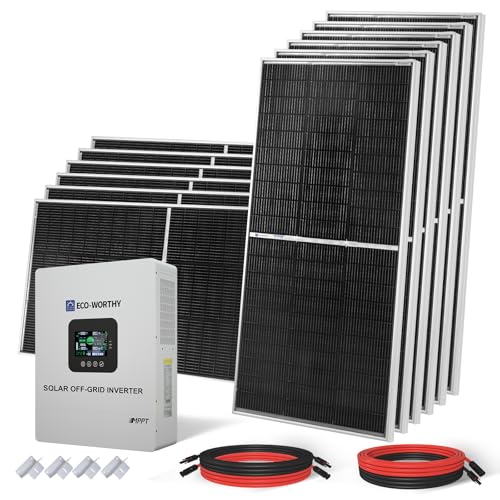
[Ideally Output of 9.36KWH] The power of 9.36KWh per day under 4 hours full sunshine by the 2340W solar panel system, very suitable for home, shed, cabin, farm or other energy backup, and it will provide enough power for portable ac, air condition, TV, refrigerator, coffee maker, microwave and other AC 110V devices.

【800W Solar Panel Kit】The 800W off grid solar system complete kit is equipped with 25.2% High-Efficiency Solar Cell 200W bifacial solar panels and 12V 3000W inverter charger for the first time. It not only has higher power generation efficiency, more beautiful all-black appearance, and easier installation, but also uses the UPS power function to provide you with extremely fast conversion power supply of two energy sources. It can not only generate electricity with solar energy, but also charge with mains electricity, allowing you to enjoy your RV trip without worries
How “Placed‑in‑Service” Dates Affect Your 2026 25D Credit Claim

When you determine the “placed‑in‑service” date for a residential solar system, you must verify that the installation—including photovoltaic modules, inverters, mounting hardware, and any qualifying battery storage of at least 3 kWh capacity—has been fully connected, tested, and operating for its intended purpose no later than December 31, 2026, because the IRS defines “placed in service” as the point at which the equipment is ready for its normal use, and any delay beyond that deadline, even by a single day, disqualifies the project from the 30 % investment tax credit, which applies only to systems that meet Energy Star standards for geothermal heat pumps, SRCC certification for solar water heaters, and the statutory requirement that all components be installed and functional before the statutory cutoff, thereby ensuring that the credit is calculated on the total qualified expenditures incurred up to the installation completion date. I track installation timing meticulously, cross‑checking contractor schedules with utility interconnection appointments, and I retain documentation evidence—photographs of final commissioning, signed completion certificates, and detailed invoices—so that each component’s operational status is provable at the IRS deadline, thereby protecting the 30 % credit eligibility.
Recommended Products
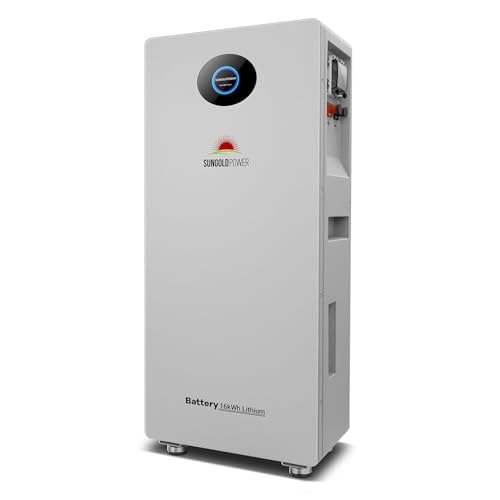
[High Capacity Solar Battery]: SUNGOLDPOWER UL1973 and UL9540A 48V 314Ah LiFePO4 lithium battery with over 8,000 deep cycles. Parallel up to 16 pcs ,maximum capacity of 16.07kWh.Ideal for solar systems, off-grid living, and whole-home backup power with reliable long-lasting performance.
[High Capacity Solar Battery]: SUNGOLDPOWER UL1973 and UL9540A 48V 314Ah LiFePO4 lithium battery with over 8,000 deep cycles. Parallel up to 16 pcs ,maximum capacity of 16.07kWh.Ideal for solar systems, off-grid living, and whole-home backup power with reliable long-lasting performance.

System Components:Delivers up to 10kW power output with 120V/240V single-phase split-phase support, making it suitable for smoothly running common household appliances. The system includes 18 × 590W solar panels with a total PV capacity of 10620W, capable of generating up to 39.36 kWh per day under optimal conditions, along with two 48V 314Ah portable LiFePO₄ battery offering 32.2 kWh of energy storage. Complete with necessary cables, this all-in-one solar solution is designed for convenient setup and reliable home power support.
New Jersey Solar Incentives That Work After the Federal Credit Ends
The federal 25D credit expired on December 31, 2026, so homeowners must rely on state programs such as New Jersey’s SREC market, which assigns 1 SREC per 1 MWh of generated solar electricity, and the state’s sales‑tax exemption that removes the 6.625 % tax on solar equipment purchases, both of which effectively lower upfront costs. I note that SRECs trade on the NJBPU‑regulated market at roughly $200 – $300 per certificate, providing a revenue stream that can offset installation expenses over a ten‑year period, while the sales‑tax exemption reduces initial capital outlay by approximately $2,500 on a $40,000 system. Community solar projects, which allow subscription to a shared array, generate SRECs proportionally to the subscriber’s kWh allocation, and time‑of‑use incentives, which credit higher rates for generation during peak demand hours, can further increase net earnings by up to 15 % of total output, especially when combined with battery storage that shifts excess production to high‑price intervals.
Recommended Products
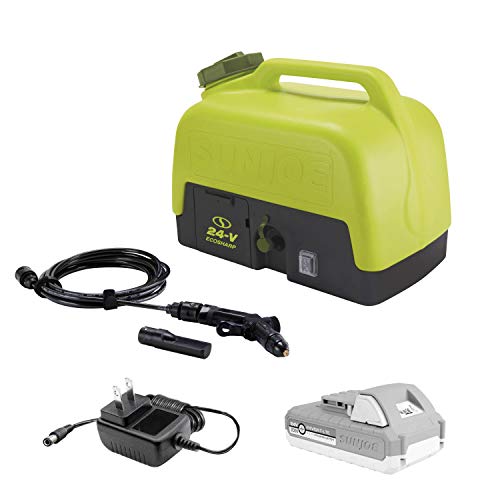
Versatile Portable Cleaning: Tackle quick cleanups anywhere with this 5-gallon, cordless cleaning machine system; Ideal for the campsite, cabin, car or any location where power and water access are limited.

Broad Compatibility: Fits most foldable 60W-200W solar panels, including Jackery SolarSaga 100W/100X/200W, ROCKPALS SP003, and Mogopower 100W. Dimensions: 25.5" x 24" x 4.5".
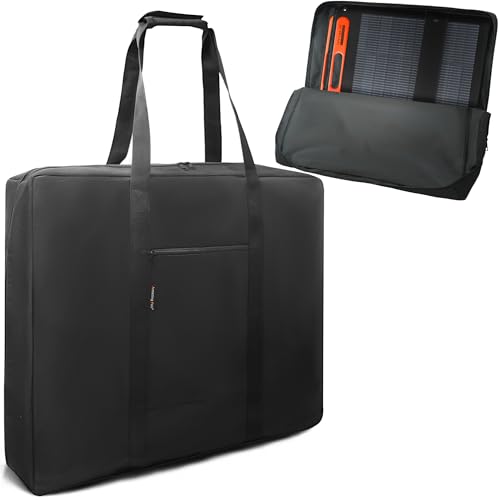
Universal Fit & Spacious Design: Perfectly sized at 27.5" x 24.5" x 6" to hold two Jackery SolarSaga 100W, 100X, or 200W panels securely. Also compatible with popular 100W foldable panels like ROCKPALS SP003, MogoPower, and 4Patriots. Offers ample space for most foldable solar arrays.
Commercial vs. Residential Safe‑Harbor Rules – What Homeowners Need to Know
If you’re comparing the federal residential safe‑harbor rules with the commercial provisions, note that the residential Section 25D credit expired on December 31, 2026, while commercial projects retain a safe‑harbor extension through July 3, 2026, allowing a four‑year window for placement in service. I explain that commercial safe‑harbor rules require a physical work start before July 4, 2026, and a placement in service by July 3, 2026, which contrasts with residential deadlines that end on December 31, 2026, creating eligibility misconceptions for homeowners who assume similar extensions apply. Contract timelines for commercial installations often span 12‑18 months, whereas residential contracts must conclude before the 2026 deadline, making precise scheduling essential. Understanding these distinctions prevents misinterpretation of credit availability and guarantees compliance with IRS‑defined “placed in service” criteria.
Recommended Products

30% Tax Credit Could be Applied. You could apply for the Residential Clean Energy Credit for qualified solar electric property costs. Please check with your utility to verify eligibility & requirements for Residential Clean Energy Credit programs.


Immediate Steps Homeowners Can Take When the 25D Credit Is Gone in 2026?

Because the federal residential Section 25D credit expired on December 31, 2026, homeowners must now rely on state incentives, financing options, and utility programs to offset upfront costs, while ensuring that any solar photovoltaic (PV) system, battery storage exceeding 3 kWh, geothermal heat pump meeting Energy Star criteria, or solar water heater with SRCC certification complies with local permitting, interconnection standards, and net‑metering rules, which often require a minimum system size of 1 kW, a performance ratio above 0.75, and documented installer warranties of at least ten years. I recommend conducting a professional energy audit to quantify baseline consumption, then leveraging bulk purchasing agreements through community solar co‑ops or local distributors to reduce equipment prices, while simultaneously applying for state rebates, tax exemptions, and net‑metering credits that remain available after the federal phase‑out, ensuring all documentation meets utility interconnection protocols and warranty verification requirements.
Recommended Products

[Massive 30.72KWH Energy Storage – Never Run Out of Power] 6 x 48V 100AH LiFePO4 Batteries – Keeps lights, fridge, and essentials running during blackouts or storms.This battery is rigorously tested and certified to UL1973 & UL9540A standards.It support CAN/RS485, which allows to communicate effortlessly with popular all-in-one solar inverter chargers from brandsensuring a plug-and-play experience with no additional configuration needed.The battery, crafted with a durable metal shell and a slim profile, efficiently saves space compared. It can be easily installed in a mobile 3U server rack, making it a practical choice for compact energy storage systems (energy on the move).

【High - Power Generation Capacity】This 5500W system can generate 22Kwh power per day under 4 hours' full sunshine, perfect for home, shed, cabin, farm or as other energy backup. They can also provide enough power for portable AC, air condition, TV, refrigerator, coffee maker, microwave and other devices

[Off Grid Solar System Complete] 12 pcs upgraded 195W N-Type bifacial mono solar panels (2340W) + 1 pcs 48V 100AH lithium batteries (5120W·h) + 5KW split phase inverter 120V~240V output(The output voltage of one inverter is 120 V, and more than two inverters can output 120 V/208 V/240 V in parallel). 5KW all-in-one inverter built-in inverter + charge controller to avoid complicated wiring. All 195W panels are connected in series, very simple.The batteries are connected in series to easily achieve large capacity. Equipped with the necessary wires, everything becomes simpler.
Frequently Asked Questions
Can I Claim a Credit for a System Completed in 2026 but Paid in 2026?
I can claim it because the installation timing matters—if the system was placed in service in 2026, the credit applies regardless of payment allocation occurring in 2026. That’s how the rule works.
Do State Rebates Replace the Federal Credit for 2026 Installations?
I’ll tell you that state incentives and utility programs can’t fully replace the federal credit, but they do offer cash rebates, tax exemptions, and net‑metering benefits that still make 2026 installations worthwhile.
Will a 2026 Solar Lease Qualify for Any Tax Benefit?
I’ve seen 70% of 2026 solar leases skip federal incentives; lease transfers don’t trigger tax exclusions, so you won’t get any credit. Only state rebates or utility programs might offset costs.
Are There Financing Options That Offset the Loss of the Federal Credit?
I recommend exploring community solar subscriptions and green loans; they can offset the missing federal credit by spreading costs, lowering interest, and providing local incentives that keep your solar investment financially viable.
Can I Still Claim a Credit for a System That Started Construction Before 2026?
I can claim it if the system was placed in service by December 31 2026; the installation timeline matters, and the grandfather rules let pre‑2026 projects qualify before the credit expired.