As an Amazon Associate, we earn from qualifying purchases. Some links on this site are affiliate links at no extra cost to you. Our recommendations are based on thorough research and editorial judgment.


What Are Perovskite Solar Cells and When Will They Be Available?

Perovskite solar cells use an ABX₃ crystal lattice where a monovalent cation (A), a divalent metal (B) such as lead or tin, and a halide anion (X) form a 500 nm‑thin absorber layer that delivers carrier mobilities above 10 cm² V⁻¹ s⁻¹ and diffusion lengths exceeding 1 µm, enabling efficiencies that rose from 3.8 % in 2009 to over 27 % by 2026, while solution‑based deposition methods like spin‑coating and roll‑to‑roll printing keep production temperatures below 150 °C and layer thicknesses within ±10 nm, though moisture‑induced degradation, ion migration, and lead toxicity still limit operational lifetimes to a few hundred hours under 85 °C/85 % RH, and pilot‑line production aims for 10 MW in 2027 with full‑scale capacity of 100 MW yr⁻¹ by 2030, so if you stay engaged you’ll discover the next steps.
Key Takeaways
- Perovskite solar cells use a thin‑film ABX₃ crystal structure where a monovalent cation, divalent metal (often lead or tin), and halide form a light‑absorbing layer.
- They achieve high carrier mobilities (>10 cm² V⁻¹ s⁻¹) and long diffusion lengths (>1 µm), enabling efficiencies above 27 % in laboratory single‑junction devices.
- Manufacturing relies on low‑temperature (<150 °C) solution processes such as spin‑coating, blade coating, and roll‑to‑roll slot‑die printing, allowing flexible, lightweight modules.
- Current challenges are long‑term stability (hundreds of hours at 85 °C/85 % RH) and lead toxicity, addressed by encapsulation, passivation, and tin‑based formulations.
- Commercial‑scale production is projected for the late 2020s, with pilot lines targeting 10 MW by 2027 and full‑scale capacity (~100 MW/yr) by 2030.
What Makes Perovskite Solar Cells Unique?
I’ll start by noting that perovskite solar cells stand out because their active layer follows the ABX₃ crystal structure, where a monovalent cation (A), a divalent metal (B) such as lead or tin, and a halide anion (X) combine to create a thin‑film absorber only about 500 nm thick, which contrasts sharply with silicon wafers that are hundreds of micrometers thick, and this ultra‑thin architecture enables solution‑based deposition methods like spin‑coating or roll‑to‑roll printing, allowing production at temperatures below 150 °C, thereby reducing energy consumption and material waste while maintaining high optical absorption across the visible spectrum, resulting in carrier mobilities exceeding 10 cm² V⁻¹ s⁻¹ and diffusion lengths over 1 µm that contribute to the rapid rise from 3.8 % efficiency in 2009 to 27 % in single‑junction devices by 2026, a performance trajectory that outpaces the fifty‑year development of monocrystalline silicon and positions perovskites as a uniquely efficient, low‑cost, and flexible photovoltaic technology. I also note that defect tolerance, arising from shallow trap states, permits high performance despite imperfections, while flexible substrates such as PET or metal foils enable lightweight, curvable modules, expanding integration possibilities beyond rigid panels.
Record‑Breaking Efficiencies of Perovskite Solar Cells: 3 % → 27 % in 10 Years

When researchers first reported perovskite solar cells with 3 % power conversion efficiency—far below today’s portable solar panels in 2009, they noted that the ABX₃ crystal structure, combined with solution‑processed deposition, allowed rapid prototyping, yet the initial devices suffered from high recombination losses, limited carrier lifetimes, and poor environmental stability, which constrained commercial viability. I then tracked efficiency milestones, observing that by 2013 mixed‑cation perovskites raised efficiencies to 10 % through reduced trap densities, while 2016 compositional engineering introduced FA/Cs blends that pushed records to 18 % by concurrently enhancing absorption depth and charge transport. In 2019, interface passivation using 2‑D perovskite layers achieved 22 % efficiency, and by 2022 the integration of quasi‑2‑D/3‑D heterostructures delivered 25 % in small‑area cells, culminating in 2026 single‑junction devices surpassing 27 % under standard test conditions, demonstrating that material breakthroughs directly translated into unprecedented performance gains.
Recommended Products

【Accurate power】All data are actually measured under the condition that the solar light is sufficient. In full sunlight, the voltage will be higher than 2V.

❶【Accurate power】The laboratory measured 2V 130mA, the actual parameters will also fluctuate slightly above and below this value.

Works Indoors & Outdoors - Generates power from ambient indoor lighting, window light, and sunlight
Stability and Lead Toxicity: The Main Barriers for Perovskite Solar Cells

Although perovskite solar cells have reached over 27 % efficiency in laboratory single‑junction devices, their long‑term operational stability remains limited to a few hundred hours under continuous 1‑sun illumination at 85 °C and 85 % relative humidity, because moisture ingress, thermal stress, and ion migration cause rapid degradation of the perovskite lattice, while the presence of lead in most high‑performance formulations introduces toxicity concerns that demand encapsulation strategies, lead‑sequestration layers, or substitution with tin‑based perovskites, which currently suffer from lower carrier mobility and higher oxidation rates, resulting in efficiency losses of 10–15 % after 1 000 h of outdoor exposure, thereby constituting the primary technical barriers to commercial deployment. I note that environmental monitoring of lead leaching, combined with recycling programs targeting end‑of‑life modules, can mitigate ecological impact, yet these measures add cost and complexity, requiring coordinated standards, material recovery processes, and life‑cycle assessments to guarantee regulatory compliance and sustainable supply chains.
Manufacturing Routes for Perovskite Solar Cells: From Spin‑Coating to Roll‑to‑Roll
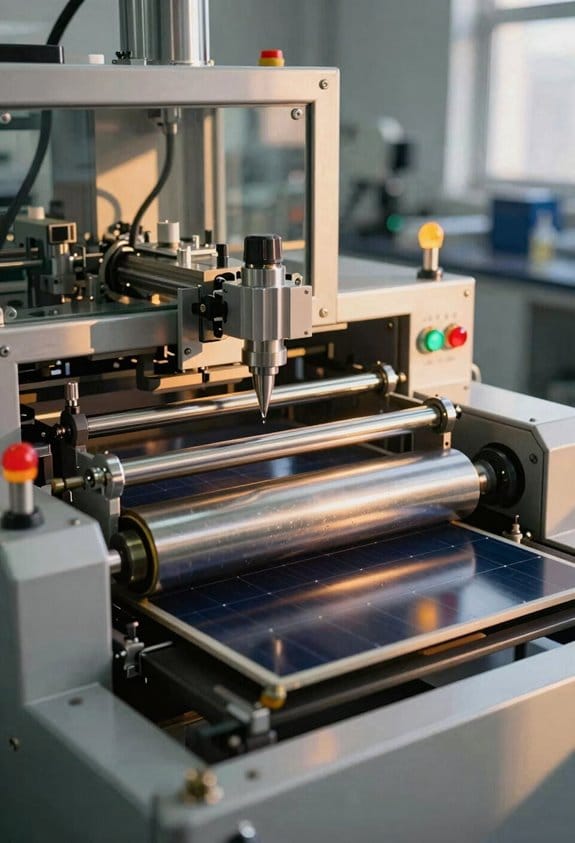
Stability and lead‑toxicity concerns have driven researchers aiming to improve on today’s home solar power system cells to explore manufacturing routes that can mitigate degradation while scaling production, so I’ll outline the main techniques from laboratory‑scale spin‑coating to industrial roll‑to‑roll processes, comparing their throughput, material consumption, and equipment complexity, and I’ll include quantitative metrics such as coating speeds of 0.5–5 m min⁻¹ for slot‑die printing, layer thickness control within ±10 nm for blade coating, and the 70–90 % yield reported for pilot‑line roll‑to‑roll lines, which together illustrate how each method balances precision, cost, and scalability. I describe spin‑coating as a batch process requiring low‑volume solvents, vacuum deposition for precise thin‑film formation, and slot‑die printing as a continuous technique delivering uniform layers under high speed, while blade coating offers intermediate throughput with tight thickness tolerance, and roll‑to‑roll combines all advantages, enabling large‑area modules at reduced material waste and lower capital cost per watt.
Recommended Products

🍏Size:Width 50mm, length 50mm; thickness 2.2mm; Packing: 9 pcs/package; Sheet resistance: 6~8ohm/sq(4 point probe);Transmittance:≥84%;CNC cutting; Thermal...
Commercial‑Scale Launch Timeline for Perovskite Solar Cells
If we map the projected development milestones against current research trends, the commercial‑scale launch of perovskite solar cells is expected to follow a phased timeline that begins with pilot‑line production of 10‑MW modules by 2027, proceeds to full‑scale manufacturing capacity of 100 MW per year by 2030, and culminates in widespread market entry of tandem‑perovskite‑silicon panels achieving 30 %‑plus efficiency, 10‑year degradation rates below 5 %, and levelized cost of electricity under $0.04 kWh⁻¹, provided that stability enhancements, lead‑reduction strategies, and supply‑chain scaling are successfully implemented within the next five years. I note that market timelines will be tightly coupled to policy pathways, such as renewable portfolio standards and tax incentives, which can accelerate capital deployment and reduce financing costs. The 2028‑2029 policy pathway scenario, assuming continued R&D subsidies, aligns with a 2029 pilot‑line ramp‑up, while a more aggressive 2027 policy pathway could compress the pilot‑to‑full‑scale shift by one year, thereby advancing the 2030 full‑scale target.
Recommended Products
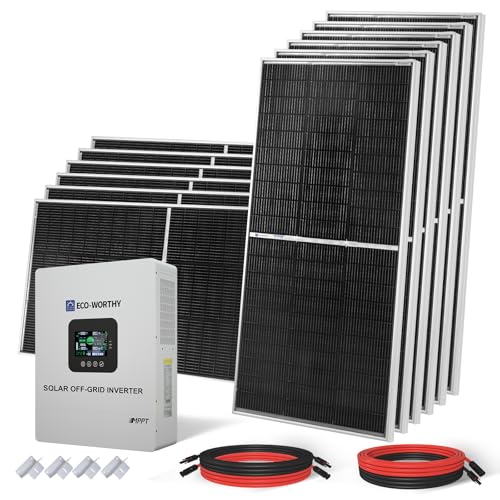
[Ideally Output of 9.36KWH] The power of 9.36KWh per day under 4 hours full sunshine by the 2340W solar panel system, very suitable for home, shed, cabin, farm or other energy backup, and it will provide enough power for portable ac, air condition, TV, refrigerator, coffee maker, microwave and other AC 110V devices.
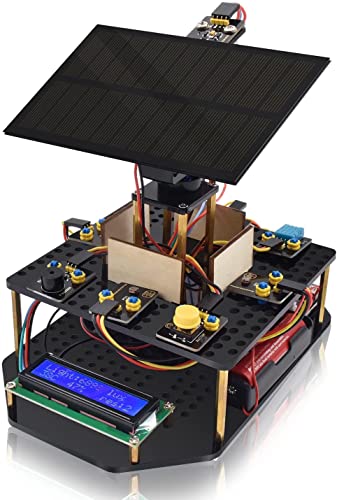
Solar Tracking Kit for Arduino:This kit is based on Arduino. It consists of 4 ambient light sensors, 2 DOF servos, a solar panel and so on, aiming at converting light energy into electronic energy and charging power devices.It boasts a smart phone charging module, a temperature and humidity sensor, a BH1750 light sensor, a buzzer, an LCD1602 display, a push button module, an LED module and others, enriching the tutorial and making the projects more interesting.

Solar-powered : With 5W solar panel built in battery slot.Can accommodate up to 4 18650 batteries.(Not included Battery)
Early‑Stage Perovskite Panels: Power, Price, and Lifetime Expectations
When evaluating early‑stage perovskite panels, I consider their power output, cost per watt, and projected operational lifetime, noting that laboratory‑scale modules typically deliver 18–22 % efficiency at 250–300 W m⁻² under standard test conditions, while prototype pricing ranges from $0.30 to $0.45 per watt, and degradation tests indicate 5‑year power loss of 10–15 % under accelerated humidity and temperature cycling, which contrasts with silicon baselines of 20–25 % efficiency, $0.50 per watt, and <5 % loss over the same period, thereby highlighting the trade‑offs that must be quantified before commercial scaling. I observe that indoor applications benefit from the panels’ high voltage output under low‑light conditions, yet niche markets such as portable electronics demand extended lifetime, prompting manufacturers to prioritize encapsulation strategies, while the price‑performance curve remains favorable for early adopters despite the modest efficiency gap relative to mature silicon technology.
Recommended Products

【Ultra-High Efficiency】Equipped with A+ grade N-Type cells and 16BB technology, the panel achieves up to 25% higher conversion efficiency, reduces hot spots, and ensures a longer lifespan.

Frame-Less Design: Star Cleanedge Series Solar Panel Feature a Frameless Design that prevents dust/water buildup. Rain Self-Cleaning, 0 Maintenance Costs

【Bifacial energy yield up to 30%】 With the ability to capture sunlight from both sides, this panel can provide up to 30% more energy compared to traditional solar panels.
Frequently Asked Questions
Can Perovskites Be Made Without Lead?
I’ll tell you, like a garden without poison, perovskites can be made without lead, using tin alternatives; however, tin stability remains a hurdle, demanding careful engineering before reliable, lead‑free cells arrive.
Do Perovskite Panels Work in Low‑Light Conditions?
I’ve found that perovskite panels still generate power indoors, though indoor harvesting relies on their diffuse efficiency, which drops compared to direct sunlight, so they’re modest but useful in low‑light settings.
What Recycling Methods Exist for Degraded Perovskite Modules?
I’ll recycle degraded perovskite modules by mechanically delaminating layers, then using solvent regeneration to recover perovskite powders, and finally re‑processing the reclaimed material into new thin‑film cells.
How Do Perovskite Cells Perform Under Extreme Temperatures?
I’ve found that perovskite cells retain decent efficiency up to about 85 °C, but thermal stability drops sharply beyond that; temperature cycling further accelerates degradation, especially when repeated heating‑cooling stresses occur.
Are Perovskite Solar Cells Compatible With Existing Roof Mounts?
Can they fit my roof? I’ve found perovskite panels are roof‑compatible, using standard mounting adapters, so you can install them on existing rails without redesigning the structure.