As an Amazon Associate, we earn from qualifying purchases. Some links on this site are affiliate links at no extra cost to you. Our recommendations are based on thorough research and editorial judgment.

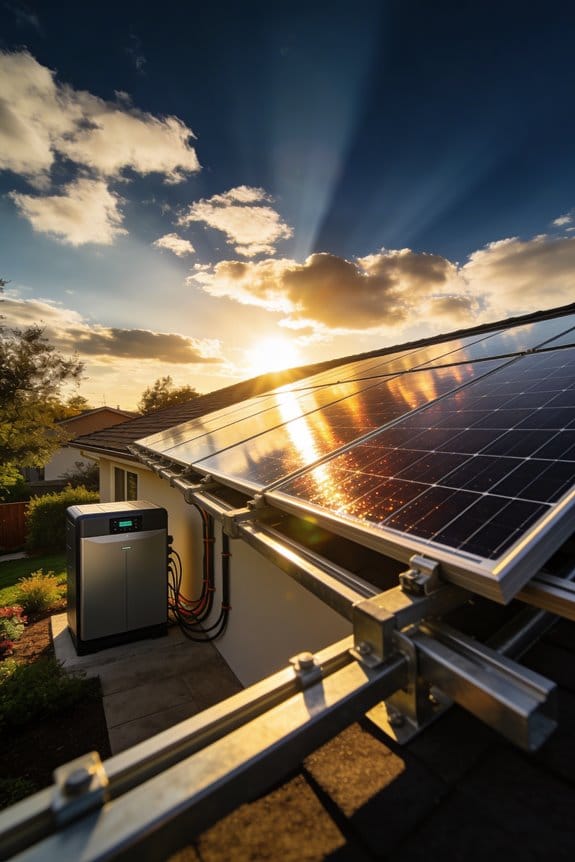
What Is a Virtual Power Plant and Can Your Home Battery Participate?

A virtual power plant (VPP) aggregates distributed energy resources—rooftop solar, home batteries typically 5 kW/10 kWh, EV chargers, smart thermostats—into a cloud‑controlled dispatchable asset that can emulate a 100 MW conventional plant, balance supply and demand within a five‑second latency window, and provide ancillary services such as frequency regulation and voltage support, while respecting individual device constraints like state‑of‑charge limits and deep‑discharge protection; your home battery can join if it has a certified inverter, smart meter, and internet‑enabled controller, and enrollment requires verification of power rating, usable capacity, and round‑trip efficiency, after which you’ll see peak‑shaving reductions up to 45 % and potential kWh credits ranging from $0.02 to $0.08, and further details await.
Key Takeaways
- A Virtual Power Plant (VPP) aggregates many distributed energy resources, like rooftop solar and home batteries, to act as a single, dispatchable power plant.
- The VPP’s cloud‑based control platform sends real‑time set‑points to each DER, coordinating generation, storage, and demand response within seconds.
- Home batteries that meet technical criteria (e.g., 5 kW power, 10 kWh usable capacity, ≥95% round‑trip efficiency) can be enrolled via a certified inverter, smart meter, and internet‑enabled controller.
- Enrolled batteries receive dispatch signals, allowing them to charge or discharge during peak periods, earn kWh credits, and support grid services such as frequency regulation.
- Participation requires encrypted telemetry, compliance with privacy regulations (GDPR/CCPA), and adherence to battery‑longevity safeguards that prevent deep‑discharge cycles.
What Is a Virtual Power Plant?
A virtual power plant (VPP) is a network of distributed energy resources (DERs) that are aggregated through cloud‑based control software to function as a single, dispatchable power plant, enabling coordinated generation, storage, and demand‑response actions across rooftop solar panels, home batteries, electric‑vehicle chargers, smart thermostats, and micro‑turbines. I explain that the VPP relies on distributed control, which allows each DER to receive real‑time set‑points, while the central platform performs energy aggregation, balancing supply and demand across thousands of assets, typically within a 5‑second latency window. The system monitors voltage, frequency, and power factor, using predictive algorithms that incorporate weather forecasts and market price signals, thereby optimizing dispatch schedules and reducing peak load by up to 45 % in residential clusters. This architecture permits seamless integration of 0.5‑kW rooftop PV arrays, 5‑kWh home batteries, and 3‑kW EV chargers, creating a virtual capacity equivalent to a 100‑MW conventional plant without constructing new infrastructure.
How Do Virtual Power Plants Work?
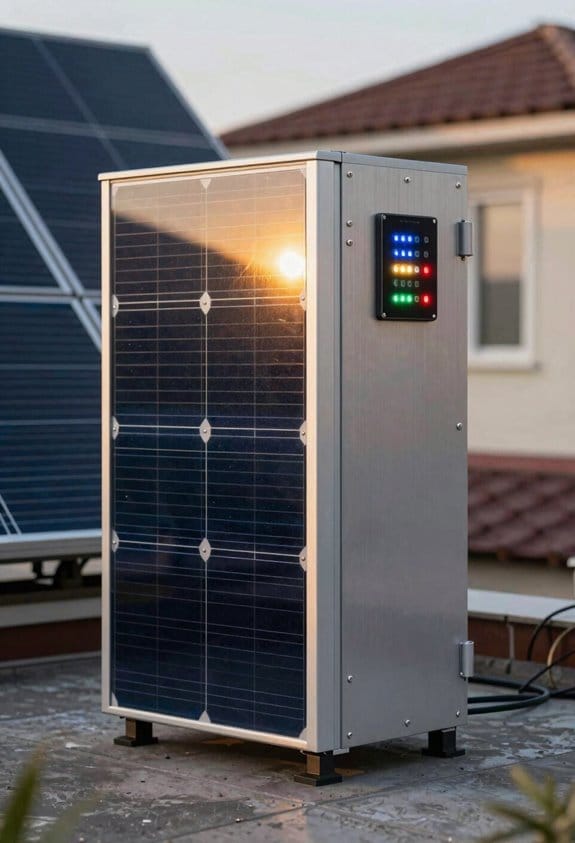
The VPP architecture builds on the aggregation concept described earlier, extending it to real‑time coordination of thousands of DERs through a cloud‑based supervisory control and data acquisition (SCADA) platform that exchanges encrypted telemetry at sub‑second intervals, while predictive algorithms ingest weather forecasts, market price signals, and grid frequency data to generate dispatch set‑points for each asset, allowing rooftop PV units of 0.5 kW, battery storage modules of 5 kWh, and EV chargers of 3 kW to collectively emulate a 100‑MW conventional plant without constructing new infrastructure, and the central controller continuously balances supply and demand by adjusting charge‑discharge cycles, shifting flexible loads, and providing ancillary services such as frequency regulation and voltage support, thereby achieving peak‑shaving reductions of up to 45 % in residential clusters. I then explain how distributed coordination, real time optimization, and predictive analytics converge: each device reports its state of charge, forecasted generation, and flexibility margin, the platform runs a mixed‑integer linear program every few seconds to allocate power, and the SCADA loop enforces set‑points, ensuring stability, minimizing losses, and meeting market bids while respecting constraints on voltage, frequency, and line loading.
Can Your Home Battery Join a VPP?
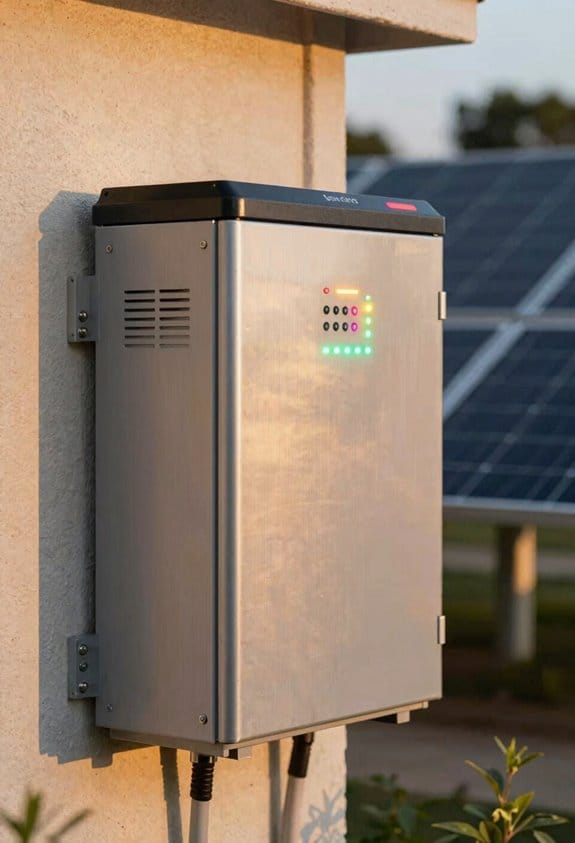
Joining a home battery to a virtual power plant involves enrolling the storage unit through an operator’s platform, which typically requires a compatible inverter, a smart meter, and an internet‑enabled controller that can receive dispatch signals. I then verify that the battery’s 5 kW power rating, 10 kWh capacity, and 95 % round‑trip efficiency meet the VPP’s technical criteria, while confirming tariff compatibility with time‑of‑use rates, which guarantees the system can shift load without violating contractual constraints. If I opt for battery leasing, the lease agreement must specify service‑level guarantees, remote firmware updates, and data‑privacy clauses, because the operator will monitor state‑of‑charge, voltage, and temperature in real time. The aggregate of these specifications determines eligibility, allowing my home battery to contribute to grid balancing services while receiving performance‑based compensation.
Recommended Products

30kWh Home Backup Solution: This system combines a 10kW hybrid inverter with two 48V 314Ah LiFePO4 batteries, delivering over 30kWh of usable energy—ideal for whole-home backup, solar storage, off-grid living, and emergency power

Victron Energy Quattro 24-Volt 5000VA 120 amp is a combined 120V inverter and battery charger, additionally it can be connected to two independent AC sources

【NEW-PARALLEL VERSION】Split-phase Solar Inverter 48V supports split-phase and single-phase pure sine wave output. One 10k inverter can also output 120V and 240V simultaneously through different connections. Upgraded Version - supports parallel operation for capacity expansion up to 60kW, max 6 power inverter parallel
How Do I Enroll My Battery in a VPP?
Signing up the battery involves installing a certified inverter, connecting a smart meter, and configuring an internet‑enabled controller that can receive encrypted dispatch signals, while simultaneously verifying that the unit’s 5 kW peak power, 10 kWh usable capacity, and 95 % round‑trip efficiency meet the VPP’s technical thresholds, ensuring compatibility with time‑of‑use tariffs, and confirming that firmware updates and data‑privacy provisions are documented in the service agreement, which together enable real‑time state‑of‑charge monitoring, voltage regulation, and temperature control, allowing the aggregated resource to participate in frequency regulation, peak shaving, and ancillary market services without violating contractual constraints. I then submit the enrollment application, attach proof of compliance with local regulations, and review the enrollment incentives, which may include upfront credits or reduced subscription fees, before the operator validates connectivity, calibrates dispatch algorithms, and authorizes participation in the virtual power plant network.
Recommended Products

VICTRON ENERGY Multi-plus II inverter: it has all the functions of the MultiPlus and also an option of an external power transformer to implement the functions PowerControl and PowerAssist and to achieve self-consumption with external power detection (max. 32 A).

This Pure Sine Wave Inverter is a combination of an inverter, battery charger and AC auto-transfer switch. High transfer efficiency is above 90%, , complete isolate surge interference of input & output's voltage and current, Impact resistance, super load capacity, built-in AVR stabilizer, continuous stable pure sine wave output.
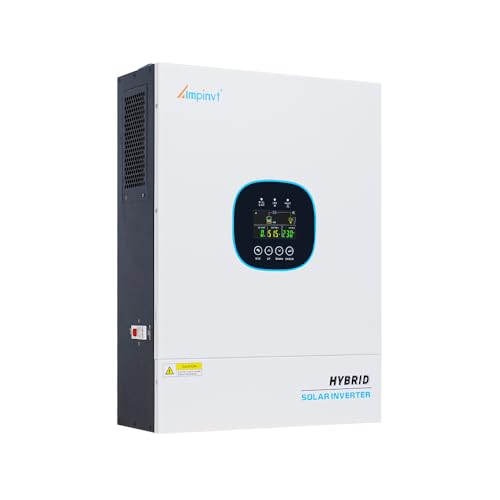
This Pure Sine Wave Solar Inverter is a combination of an inverter, ac battery charger , MPPT solar charge controller and AC auto-transfer switch. Support Single-phase,Split Phase and Three-phase 120/208V/240Vac Output, High transfer efficiency is above 92%.
What Benefits Do Homeowners Get From a VPP?

Typically, homeowners who enroll their battery systems in a virtual power plant receive direct financial compensation, measured in kilowatt‑hour credits ranging from $0.02 to $0.08 per kWh dispatched during peak‑price intervals, while simultaneously benefiting from reduced electricity bills through automated demand‑response actions that shift load to off‑peak periods, and gaining access to ancillary services markets that reward frequency‑regulation performance, which is quantified by response times under 200 milliseconds and round‑trip efficiencies exceeding 95 percent; these advantages are supported by real‑time telemetry, encrypted communication protocols, and predictive analytics that forecast price spikes and weather‑driven generation variability, ensuring that each discharge event maximizes revenue without compromising battery health or violating grid reliability standards. I also experience backup power availability during outages, as the VPP platform can prioritize local discharge to sustain essential loads, thereby enhancing resilience while maintaining the same economic incentives that drive reduced bills and market participation.
Recommended Products

[Multiple Magnification] WF10X&WF25X microscope eyepiece alone or with 2X extender lens, cooperate 4x 10x 40x achromatic objective lenses,microscope offers 10 magnification settings : 40X,80X,100X,200X,250X,400X,500X,800X,1000X,2000X.

【Life-like ocean background】Our Artificial fish Aquarium Night Light tank with Life-like ocean background. Create a captivating underwater world in your home with our bubble fish lamp, featuring vibrant artificial fish that mimic real aquatic life

5 Light Modes & Dimmable Brightness – 15W bright desk lamp has 10 brightness levels and 5 lighting modes, from 3000K to 6000K; To provides ideal lighting for working, studying, reading, crafting and task Lighting
How Do I Pick the Best VPP Operator for My Home Battery?
How can you evaluate a VPP operator for your home battery, considering technical criteria such as dispatch response time, typically under 200 ms, round‑trip efficiency exceeding 95 percent, and compensation rates ranging from $0.02 to $0.08 per kWh during peak intervals, while also reviewing the operator’s data‑security protocol, which must employ end‑to‑end encryption and ISO 27001 certification, and the platform’s forecasting accuracy, measured by mean absolute percentage error below 5 percent for price and weather predictions, in order to make certain that integration with your smart‑meter infrastructure, which supports IEC 61850 communication standards, will not compromise battery health or grid reliability? I compare reputation metrics, such as uptime percentages and historical payout consistency, against contract transparency, ensuring fee structures, data‑usage clauses, and termination policies are explicitly detailed in the service agreement; I also verify that the operator’s API latency aligns with the 200 ms dispatch target, that round‑trip efficiency is validated through third‑party testing, and that compensation schedules are published with clear peak‑interval definitions, thereby confirming that technical performance, security compliance, and contractual clarity collectively support reliable VPP participation.
What Common Pitfalls Should I Watch for When Joining a VPP?
After evaluating operator response time, efficiency, compensation, security, and forecasting accuracy, the next step is to identify common pitfalls that can undermine VPP participation. I watch contract terms closely, because hidden fees, minimum dispatch thresholds, and early‑termination penalties can erode expected revenue, especially when a 5‑% participation fee reduces net earnings from a 12‑% market payment to under 7 %. I also scrutinize data privacy policies, since encrypted telemetry streams may still expose usage patterns to third‑party analytics, potentially violating GDPR or CCPA compliance, and I verify that the platform’s breach‑response protocol includes real‑time alerts and forensic logging. Finally, I confirm that the aggregation algorithm respects battery state‑of‑charge limits, preventing deep‑discharge cycles that could shorten lifespan by more than 10 % over three years.
Frequently Asked Questions
Do VPPS Affect My Home’s Insurance Premiums?
I’ve found that VPPs rarely trigger insurance impact; most insurers treat them like any other solar or storage system, so premium adjustment is minimal unless your policy specifically excludes distributed‑energy resources.
Can a VPP Operate During a Total Grid Blackout?
I can tell you a VPP can run in islanded operation, but only if it has a black‑start capability; otherwise, during a total grid blackout, it won’t supply power without external generation.
What Data Does the VPP Operator Collect From My Battery?
I collect battery telemetry—state‑of‑charge, voltage, temperature, and usage patterns—under a consent management framework you approve, so I can dispatch power, forecast availability, and guarantee grid services while respecting your privacy.
Do VPPS Support Bidirectional Power Flow for Vehicle‑To‑Grid?
You’ll find, “the early bird catches the worm,” that VPPs do support vehicle‑to‑grid with bidirectional charging, letting your EV both draw from and feed power back to the grid when needed.
Will Participating in a VPP Void My Appliance Warranties?
I’ll tell you that joining a VPP generally doesn’t void your appliance warranties, but you should check the contract for any service exclusions and confirm warranty transferability before you enroll.