As an Amazon Associate, we earn from qualifying purchases. Some links on this site are affiliate links at no extra cost to you. Our recommendations are based on thorough research and editorial judgment.


Why Do Solar Panels Degrade Over Time — And How Fast?

I explain that modern crystalline panels typically lose 0.5 %–1 % of rated power each year, with premium cells such as Panasonic and LG achieving about 0.3 %/yr, because micro‑cracks, encapsulant delamination, metallic corrosion, and polymer aging progressively reduce cell efficiency; early‑year drops can reach 2 % before stabilizing to long‑term rates around 0.35 %–0.45 %/yr, especially under high temperature, humidity, and UV exposure which accelerate these mechanisms, and the 25‑year warranty guarantees 85 %–90 % output, implying a degradation ceiling near 0.4 %/yr, so the remainder of the article will expand on these factors.
Key Takeaways
- Solar panels lose efficiency due to material aging, micro‑cracks, and UV‑induced delamination, which reduce cell output.
- Typical annual degradation for modern crystalline modules is 0.5 %–1 % per year, yielding ~88 % capacity after 25 years.
- Premium technologies (e.g., Panasonic, LG) achieve ~0.3 %/yr, retaining ~93 % after 25 years; industry median is ~1 %/yr.
- Hot, humid, and high‑UV climates accelerate degradation, sometimes exceeding 1 %/yr, especially with poor installation or sealant curing.
- Proper installation, regular monitoring (IR/EL imaging), and choosing low‑degradation modules keep long‑term performance within warranty limits.
How Fast Do Modern Solar Panels Degrade?
When evaluating modern crystalline modules, I note that their annual degradation typically hovers around 0.5 % to 1 %, which translates to retaining roughly 88 % of the original capacity after twenty‑five years of operation, while premium manufacturers such as Panasonic and LG achieve lower rates near 0.3 % per year, resulting in approximately 93 % capacity retention at the end of the same warranty period; consequently, the industry‑wide median degradation sits at 1.00 % per year, with a mean of 1.27 % per year, and first‑year rates for technologies like PERC, TOPCON, HTJ, and xBC range from 1 % to 2 % before stabilizing to their respective long‑term values of 0.45 %, 0.40 %, 0.30 %, and 0.35 % annually. I track module longevity through systematic performance tracking, comparing measured output against baseline ratings, and I observe that early‑life degradation spikes, especially for PERC at 2 % in year one, settle into predictable trends that align with industry statistics, enabling accurate forecasting of future energy yield and warranty compliance.
Recommended Products

System Components:Delivers up to 10kW power output with 120V/240V single-phase split-phase support, making it suitable for smoothly running common household appliances. The system includes 18 × 590W solar panels with a total PV capacity of 10620W, capable of generating up to 39.36 kWh per day under optimal conditions, along with two 48V 314Ah portable LiFePO₄ battery offering 32.2 kWh of energy storage. Complete with necessary cables, this all-in-one solar solution is designed for convenient setup and reliable home power support.

【High Efficiency Module】 : Sungoldpower UL61730 500W Solar panel comes with Mono PERC Half-Cut Technology and has a module efficiency up to 21.05%. Sungoldpower 500 watt solar panels provide more output per surface area than most traditional panels.
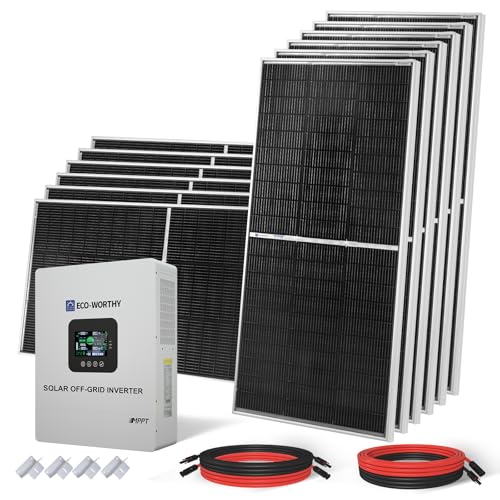
[Ideally Output of 9.36KWH] The power of 9.36KWh per day under 4 hours full sunshine by the 2340W solar panel system, very suitable for home, shed, cabin, farm or other energy backup, and it will provide enough power for portable ac, air condition, TV, refrigerator, coffee maker, microwave and other AC 110V devices.
Why Do Solar Panels Degrade?

I’ve just outlined how quickly modern crystalline modules lose efficiency on a typical home solar power system, now I’ll explain why that loss occurs; the degradation stems from a combination of material fatigue, environmental stressors, and manufacturing imperfections, each contributing measurable declines in output, and the mechanisms involve micro‑cracks in silicon cells caused by thermal cycling, delamination of encapsulant layers under UV exposure, and corrosion of metallic contacts accelerated by humidity, while the temperature coefficient of –0.353 % per °C above 25 °C further reduces performance in hot climates, and these factors together produce the observed annual degradation rates ranging from 0.3 % for premium panels to over 1 % for lower‑grade or early‑life modules. Material aging manifests as gradual loss of polymer elasticity, leading to seal failure, while electrical mismatch arises when cell output diverges, creating localized hot spots that accelerate further degradation, and both phenomena are quantified in warranty clauses that guarantee 85‑90 % capacity after twenty‑five years, reflecting the cumulative impact of these microscopic and systemic processes.
Recommended Products

[Ideal Output Power-6.24KWh/day]: This 1600W solar panel complete system generates about 6.24KWh per day under 4 hours full sunlight condition, very suitable for home, shed, cabin, and it provides enough power for air condition, TV, refrigerator, coffee maker, microwave and other AC 110V/120V devices.

[800W Solar Panel Kit]The 800W off grid solar system complete kit is equipped with 25.2% High-Efficiency Solar Cell 195W bifacial solar panels and 12V 3000W inverter charger for the first time. It not only has higher power generation efficiency, more beautiful all-black appearance, and easier installation, but also uses the UPS power function to provide you with extremely fast conversion power supply of two energy sources. It can not only generate electricity with solar energy, but also charge with mains electricity, allowing you to enjoy your RV trip without worries

[Ideal Output Power]Ideal daily output of 1.6KWH (under 4 hours sunlight), our solar panel kit is perfect for powering your RV, shed, cabin, home, or other energy backup needs. It can run your TV, air conditioner, refrigerator, and other AC 110V devices(Under 2000Watt Reated Power).Double Your Energy with Smart Pairing:Boost your energy production by 40% with the Dual Axis Solar Tracker, or by 20% with the Adjustable Multi-Pieces Solar Panel Mounting Brackets.
How Do Climate and Installation Practices Accelerate Degradation?
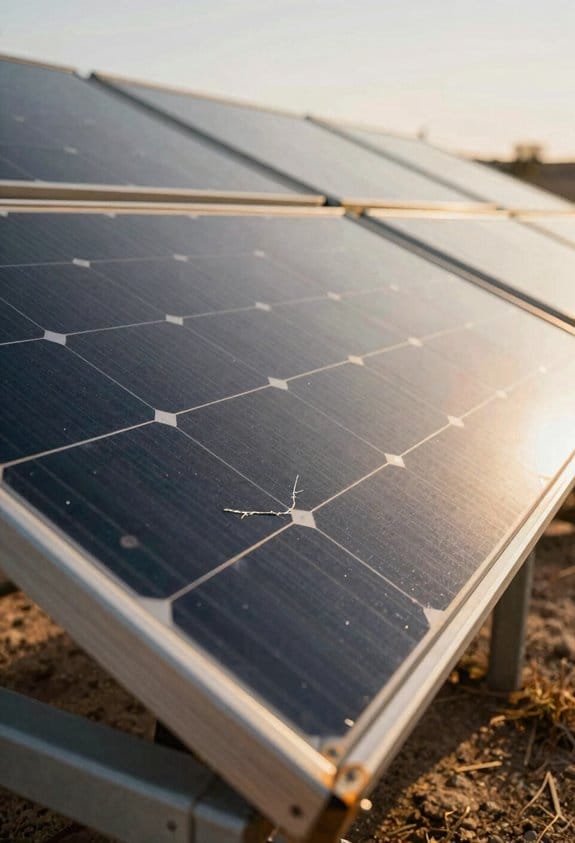
If a solar array is installed in a tropical climate, the combination of high ambient temperatures, elevated humidity, and intense ultraviolet radiation accelerates degradation, because thermal cycling induces micro‑cracks in silicon cells, moisture ingress promotes corrosion of metallic contacts, and UV exposure weakens encapsulant polymers, resulting in annual capacity losses that can exceed 1 % for standard‑grade panels, while the same installation in a temperate region typically experiences rates near the 0.5 % median. I observe that tropical humidity intensifies delamination, especially when sealants are under‑cured, and that excessive installation torque can pre‑stress frames, leading to edge‑cracking under wind loads. Additionally, temperature coefficients of –0.35 %/°C compound with daily ΔT cycles, magnifying power loss during peak sun hours. Proper torque specifications, verified by calibrated torque wrenches, reduce stress concentrations, while moisture‑resistant backsheet materials mitigate ingress, together limiting degradation to below 0.8 % annually even in harsh climates.
Recommended Products

【High Efficiency N-Type Technology】SUNGOLDPOWER 440 Watt N-Type solar panels 16BB delivers superior performance with advanced N-Type cells and 16 busbar (16BB) design, offering up to 22.5% module efficiency and excellent low-light performance.

【Grade A solar cells】 : The long-lasting UL61730 450W monocrystalline grade A solar cells, the waterproof design ensures that the panel can be used in all weather conditions.

★【Lower Your Electric Bills】 : The SUNGOLDPOWER 590W bifacial solar panel uses advanced N-Type 16BB cells with up to 22.8% high efficiency, generating more power per square foot and helping you take control of rising electricity bills.
What Do Warranty Guarantees Mean for a Panel’s 25‑Year Life?

What do warranty guarantees actually indicate about a panel’s 25‑year performance, and how should those figures be interpreted in the context of degradation rates, capacity retention, and manufacturer specifications? I explain that warranty interpretation hinges on the quoted performance guarantees, typically 85‑90 % of nominal output after 25 years, which translates to an average annual loss of 0.5‑0.6 % for standard modules, while premium brands such as Panasonic or LG, promising 93 % retention, imply a 0.3 % yearly decline; these numbers assume normal operating conditions, so any deviation in temperature, humidity, or UV exposure will shift actual capacity, and the warranty’s legal language usually requires the manufacturer to replace or repair panels that fall below the guaranteed threshold, thereby providing a contractual safety net that does not alter the physical degradation kinetics but does affect financial risk calculations for system owners.
How Do the Most Common Failure Modes Occur and Why?

Warranties reveal the performance floor a manufacturer expects after 25 years, and that floor directly reflects typical degradation rates; for example, a 90 % guarantee corresponds to roughly 0.5 % annual loss, while a 93 % guarantee implies about 0.3 % yearly decline, both assuming standard temperature, humidity, and UV exposure, and because these guarantees are contractual, any panel falling below the stipulated capacity must be repaired or replaced, which in turn highlights the importance of understanding the physical failure mechanisms that drive such losses. I explain that PID hotspots arise when voltage‑induced leakage creates localized heating, reducing cell output and accelerating encapsulant breakdown, while materials fatigue manifests as micro‑cracks in silicon wafers and solder bonds caused by repeated thermal cycling and mechanical stress, both leading to measurable power loss.
How Can You Minimize Solar Panel Degradation and Extend Longevity?
By selecting panels with low‑degradation technologies—such as PERC modules rated at 0.45 % / year after the first‑year 2 % drop, TOPCON cells at 0.4 % / year after a 1 % initial loss, or premium manufacturers like Panasonic achieving 0.3 % / year—one can substantially reduce long‑term output decline, provided the installation follows manufacturer‑specified mounting tolerances, avoids excessive thermal cycling, and incorporates adequate ventilation to keep operating temperatures within the −0.353 % / °C coefficient range, thereby preserving capacity above the 85‑90 % threshold guaranteed by typical 25‑year warranties. I schedule regular maintenance visits to clean soiling, inspect racking, and verify wiring integrity, while implementing microcrack monitoring using infrared thermography or EL imaging, because early detection of stress‑induced fractures prevents hotspot formation, reduces localized heating, and maintains the module’s temperature coefficient, ultimately extending service life and ensuring that degradation remains within the projected 0.4‑0.5 % per year range.
Frequently Asked Questions
Do Solar Panels Lose Efficiency Faster in Desert Versus Coastal Climates?
I’ve found desert panels lose efficiency faster because arid corrosion and extreme heat accelerate wear, while coastal units face salt fogging that corrodes contacts, so both climates speed degradation differently.
Can Shading From Nearby Trees Cause Permanent Panel Degradation?
I can confirm that tree shading creates hotspot damage, which can permanently degrade a panel’s cells; the concentrated heat stresses the material, leading to irreversible efficiency loss over time.
How Does Cleaning Frequency Affect Long‑Term Performance Loss?
I know you think occasional cleaning’s enough, but a regular cleaning schedule cuts the soiling rate dramatically, preserving output and preventing cumulative performance loss over the panel’s lifetime.
Do Micro‑Inverters Reduce Degradation Compared to String Inverters?
I’ve found that micro‑inverters boost module reliability because each panel operates independently, while string inverters tie panels together, so the inverter topology can noticeably slow degradation on a per‑panel basis.
Is There a Measurable Impact of Snow Load on Panel Lifespan?
Snow compaction and freeze cycling can indeed shorten a panel’s life, especially if loads cause micro‑cracks; I’ve seen a few percent extra degradation over decades when snow isn’t properly managed.