As an Amazon Associate, we earn from qualifying purchases. Some links on this site are affiliate links at no extra cost to you. Our recommendations are based on thorough research and editorial judgment.


What Is a Solar Charge Controller and Do You Always Need One?

I’m a solar charge controller that regulates panel voltage and current by monitoring panel Vmp and Imp, then adjusting the charge rate with either PWM duty cycles or MPPT set‑points, while enforcing low‑voltage disconnect at 10.5 V, over‑voltage cut‑off at 14.8 V, and short‑circuit protection under 100 A, and I prevent nighttime reverse current by engaging a blocking diode, which protects batteries from discharge; most off‑grid systems need me because panel open‑circuit voltages commonly exceed the 14.4 V charge‑acceptance limit of 12 V lead‑acid batteries, causing over‑charge and gassing, whereas only when panel voltage stays below that threshold and current stays under safe limits could a direct connection suffice, and if you keep reading you’ll discover more details.
Key Takeaways
- A solar charge controller regulates voltage and current from panels to batteries, preventing over‑charge and deep‑discharge.
- It blocks reverse current at night, ensuring loads draw from the battery rather than the panels.
- Controllers are required when panel voltage exceeds the battery’s maximum charge‑acceptance voltage or when current could over‑charge the battery.
- Small low‑voltage arrays that stay below battery limits can be connected directly, but only with reliable reverse‑current protection.
- Choosing PWM or MPPT depends on panel‑to‑battery voltage ratio; MPPT is more efficient for higher voltage mismatches.
What a Solar Charge Controller Actually Does
Regulating the flow of electricity from photovoltaic panels to batteries, a solar charge controller monitors panel voltage and current, adjusts the charging rate using PWM or MPPT algorithms, and prevents reverse current at night by engaging a blocking diode, thereby protecting the battery from overcharge and ensuring that the load receives stable power within specified voltage limits. I observe that the controller continuously samples voltage, current, and temperature, applying solar sensing to modulate PWM duty cycles or MPPT set‑points, while referencing battery chemistry parameters such as nominal voltage, charge acceptance, and float voltage, which differ between lead‑acid, lithium‑ion, and nickel‑metal‑hydride cells. The device also enforces low‑voltage disconnect at 10.5 V for a 12 V system, over‑voltage cut‑off at 14.8 V, and short‑circuit protection under 100 A, thereby maintaining safe operating margins across diverse storage chemistries.
Why Every Off‑Grid System Needs a Solar Charge Controller (Even Small Ones)
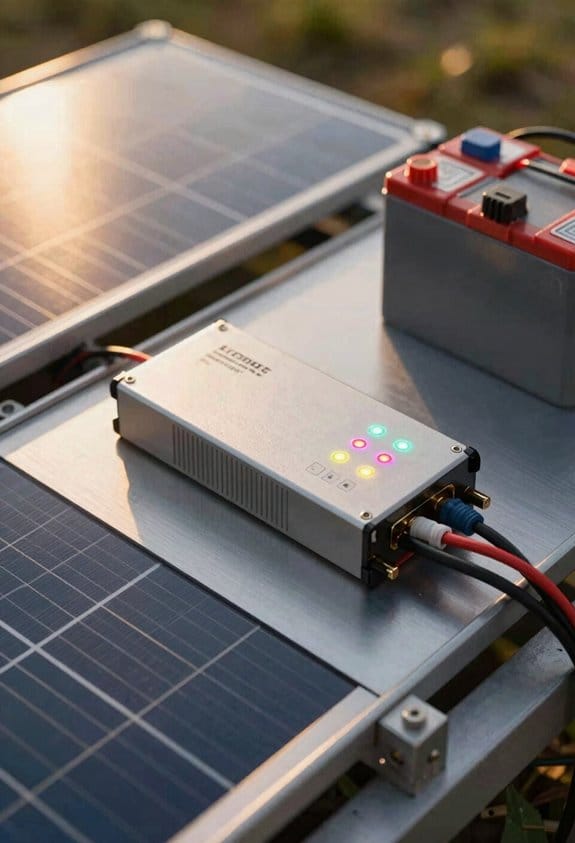
When an off‑grid installation includes even a modest 100 W solar array, a charge controller becomes indispensable because it limits panel voltage to the battery’s maximum charge‑acceptance threshold—typically 14.4 V for a 12 V lead‑acid bank—while preventing reverse current at night, which would otherwise discharge the battery and reduce its usable capacity. I explain that a controller’s PWM or MPPT algorithm regulates current flow, thereby avoiding over‑charging, gassing, and deep‑discharge that would otherwise accelerate battery maintenance cycles and shorten lifespan. The device also blocks nighttime reverse current, ensuring that nighttime lighting draws power only from the stored energy rather than feeding back into the panels, which preserves state‑of‑charge and prevents unnecessary losses. This protection is essential even for small systems, as the proportional impact on efficiency and battery health is significant.
Recommended Products


100A MPPT CONTROLLER: The revolutionary GenStar MPPT (Maximum Power Point Tracking) 100A solar charge controller represents Morningstar's best engineering efforts brought together into a single design, with ability to add additional technology such as Relay, Shunt and BMS functionality. The GenStar MPPT is available in 60, 80 and 100A charge ratings with a maximum Voc limit of 200V, and supports 12, 24, 36 and 48V Lithium and Lead-Acid batteries.

60A, 600V MPPT CONTROLLER: Morningstar TriStar Maximum Power Point Tracking (MPPT) 60A, 600V solar charge controller is perfect for larger solar systems with multiple panels or high-voltage outputs. It boosts energy output and accelerates charging times. Compatible with a wide variety of solar modules and array configurations, it ensures optimal energy harvest.
When a Solar Charge Controller Isn’t Needed
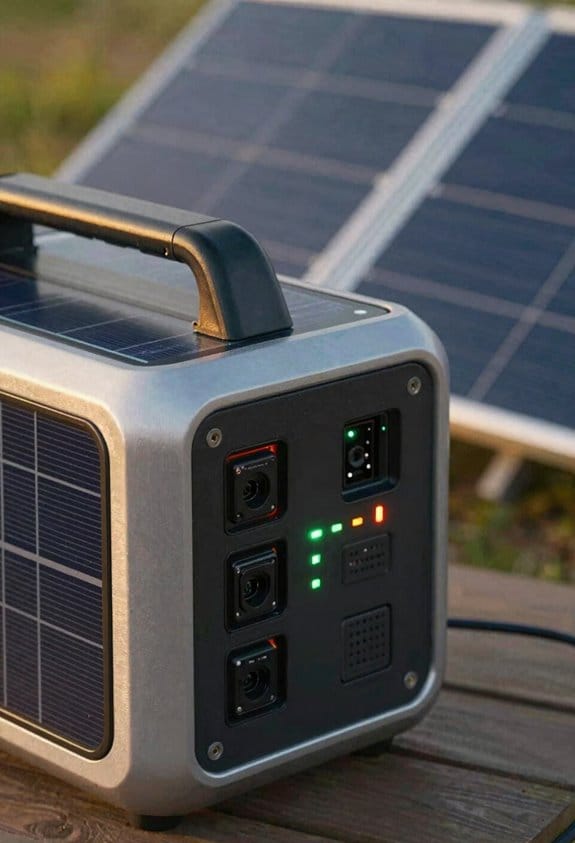
Even a modest 100 W array typically requires a controller, yet there are scenarios where the controller can be omitted without compromising system integrity, such as when the solar panel voltage never exceeds the battery’s maximum charge‑acceptance voltage, the array’s current rating stays below the battery’s safe charge‑current limit, and the load is isolated from the panels by a diode or mechanical disconnect, thereby preventing reverse‑current flow and over‑charging; in these cases, direct connection works because the panel’s open‑circuit voltage, for example 17 V for a 12 V lead‑acid bank, remains below the battery’s 14.4 V threshold, the charge current stays under 10 A, and the system includes a built‑in low‑voltage disconnect that cuts off the load when the battery falls beneath 10.5 V, ensuring safe operation without additional regulation. I find that small panels, when paired with passive systems, allow direct coupling that simplifies charge management, provided voltage and current limits are strictly observed, and that a diode or mechanical breaker reliably blocks reverse flow, consequently maintaining battery health without active regulation.
Recommended Products

QUALITY SIGNS - We use only MUTCD approved materials, ensuring every sign meets all street and safety requirements

ShadowFlux Anti-Shading Technology - Renogy shadowflux technology delivers enhanced power generation even in shaded areas caused by buildings, plants, or stains. This 400w solar panel innovative shadowflux anti-shading tech significantly reduces hot-spot risks, ensuring reliable power output and peace of mind.

Up to 25% High Efficiency: Our 400 watt solar panels utilize the latest half-cut cell technology and 10BB hidden busbars to enhance light absorption efficiency; the panels are constructed with high-quality materials such as A+ grade high-strength polyester film and high-efficiency monocrystalline silicon, ensuring superior and stable performance; compared to traditional solar panels, reducing power loss and lowering panel temperature
PWM vs. MPPT: Choosing the Right Solar Charge Controller

Because both PWM and MPPT controllers regulate the power transferred from photovoltaic arrays to batteries, I compare their operational principles, efficiency ranges, and typical application thresholds, noting that PWM devices switch the panel voltage between the array’s maximum power point and the battery voltage, achieving 70‑80 % efficiency at low irradiance, while MPPT units employ DC‑DC conversion algorithms that track the panel’s true maximum power point, often delivering 92‑98 % efficiency, especially when panel voltage exceeds battery voltage by 30‑40 % and temperature variations are significant, thereby influencing system sizing, cost‑benefit analysis, and overall energy yield.
In practice, the efficiency comparison hinges on voltage mismatch, where MPPT’s temperature compensation maintains peak power extraction across a broader thermal range, whereas PWM’s simpler design limits gain to narrow irradiance windows.
For installations with high panel‑to‑battery voltage ratios, MPPT’s superior conversion efficiency justifies its higher upfront cost, while low‑voltage, budget‑constrained systems may accept PWM’s reduced efficiency and minimal temperature compensation.
Recommended Products

Reliable LiFePO4 Technology: Our 16-cell LiFePO4 battery boasts an impressive lifespan of 2500 to 7000 cycles over 10 years. Equipped with an advanced Battery Management System (BMS), it's safeguarded against overcharging, deep discharges, overloads, overheating, short circuits, low temperature cut-off, and boasts an exceptionally low self-discharge rate.

System Components:Delivers up to 10kW power output with 120V/240V single-phase split-phase support, making it suitable for smoothly running common household appliances. The system includes 18 × 590W solar panels with a total PV capacity of 10620W, capable of generating up to 39.36 kWh per day under optimal conditions, along with two 48V 314Ah portable LiFePO₄ battery offering 32.2 kWh of energy storage. Complete with necessary cables, this all-in-one solar solution is designed for convenient setup and reliable home power support.

【10 Years of Peace of Mind】Trusted by 6M+ users worldwide, our leading PV inverter brand provides a 10-year product quality assurance and local support, ensuring fast, reliable service and assistance whenever you need it, right in your area.
How to Diagnose Faults and Keep Your Controller Reliable
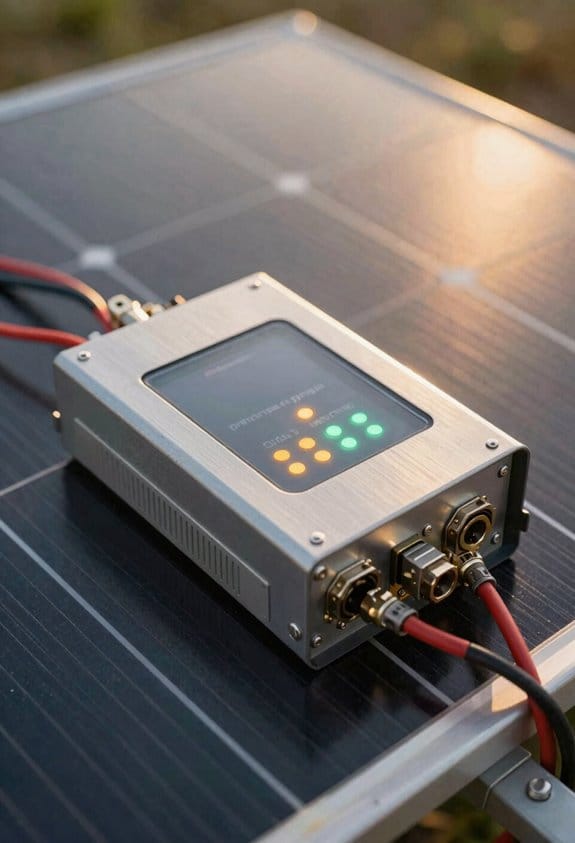
Typically, a solar charge controller exhibits fault indicators—such as LED codes, audible alarms, or voltage drop anomalies—that can be systematically examined using a multimeter, oscilloscope, and temperature sensor, allowing you to isolate issues ranging from reverse‑polarity protection tripping (often triggered at < 2 V deviation) to over‑current shutdowns occurring when load current exceeds 1.2 × the controller’s rated 10 A limit, while maintaining a diagnostic workflow that records each measurement, compares it against manufacturer specifications, and documents environmental conditions to guarantee repeatable reliability assessments. I begin by opening the fault logbook, noting timestamps, voltage, current, and temperature readings, then perform grounding checks, confirming that chassis and negative terminals share a common reference; inconsistencies often reveal corrosion or loose connections. Next, I verify input voltage against panel Vmp, confirming it stays within ±5 % of nominal, and inspect the PWM or MPPT duty cycle for abnormal spikes, which may indicate controller firmware glitches. Finally, I cross‑reference observed alarm codes with the datasheet, replace suspect MOSFETs if voltage drop exceeds 0.2 V, and retest under load, ensuring the controller resumes normal operation before closing the log.
Frequently Asked Questions
Can a Solar Charge Controller Boost Voltage for Low‑Voltage Panels?
I’ll tell you straight: a solar charge controller can’t magically boost voltage for low‑voltage panels; it focuses on voltage regulation and panel matching, ensuring safe, efficient charging without over‑volting the battery.
Do Controllers Work With Lithium‑Ion Batteries Without Settings?
I tell you they generally work with lithium‑ion batteries, but you must check the controller’s default limits for that chemistry; otherwise, you risk over‑charging or under‑charging without proper settings.
How Does Temperature Compensation Affect Charging Efficiency?
I’ll tell you, temperature compensation subtly shifts voltage, smoothing fluctuations so charge efficiency climbs, especially when heat spikes, keeping batteries happy and power flowing steadily without wasteful over‑charging.
Can Multiple Controllers Be Daisy‑Chained for Larger Systems?
I can daisy‑chain multiple controllers for larger systems, but I’ll use parallel operation and make certain they share compatible communication protocols; otherwise they’ll conflict and you’ll lose proper charge management.
Is a Controller Required for Grid‑Tied Solar Installations?
I say the controller’s like a traffic light for your rooftop, and for grid‑intertie considerations you still need it to prevent back‑flow and protect utility export, even though the inverter handles most regulation.