As an Amazon Associate, we earn from qualifying purchases. Some links on this site are affiliate links at no extra cost to you. Our recommendations are based on thorough research and editorial judgment.
What Is a Micro-Inverter and Is It Better Than a String Inverter?

I’m a micro‑inverter, a device mounted on each photovoltaic module that converts 30‑45 V DC to 120‑240 V AC with 96‑97 % efficiency, performing independent maximum‑power‑point tracking so each panel operates near its optimum voltage and current, while a string inverter aggregates DC from multiple panels, limits overall output to the lowest‑performing module, and typically reaches 95‑96 % conversion efficiency; micro‑inverters eliminate string‑level mismatch caused by shading, orientation, or degradation, reducing annual energy loss up to 12 % in non‑uniform conditions, though they incur 1‑2 % per‑panel losses and higher upfront cost, while offering 25‑year warranties and lower failure rates, and if you continue you’ll see how these trade‑offs affect system design.
Key Takeaways
- A micro‑inverter is a small inverter mounted on each solar panel that converts DC to AC locally, providing panel‑level MPPT.
- It isolates panels, so shading, orientation, or degradation of one module only reduces its own output, preserving the rest of the system’s energy.
- Micro‑inverters typically achieve 96‑97 % conversion efficiency, but per‑panel losses and AC‑coupling can lower overall system efficiency by 3‑5 % versus a string inverter.
- They cost 20‑30 % more upfront than string inverters but offer longer warranties (≈25 years) and lower failure rates (≈0.055 % vs. 0.89 %).
- For installations with partial shading, multiple orientations, or future expansion, micro‑inverters usually provide higher energy yield and easier scalability, making them “better” in those scenarios.
What’s the Real Difference Between Micro‑ and String Inverters?
I’ll start by pointing out that micro‑inverters mount directly on each panel, converting DC to AC at the source, whereas string inverters sit centrally, typically near the meter, and convert the combined DC output of an entire string of panels in a single step. This architecture eliminates panel mismatch caused by shading, orientation, or degradation, because each module operates independently, while a string inverter’s output is limited by the lowest‑performing panel in the series, potentially reducing overall efficiency by up to 30 % under non‑uniform conditions. Installation aesthetics also differ: micro‑inverters add minimal visual clutter, blending with roof lines, whereas string inverters require a separate, often conspicuous enclosure that may affect curb appeal. Consequently, system design must weigh independent optimization against centralized hardware footprint, considering both performance variance and visual integration.
How Microinverters Convert Power at the Panel Level
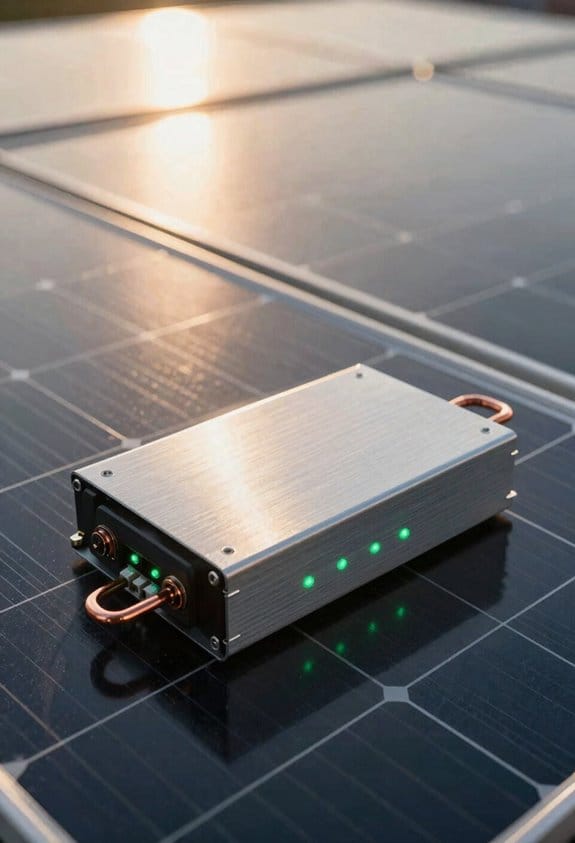
Micro‑inverters, mounted directly on each photovoltaic module in a modern home solar power system, receive the panel’s DC output—typically ranging from 30 V to 45 V at open‑circuit voltage and 5 A to 9 A at maximum power point—and immediately convert it to 120 V or 240 V AC—similar to what you will see in many RV solar panel setups—using a high‑frequency transformer‑less architecture, which incorporates a maximum‑power‑point‑tracking (MPPT) controller that continuously adjusts the operating voltage to within 1 % of the panel’s best, thereby minimizing mismatch losses. I then observe that each unit operates at the panel level, delivering clean, high‑quality power because the MPPT maintains ideal voltage, reducing harmonic distortion. The design also prevents module islanding by synchronizing phase and frequency with the grid, while real‑time monitoring transmits per‑panel performance metrics to a cloud portal, enabling instantaneous detection of faults or efficiency deviations.
Why Shade Tolerance Matters for Microinverters?
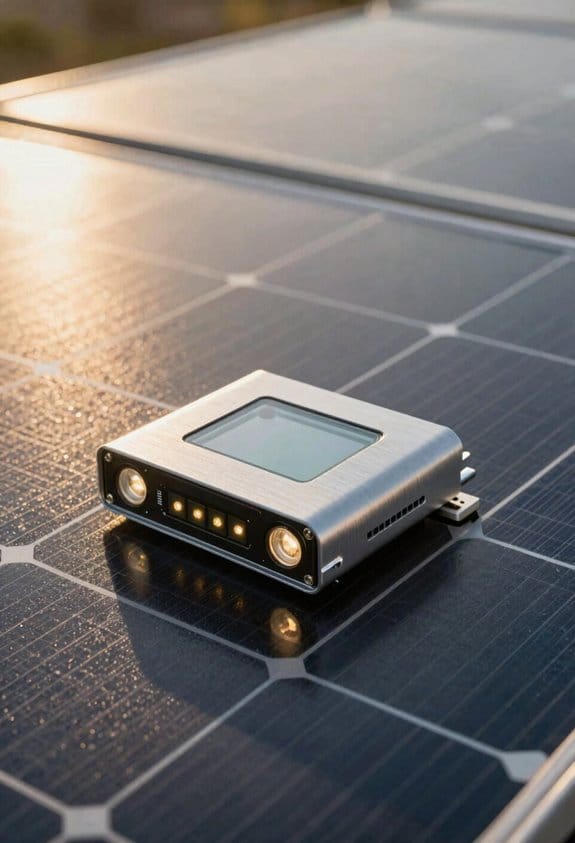
Typically, a single shaded panel can drop the output of an entire string by up to 30 % when a string inverter is used, because the inverter’s MPPT operates on the aggregate voltage of all series‑connected modules, whereas a microinverter isolates each panel’s conversion, allowing the unshaded modules to continue delivering 95 %–100 % of their rated power, while the shaded panel’s output falls to its reduced level without affecting the rest of the system. I explain that urban canopies, which cause intermittent shadows from nearby buildings, create localized losses that microinverters mitigate by keeping each module’s MPPT independent, hence preserving overall yield. Seasonal variability, such as winter sun angles, further emphasizes the need for panel‑level optimization, because a single low‑irradiance panel would otherwise throttles the entire string, reducing annual energy production by up to 12 % in typical residential layouts.
Microinverter Performance Trade‑offs: Efficiency, Battery Integration, and Energy Losses
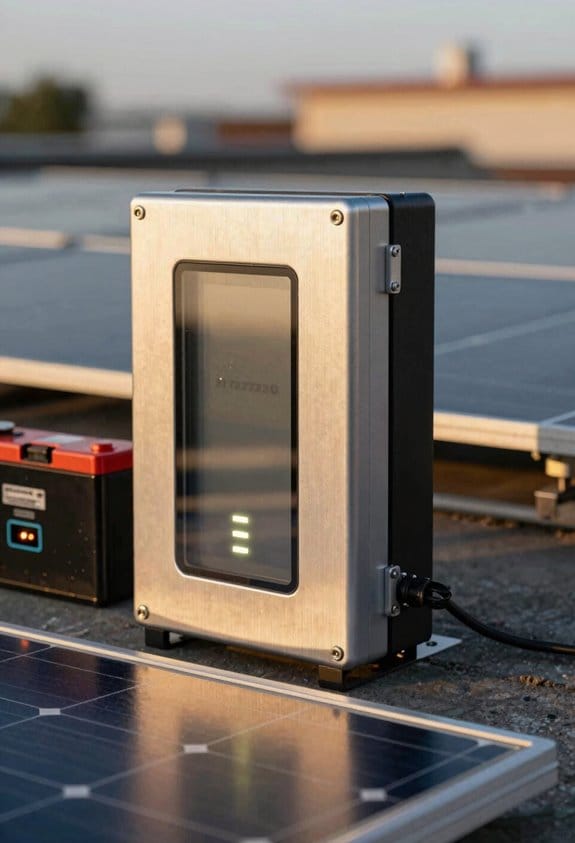
Shade tolerance, which we just examined, leads directly into the efficiency trade‑offs that characterize microinverter performance, especially when batteries are introduced. I note that each microinverter typically achieves 96‑97 % conversion efficiency, yet the cumulative effect of panel level losses, often 1‑2 % per panel, compounds when dozens of units are present, resulting in overall system efficiencies that can fall 3‑5 % below a comparable string inverter. When a battery is added, the AC coupling penalties—additional DC‑to‑AC‑to‑DC conversions—introduce roughly 4‑6 % extra loss, because the inverter must first generate AC, then a charger reconverts it to DC for storage, and finally the inverter re‑creates AC for export. Consequently, the energy‑budget analysis shows that microinverters, while offering granular control, incur measurable efficiency penalties in battery‑integrated configurations.
Microinverter Cost, Warranty & Reliability: What the Numbers Show
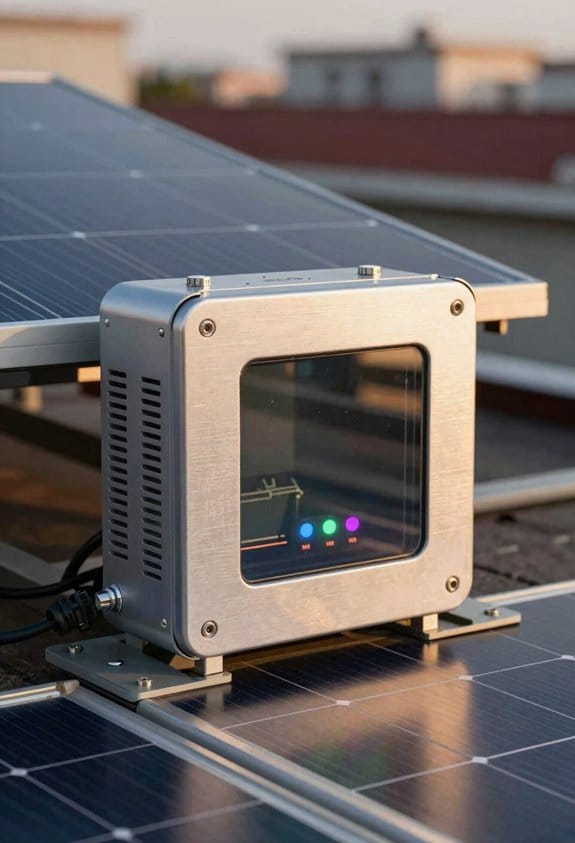
Because the upfront expense of microinverters exceeds that of string inverters, I compare their cost structures, warranty terms, and reliability metrics, noting that a typical 10‑panel system with microinverters can cost 20‑30 % more, while a comparable string‑inverter installation often falls within a lower price bracket. I observe that microinverters typically carry 25‑year warranties, versus 10‑15‑year coverage for string inverters, which translates into lower long‑term reliability risk, and I reference industry failure rates of 0.055 % for microinverters against 0.89 % for string inverters, indicating a tenfold reduction in expected component loss. Consequently, replacement logistics become simpler, as fewer units require service over the system lifetime, and the amortized cost of a mid‑life inverter swap remains modest compared with the cumulative expense of multiple string‑inverter replacements.
Recommended Products

【4000Watt Pure Sine Wave Inverter】This 4000 watt inverter pure sine wave version converts 24V DC to AC 110V 120V, ideal to install in RVs, Cars, Vessels and 24V off grid solar system, and computer, hair dryer, 2000Watt microwave and other sensitive equipment not more than 4000watt, Surge Power 7000 Watt for 2 Seconds

【24V 2000W Pure Sine Wave Inverter】100% Real power 2000W continuous output, Pure sine wave inverter, THD<3%. DC24V input, 2 AC 110-120v outlets and 1 hardwire block for high power electrical, double 5V 2.4A USB for fast charge. Please do not connect with 12V Battery. Product liability insurance is covered by AIG.

IQ8H-240-72-M-US Micro Inverter, 320-540W, 16-58V, MC4 Connector The IQ8H-240-72-M-US Micro Inverter is the industry's first micro-grid forming, software defined micro inverter
Scaling Your Solar System: Adding Panels With Microinverters vs. String Inverters
When expanding a solar array, you’ll notice that microinverters simplify panel additions, because each new module carries its own inverter, allowing immediate grid‑compatible AC output without redesigning a central string. I can attach a microinverter to any roof orientation, which improves roof compatibility and avoids the need for a new string design, while the inverter lifespan typically extends to 25 years, surpassing the 10‑15 year expectancy of many string inverters. Adding a panel to a microinverter system requires only a single wiring connection and a brief configuration step, whereas a string inverter may demand re‑balancing of string voltages, additional conduit, and potential inverter oversizing. Consequently, the incremental cost per panel is lower with microinverters, and the overall system efficiency remains stable because each inverter operates at its peak voltage and current range.
Recommended Products

System Components:Delivers up to 10kW power output with 120V/240V single-phase split-phase support, making it suitable for smoothly running common household appliances. The system includes 18 × 590W solar panels with a total PV capacity of 10620W, capable of generating up to 39.36 kWh per day under optimal conditions, along with two 48V 314Ah portable LiFePO₄ battery offering 32.2 kWh of energy storage. Complete with necessary cables, this all-in-one solar solution is designed for convenient setup and reliable home power support.
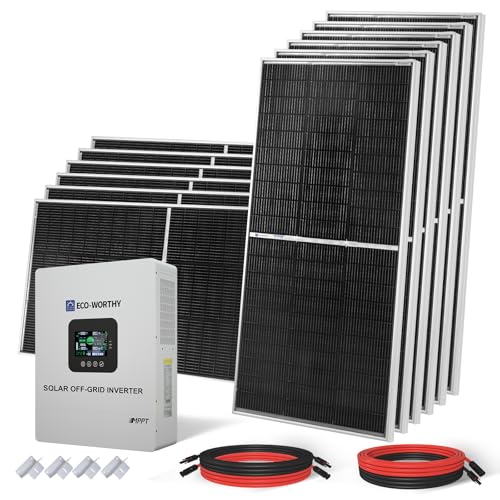
[Ideally Output of 9.36KWH] The power of 9.36KWh per day under 4 hours full sunshine by the 2340W solar panel system, very suitable for home, shed, cabin, farm or other energy backup, and it will provide enough power for portable ac, air condition, TV, refrigerator, coffee maker, microwave and other AC 110V devices.

N-Type Renogy Solar Panel: This advanced N-Type solar panel utilizes 18-busbar cell design to minimize hot spots and maintain stable performance under extreme conditions. Delivering industry-leading 25% conversion efficiency with enhanced heat resistance, this premium solar panel offers superior long-term energy output and operational lifespan.
Bottom‑Line Decision Guide: Is a Microinverter Right for Your Home?
Expanding a solar array with microinverters, as described earlier, leads directly into the decision framework for evaluating whether a microinverter suits a particular residence, because the panel‑level conversion, 25‑year warranty, and 0.0551 % failure rate contrast sharply with the 10‑15‑year lifespan, 0.89 % failure rate, and centralized conversion of string inverters, while the higher upfront cost per watt—typically $0.12 to $0.15 versus $0.08 to $0.10 for string inverters—must be weighed against long‑term reliability and scalability, especially in scenarios involving partial shading, multiple roof orientations, or future expansion plans that demand incremental wiring and configuration. I compare installation timeline, noting microinverters add modest rooftop labor but avoid central‑inverter mounting, and I assess resale value, recognizing that panel‑level monitoring and extended warranty can increase property appeal, whereas higher initial cost may slightly offset perceived financial return.
Recommended Products

This Pure Sine Wave Solar Inverter is a combination of an inverter, ac battery charger , MPPT solar charge controller and AC auto-transfer switch. High transfer efficiency is above 85%, built-in AVR stabilizer, complete isolate surge interference of input & output's voltage and current, Impact resistance super load capacity, continuous stable pure sine wave output. Available at 240Vac (HOT1+HOT2) and 120/240Vac output at the same time.

【ALL-IN-ONE Solar Hybrid Inerter】EcoSolLi pure sine wave inverter with advanced SPWM technology and dual closed-loop control, pure sine wave output guarantees maximum safety for your home circuits. Built-in MPPT ensuring optimal energy harvest with up to 99% efficiency in real-time.

This Pure Sine Wave Solar Inverter is a combination of an inverter, ac battery charger , MPPT solar charge controller and AC auto-transfer switch. Support Single-phase,Split Phase and Three-phase 120/208V/240Vac Output, High transfer efficiency is above 92%.
Frequently Asked Questions
Can Microinverters Be Retrofitted Onto Existing Solar Panels?
I can retrofit microinverters onto existing panels if they’re compatible, but you’ll need to check panel compatibility and make certain warranty transfer—some manufacturers allow it, others don’t.
Do Microinverters Work With All Types of Solar Panels?
I can tell you microinverters generally work with most panel types, but I always check module compatibility first; otherwise warranty implications could become a hassle if the panel isn’t officially supported.
How Do Microinverters Affect the Overall Lifespan of a Solar Installation?
I’ve seen microinverters boost longer durability, so your system lives harder, while their 25‑year warranty shields you from costly failures, making the whole installation feel sturdier and more reliable.
Are There Specific Safety Concerns Unique to Microinverter Systems?
I’m aware microinverters need arc‑fault protection and rapid‑shutdown compliance, so I always verify they meet NEC requirements and have built‑in safety circuits to prevent fire hazards and guarantee quick power isolation.
What Is the Impact of Microinverters on Utility Grid Interconnection Requirements?
I picture tiny panels humming like fireflies, each meeting grid standards and respecting export limits; microinverters let you comply with utility interconnection rules while keeping your system’s output balanced and predictable.