As an Amazon Associate, we earn from qualifying purchases. Some links on this site are affiliate links at no extra cost to you. Our recommendations are based on thorough research and editorial judgment.

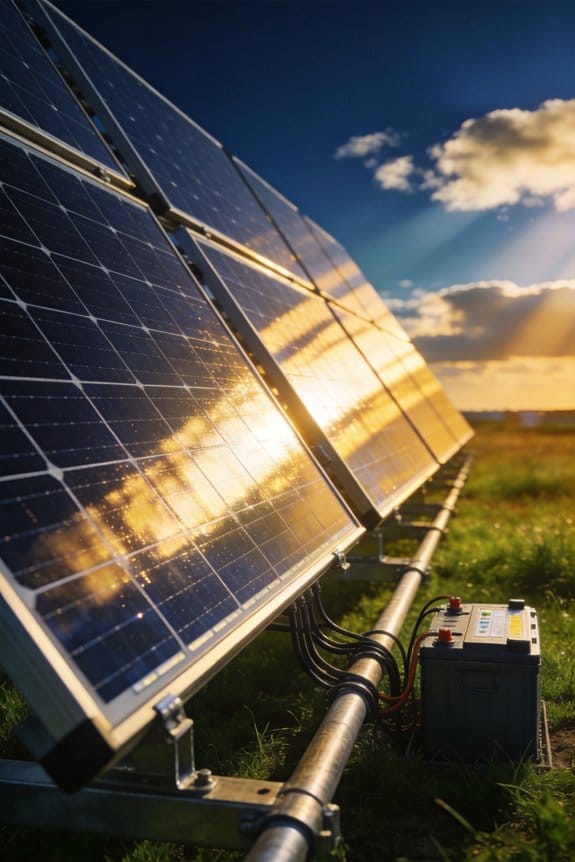
Bifacial vs Monofacial Solar Panels: What’s the Real Difference?

I explain that bifacial panels capture photons on front and rear glass surfaces, yielding 5‑30 % more energy when ground albedo exceeds 0.3, whereas monofacial units receive only front‑side light and lose output by the cosine of tilt deviation; bifacial modules often require 1‑3 m clearance to access reflected irradiance and use dual‑glass laminates that degrade about 0.3 % per year, while monofacial panels typically use backsheets with 0.5 % annual degradation and need only roof‑level mounting, and although bifacial systems cost 5‑8 % more upfront, their higher yield can shorten payback by one to three years on suitable sites, so if you keep exploring you’ll discover additional details.
Key Takeaways
- Bifacial panels capture sunlight on both sides, adding reflected (albedo) light and typically boosting energy output 5‑30% versus monofacial panels.
- Energy gains depend on ground albedo, tilt, and season; low‑reflectance rooftops see ~2% increase, while snow‑covered or high‑reflectance sites can reach 30%.
- Bifacial modules require 1‑3 m clearance and adjustable tilt to expose the rear side, whereas monofacial panels can be mounted flush with the roof.
- Dual‑glass bifacial panels usually have longer warranties (30 years) and lower degradation (~0.3%/yr) than monofacial backsheets (25 years, ~0.5%/yr).
- Upfront cost is 5‑8% higher for bifacial panels, but the extra yield shortens payback by 1‑3 years and can lower levelized cost when albedo exceeds 0.3.
Bifacial vs Monofacial: Light Capture Explained
I’ll start by breaking down how monofacial and bifacial panels capture light, noting that monofacial cells absorb photons only on their front glass surface while bifacial cells collect sunlight on both front and rear glass layers, which means the latter can harvest direct irradiance plus reflected or albedo light from the ground, surrounding structures, or snow. The albedo impact, consequently, raises total irradiance on bifacial modules by 5‑30 % in high‑reflectance environments, whereas monofacial devices receive only front‑side illumination, limiting their energy yield to the incident angle’s cosine component. Angle sensitivity further differentiates performance; bifacial panels exhibit reduced cosine loss because rear‑side capture mitigates oblique incidence, while monofacial panels suffer a proportional drop in output as tilt deviates from best sun‑tracking angles, especially when ground reflectivity is low.
Recommended Products

【52.7KWh LiFePO4 Battery】5 sets Dawnice’s newest line of batteries – 51.2V 206Ah LiFePO4 battery provides 6000+ cycles & a 10 years lifetime with built-in 100A Battery Management System (BMS) protects it from overcharge, deep discharge, overloading, overheating and short circuit, and excessive low self-discharge rate.
[Bifacial Technology] Designed to capture sunlight from both sides, this panel increases energy yield by up to 30%, making it ideal for various installations, including rooftops and ground mounts.
【High Efficiency】 : SUNGOLDPOWER 560W Bifacial monocrystalline PERC solar panel can generate more energy up to 30%
Bifacial vs Monofacial: Real‑World Energy Gains
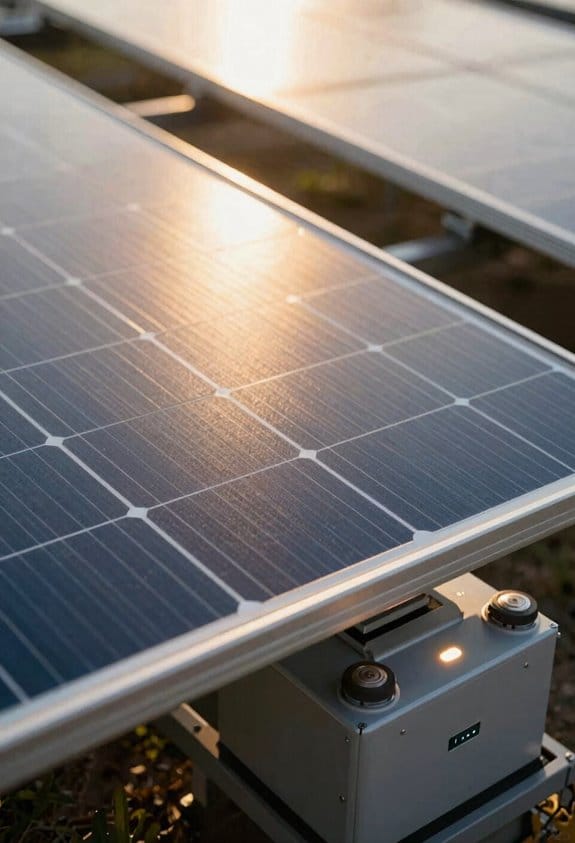
Having outlined how each panel type captures photons, the next step is to quantify the resulting energy output under typical operating conditions, because real‑world gains depend on factors such as ground albedo, tilt angle, and seasonal sun path, which together determine the effective irradiance on the rear surface of bifacial modules and the sole front surface of monofacial modules, leading to measured yields that range from a 2 % increase on low‑reflectance rooftops to as much as 30 % on high‑albedo ground or snow‑covered sites, while laboratory‑controlled tests report bifacial gains of 5‑30 % relative to monofacial baselines, confirming that the additional rear‑side contribution translates into higher annual kilowatt‑hour production when installation geometry and environmental reflectivity are optimized. In practice, I observe that seasonal performance can shift the rear‑side contribution by several percent, especially when winter snow raises albedo, whereas urban shading often reduces the effective gain to the lower end of the 2‑8 % range on typical rooftops, making site‑specific analysis essential for accurate energy modeling.
Recommended Products
【High Efficiency】 : SUNGOLDPOWER 16BB N-Type 560W Bifacial monocrystalline PERC solar panel can generate more energy up to 30%

★【High Efficiency】 : SUNGOLDPOWER UL61730 CEC Listed N-Type 16BB 590W Bifacial monocrystalline solar panel can generate more energy up to 22.8%. Bifacial technology allows for the harvesting of up to an additional 30% energy from the rear side of the module.

【Grade A solar cells】 : The long-lasting UL61730 550W monocrystalline grade A solar cells, the waterproof design ensures that the panel can be used in all weather conditions.
Bifacial vs Monofacial: Installation Height & Clearance Requirements
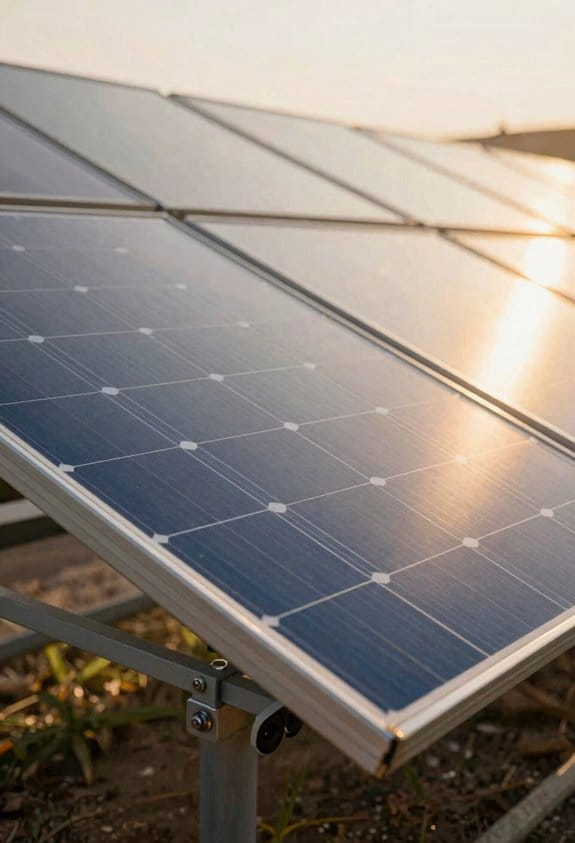
Installing bifacial modules typically demands a clearance of one to three meters above reflective surfaces, whereas monofacial panels generally require only standard roof‑level mounting without rear‑side spacing, because the former’s rear irradiance gain depends on unobstructed view of ground albedo, while the latter’s performance relies solely on front‑side exposure. I note that mounting clearances for bifacial systems must accommodate ground‑reflectance variation, often requiring adjustable tilt to preserve ideal rear‑side illumination, whereas monofacial installations can use fixed racks with minimal vertical separation. Airflow optimization becomes critical when panels are elevated, as increased spacing reduces thermal buildup, improves cell temperature, and consequently enhances efficiency; conversely, monofacial arrays benefit from tighter spacing that simplifies structural design, yet still require adequate ventilation to avoid overheating and maintain rated output.
Recommended Products

Adjustable solar panel mounting brackets designed for off-grid solar systems.

EASILY ADJUST Your Antenna to Any Desired Angle & Position for Optimum Signal Reception - Tilts and Swivels in 2 Directions
Bifacial vs Monofacial: Durability, Warranty, and Degradation
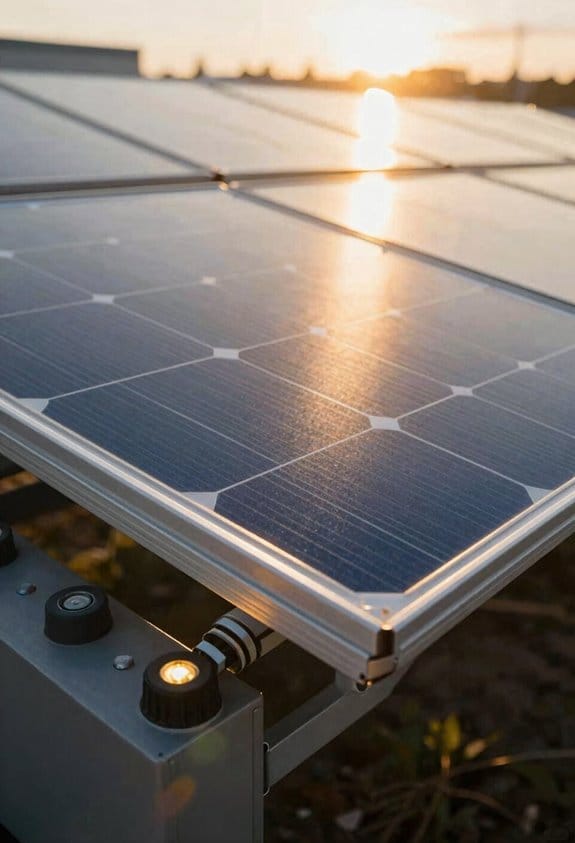
Because both panel types are expected to operate for decades, their construction materials and cell technologies directly influence durability, warranty terms, and degradation rates, with bifacial modules typically employing dual‑glass laminates that resist moisture ingress and UV degradation, while monofacial units rely on polymer backsheets that may deteriorate faster under prolonged exposure. I note that glass longevity in dual‑glass designs often exceeds 30 years, whereas backsheet aging can reduce structural integrity after 20–25 years, prompting manufacturers to offer 30‑year power warranties for bifacial panels compared with 25‑year warranty terms for most monofacial units, and the measured degradation rates for bifacial modules average 0.3 % per year versus 0.5 % per year for monofacial, reflecting the protective advantage of glass over polymer.
Bifacial vs Monofacial: Financial Payback & ROI
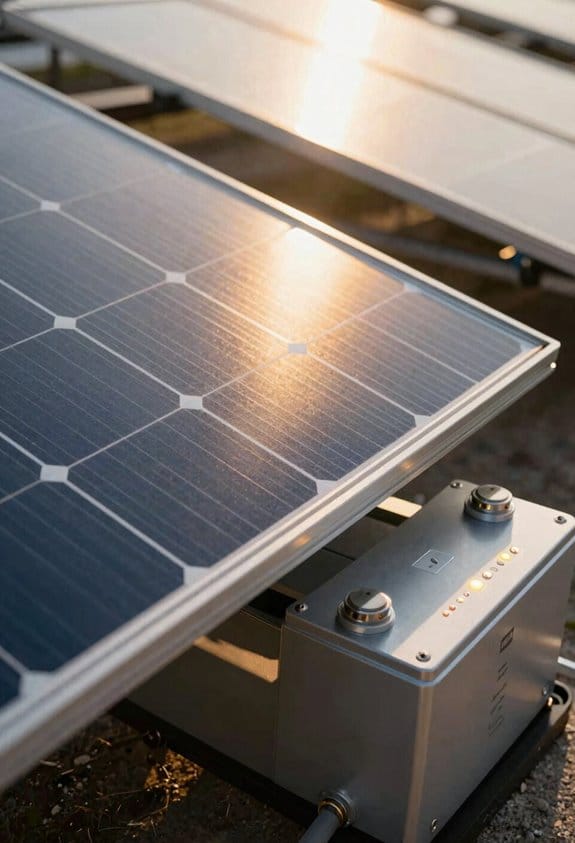
When evaluating financial payback and ROI, I compare the higher upfront cost of bifacial panels—typically 5‑8 % above monofacial units in 2026—with their additional energy yield, which ranges from 5‑30 % in ideal conditions and can reach 2‑8 % on residential rooftops, thereby shortening the payback period by roughly one to three years depending on site albedo, system size, and electricity rates. I calculate levelized cost by dividing total lifecycle expense, including installation, maintenance, and degradation, by cumulative kilowatt‑hours produced, and I find that bifacial systems often achieve a 2‑5 % lower levelized cost when albedo exceeds 0.3. The payback timeline contracts further when electricity prices rise, because the incremental generation offsets the initial premium, especially for commercial farms where rear‑side gain reaches 10‑15 %.
Recommended Products
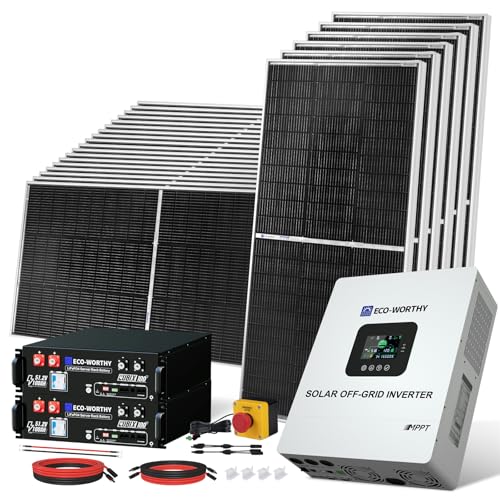
Full Off-Grid Solar Solution: Achieve energy independence with a robust renewable solution! Take control of your energy independence with the ECO-WORTHY comprehensive off-grid solar kit. This package includes two 48V 100Ah LiFePO4 integrated communication batteries, 24pcs 195W N-Type bifacial solar panels, and a powerful 5000W off-grid solar inverter equipped with a 100A MPPT solar charge controller, as well as all the necessary cables and mounting brackets.

★【High Efficiency】 : SUNGOLDPOWER UL61730 CEC Listed N-Type 16BB 450W Bifacial monocrystalline solar panel can generate more energy up to 22.5%. Bifacial technology allows for the harvesting of up to an additional 30% energy from the rear side of the module.
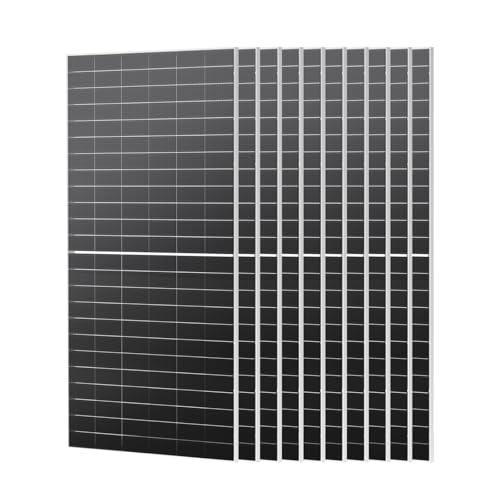
【N-Type Panel Design】Equipped with A+ grade N-Type cells and 16BB technology, the panel achieves up to 25% higher conversion efficiency, reduces hot spots, and ensures a longer lifespan.
Bifacial vs Monofacial: Which Panel Fits Your Project?
How do you determine which panel type aligns with your project’s constraints, budget, and performance targets, given that monofacial modules typically deliver 18‑22 % efficiency, weigh roughly 20 kg, and require only standard racking, whereas bifacial units achieve 20‑30 % efficiency, weigh about 24 kg, and demand 1‑3 m clearance above reflective surfaces to capture rear‑side gain that can add 5‑30 % energy in ideal albedo conditions; I assess roof compatibility, structural load capacity, and aesthetic impact, then compare the 5‑8 % higher upfront cost of bifacial panels against projected energy yield increases, which can reach 8‑28 % on commercial flat roofs with high albedo ground, while monofacial panels remain viable for residential rooftops where space and visual integration limit rear‑side exposure, and I calculate ROI using degradation rates, warranty periods, and installation labor differences.
Recommended Products

【High Efficiency,Up to 30% Extra Power】 : SUNGOLDPOWER 560W Bifacial solar panel 16BB N-Type can generate extra energy up to 30% ,total peak power for one panel is about 728W because it can create power from both front and back!

【Max Output】High-efficiency 16BB N-type cells deliver more energy per square foot, helping you maximize solar panel output even in tight installation spaces. With up to 25% cell efficiency, this solar panel provides higher watt output than conventional panels – a true power upgrade for your system.
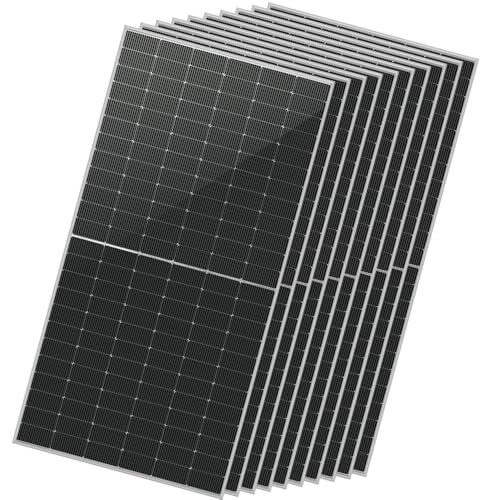
【High Efficiency】 : SUNGOLDPOWER 16BB N-Type 560W Bifacial monocrystalline PERC solar panel can generate more energy up to 30%
Frequently Asked Questions
How Does Snow Albedo Affect Bifacial Panel Output?
I’ve seen snow reflection boost bifacial output dramatically; the high seasonal albedo reflects extra light onto the rear side, often adding 20‑30 % more energy compared to clear‑sky conditions.
Can Bifacial Panels Be Used on Tilted Residential Roofs?
I’d say it’s like catching sunlight from both sides of a window—bifacial panels work on tilted residential roofs if you give them proper roof mounting and keep edge shading minimal.
What Cleaning Methods Are Optimal for Dual‑Glass Panels?
I recommend using gentle, non‑abrasive cleaning: apply a mild detergent, rinse, then dry with a microfiber squeegee. Adding a hydrophobic coating afterward reduces future grime and improves water runoff on dual‑glass panels.
Do Bifacial Panels Require Special Inverter Configurations?
I know you might think extra hardware’s needed, but bifacial panels work fine with standard string inverters; just enable panel‑level optimization in the MPPT settings to capture rear‑side gains efficiently.
How Does Ground Surface Material Influence Rear‑Side Energy Gain?
I’ll tell you that ground reflectance drives rear‑side gain: bright surfaces like sand or snow boost it, while vegetation cover absorbs light, reducing the extra energy you’d otherwise harvest.