As an Amazon Associate, we earn from qualifying purchases. Some links on this site are affiliate links at no extra cost to you. Our recommendations are based on thorough research and editorial judgment.


What Happens to Your Solar System When You Sell Your House?

When you sell a house with a solar photovoltaic system, you must first determine whether the array is owned outright, financed, or leased/PPA, then verify title documents, lien releases, and warranty transferability, coordinate payoff statements with escrow to allocate proceeds for loan settlement, submit recorded deeds and bills of sale to the title company, update utility interconnection records and manufacturer portals with the new owner’s information, and guarantee that all permits, performance logs, and maintenance histories are transferred, preserving operational integrity, warranty coverage, and financial obligations while avoiding title defects and utility service disruptions; continuing will reveal the detailed steps and required documentation.
Key Takeaways
- Transfer ownership by providing the bill of sale, serial numbers, and warranty certificate to the buyer and utility.
- If the system is financed, obtain a payoff statement, settle the loan at closing, and record lien release for a clean title.
- For leased or PPA systems, contact the provider 45 days before closing, complete credit screening, and secure transfer approval.
- Update the utility interconnection agreement and manufacturer portal to reflect the new owner and preserve warranty coverage.
- Provide the buyer with maintenance logs, production history, and warranty transfer documentation to avoid service interruptions.
Solar System Transfer: Determine Your Ownership Type
Determine your ownership type by reviewing the title documents, warranty certificates, and financing agreements that accompany the solar installation, because owned systems transfer automatically as permanent fixtures upon closing, financed loans require payoff or coordination with lenders such as GoodLeap or Mosaic, and leased or PPA arrangements demand credit qualification, new lease application, and provider approval, all of which must be documented and disclosed to the buyer to guarantee compliance with local permitting, utility interconnection, and contractual obligations. I conduct ownership verification by cross‑checking the deed entry, confirming that the solar assets are recorded as a fixture, and examining any lien encumbrances that could affect title implications. I also review the 25‑year manufacturer warranty transfer clause, verify that the financing agreement specifies payoff conditions, and note any lease termination or buyout options, guaranteeing each element is clearly outlined for the prospective owner.
Solar System Transfer Steps for Owned Installations
Because the system is owned outright, the transfer process begins with notifying the installer and providing proof of new ownership, which typically includes a recorded deed, a bill of sale, and the manufacturer’s warranty certificate, all of which must be submitted alongside a completed ownership‑transfer form that details the system’s serial number, capacity in kilowatts, and interconnection identifier. I then request an updated interconnection agreement from the utility, ensuring the new owner’s account number replaces mine, while simultaneously reviewing the warranty terms to confirm transferability and, if necessary, initiating warranty negotiation to preserve coverage for the remaining 20 years. Documentation of system production, operation, and maintenance history is compiled, uploaded to the installer portal, and a final system decommissioning inspection is scheduled to verify no residual equipment remains attached to my previous address. This sequence, performed within 30 days of closing, guarantees uninterrupted service and compliance with local permitting requirements.
Recommended Products
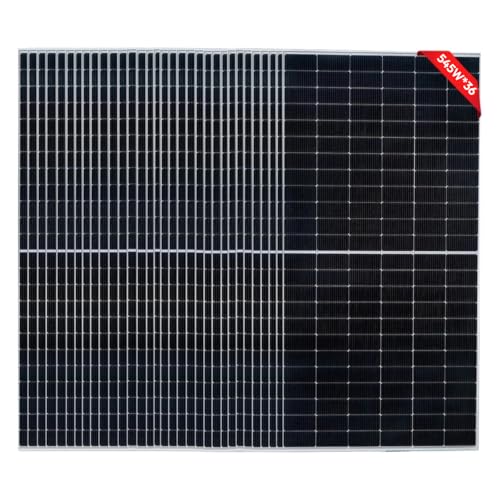
[Bifacial Technology] Designed to capture sunlight from both sides, this panel increases energy yield by up to 30%, making it ideal for various installations, including rooftops and ground mounts.

[Ideally Output of 9.36KWH] The power of 9.36KWh per day under 4 hours full sunshine by the 2340W solar panel system, very suitable for home, shed, cabin, farm or other energy backup, and it will provide enough power for portable ac, air condition, TV, refrigerator, coffee maker, microwave and other AC 240V (split-phase)devices.
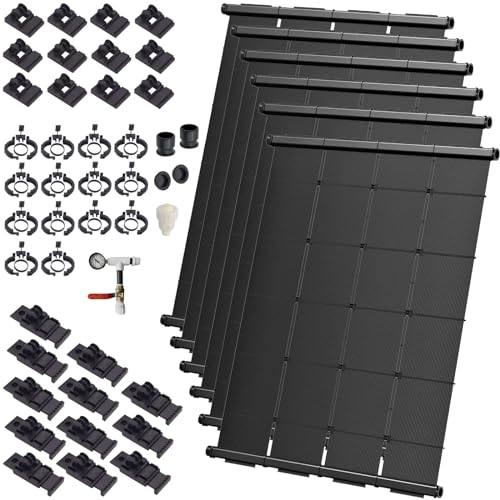
TECHNOLOGICALLY ADVANCED DESIGN - SwimJoy's technologically advanced design makes it one of the most durable, efficient, & longest-lasting solar pool heating systems available.
Solar System Transfer: Handling Financed Loans
When you sell a home with a financed solar system, you must first verify that the outstanding loan balance, which typically ranges from $10,000 to $30,000 for a 5‑kW installation, can be settled with the sale proceeds, because lenders such as GoodLeap, SunPower Financial, or Mosaic require full payoff before the title can transfer, and the payoff amount, including any accrued interest and pre‑payment penalties, must be confirmed through a final loan statement, which you should request at least thirty days before closing to make certain the escrow agent can allocate the necessary funds, thereby preventing any lien from remaining on the property after the transaction. I then initiate lender coordination by submitting the payoff statement to the escrow,, ensuring the escrow officer schedules the disbursement, confirming the loan payoff occurs simultaneously with the closing, and verifying that the title company records the release of the lien, which eliminates any encumbrance and guarantees a clean title for the buyer.
Solar System Transfer: Managing Leased Agreements
I’ll walk through the lease‑transfer process, outlining each required step, the credit‑check timeline, and the associated paperwork, because ensuring the buyer meets the leasing company’s qualification criteria, typically a minimum credit score of 680 and a debt‑to‑income ratio below 45 %, is essential for a seamless changeover. First, I contact the provider 45 days before closing, request the assumption process packet, and submit the buyer’s credit screening documentation, which includes a recent FICO report and income verification, then I verify that the provider’s underwriting system flags any discrepancies, allowing correction before final approval. Next, I arrange ACH payment setup, confirm the lease balance, and obtain a signed transfer of ownership form, after which I notify the utility for interconnection update and ensure the new owner receives app access credentials, completing the handoff.
Recommended Products

Rich Quantity and Different Sizes: there are 100 pieces of blue printing paper with 4 sizes, about 30 pieces of 14.8 x 21 cm /5.8 x 8.3 inches (A5), 30 pieces of 14.8 x 10.5 cm /5.8 x 4.1 inches (A6), 10 pieces of 21 x 29.7 cm /8.3 x 11.7 inches (A4) and 30 pieces of 9.9 x 9 cm /4 x 4 inches, sufficient quantity and various styles can meet your creative and selection needs

Saral transfer rolls are wax-less, non-toxic, and do not contain acid. The paper allows you to transfer your design from a sketch, pattern, template or by hand to any surface

PREMIUM GRAPHITE TRACE PAPER; 50 Sheets of gray artist quality graphite paper set, the better alternative to carbon paper for tracing
Solar System Transfer Documentation & Permits
If the homeowner has retained the original installation records, the transfer documentation must include the bill of sale, the manufacturer’s warranty certificate, and the system‑performance log, each stamped with the date of sale, the serial numbers of the inverters and panels, and the cumulative kilowatt‑hour output recorded over the past 12 months, because these items verify compliance with local interconnection standards and enable the utility to update the net‑metering account without interruption. I then compile the required permits, referencing the municipality’s permit timelines, which typically range from ten to thirty days, and I use the standard documentation templates supplied by the installer to make certain all fields—system capacity, inverter rating, and mounting details—are completed accurately. By submitting the completed forms alongside the performance log, I trigger the interconnection review, which, once approved, updates the utility’s records and confirms that the system remains operational under the new owner’s net‑metering agreement.
Solar System Transfer Disclosure Checklist for Buyers & Agents
Although the seller’s disclosure package must contain the system’s serial numbers, inverter capacity, and cumulative 12‑month kWh output, the buyer’s agent should also verify that the manufacturer’s warranty remains transferable, that any outstanding lease or loan balances are settled, and that the local utility’s interconnection agreement has been updated, because these elements collectively guarantee uninterrupted net‑metering service and compliance with municipal permitting requirements, while the accompanying documentation—bill of sale, performance log, and warranty certificate—provides the necessary evidence for utility verification and future maintenance scheduling. I then cross‑check solar appraisals, ensuring that performance ratios, degradation rates, and capacity factors are accurately reported, and I compile a buyer education packet that outlines warranty terms, financing obligations, and operational histories, thereby enabling the new owner to assess risk, confirm eligibility for incentives, and schedule routine inspections without ambiguity.
Solar System Transfer Impact on Home Value & Negotiations
Solar panels can boost a home’s market price by roughly 6.8 percent, which translates into a $15,000–$25,000 premium for a typical 5‑kW system in a $250,000‑$350,000 property. When I disclose the system’s ownership status, warranty length, and production history, the resale premium becomes a quantifiable asset, allowing me to cite documented annual output of 6,500 kWh, a 25‑year limited warranty, and net‑metering credits that collectively enhance buyer confidence. This data, combined with a clear transfer process, supplies negotiation leverage, enabling me to request a higher closing price or offset repair contingencies, while the buyer can assess the financial impact of assuming a lease or loan, compare it against market benchmarks, and decide whether the system’s ongoing savings justify the added cost.
Recommended Products

【52.7KWh LiFePO4 Battery】5 sets Dawnice’s newest line of batteries – 51.2V 206Ah LiFePO4 battery provides 6000+ cycles & a 10 years lifetime with built-in 100A Battery Management System (BMS) protects it from overcharge, deep discharge, overloading, overheating and short circuit, and excessive low self-discharge rate.

System Components:Delivers up to 10kW power output with 120V/240V single-phase split-phase support, making it suitable for smoothly running common household appliances. The system includes 18 × 590W solar panels with a total PV capacity of 10620W, capable of generating up to 39.36 kWh per day under optimal conditions, along with two 48V 314Ah portable LiFePO₄ battery offering 32.2 kWh of energy storage. Complete with necessary cables, this all-in-one solar solution is designed for convenient setup and reliable home power support.
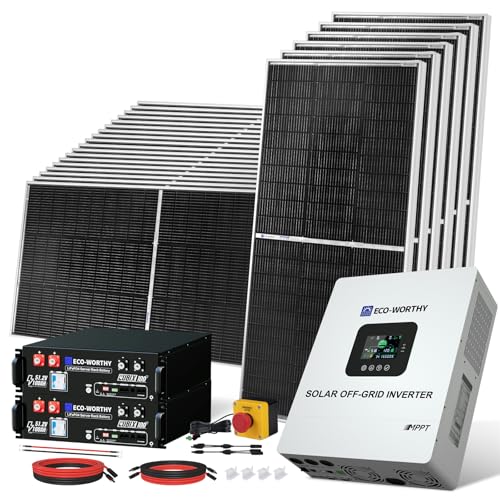
Full Off-Grid Solar Solution: Achieve energy independence with a robust renewable solution! Take control of your energy independence with the ECO-WORTHY comprehensive off-grid solar kit. This package includes two 48V 100Ah LiFePO4 integrated communication batteries, 24pcs 195W N-Type bifacial solar panels, and a powerful 5000W off-grid solar inverter equipped with a 100A MPPT solar charge controller, as well as all the necessary cables and mounting brackets.
Solar System Transfer Pitfalls to Avoid
Maneuvering the transfer of a solar installation requires meticulous attention to contractual clauses, utility interconnection agreements, and warranty registration processes, because overlooking any of these elements can result in delayed service restoration, unexpected liability for equipment failure, or forfeiture of the remaining warranty period, which typically spans 25 years from commissioning and may be reduced by up to 10 percent if the transfer is not documented within the 30‑day window stipulated by most manufacturers. I advise you to verify that the warranty pitfalls are addressed by confirming serial‑number registration, confirming that the manufacturer’s online portal reflects the new owner, and ensuring that any claim‑free period is preserved. Additionally, remove prior App access, such as the Tesla app, before granting the buyer new credentials, because retained access can cause data conflicts, billing errors, and unauthorized system control, all of which jeopardize compliance and may trigger warranty voidance.
Recommended Products

TECHNOLOGICALLY ADVANCED DESIGN - SwimJoy's technologically advanced design makes it one of the most durable, efficient, & longest-lasting solar pool heating systems available.

The F3800 Plus Power Station, 400W Solar Panel, and Transfer Switch Kit will be dispatched separately. If you receive one item before the others, please await the arrival of the remaining items.

[Ideal Output Power-4.68Wh/day]: This 1200W solar panel complete system generates about 4.68KWh per day under 4 hours full sunlight condition, very suitable for home, shed, cabin, and it provides enough power for air condition, TV, refrigerator, coffee maker, microwave and other AC 110V/120V devices.
Solar System Transfer Post‑Sale Checklist for Owners & Utilities
After outlining the common pitfalls that can jeopardize warranty continuity and system functionality, the next step is to follow a structured post‑sale checklist that guarantees both the former owner and the utility provider complete all required actions within the stipulated timeframes. I first verify that the bill of sale includes the system’s serial numbers, production data, and maintenance logs, then I submit post closing support documentation to the installer, ensuring the warranty transfer is recorded before the utility’s deadline. Next, I file utility notifications, attaching the new ownership form, interconnection agreement, and any required permit updates, while confirming the utility’s acknowledgment within 30 days. Finally, I remove the previous owner’s access credentials from the monitoring app, register the new owner’s account, and retain copies of all correspondence for audit purposes.
Solar System Transfer Quick Reference Cheat Sheet
Because the transfer process hinges on precise documentation, I’ll outline the essential items you need to verify, the deadlines you must meet, and the parties you must notify, ensuring that warranty continuity, interconnection status, and financing obligations remain intact throughout the closing period. I’ll provide a table of item, due date, responsible party, and verification method, noting that installation aesthetics must meet HOA guidelines, that battery considerations include state‑of‑charge, capacity (kWh), and warranty remaining, and that interconnection agreements require utility confirmation within five business days post‑closing. I’ll also list required forms: ownership transfer, permit amendment, and lien release, each with a recommended submission window of ten days before settlement, and I’ll reference contact numbers for installer, lender, and utility to streamline communication.
Frequently Asked Questions
Can the Solar System’s Production Data Be Accessed After the Sale?
I can still access the production data after the sale, but ownership of that data transfers to the new homeowner—so I’ll need to hand over the account credentials for production access and data ownership.
Will the New Owner Inherit Any Pending Solar Tax Credits?
I’ll tell you directly: the new owner doesn’t inherit any pending tax credit; it stays with the original ownership transfer, so you must claim it before the sale completes.
Do I Need to Inform My Homeowner’s Insurance About the System Transfer?
I tell you, you should definitely notify your insurer and update your policy when transferring the solar system. That guarantees coverage stays accurate, avoids gaps, and keeps the new owner protected under the correct terms.
How Does a Solar System Affect Property Tax Reassessment?
I’ll tell you: solar boosts home value, yet most jurisdictions treat it as a capital improvement, so property reassessment may rise, but many offer tax exemptions that offset the increase.
Can I Keep the Original Solar Monitoring App Login for Reference?
I’ll retain access by transferring the login to the new owner, so you keep the original solar monitoring app credentials for reference while the buyer gets their own account.